
SoftBank Is Assembling a Robot Conglomerate, and a Swiss Excavator Startup Is Next on the List
Masayoshi Son is shopping in Switzerland again. SoftBank is weighing an acquisition of Gravis Robotics, the ETH Zurich spinout that retrofits excavators and earthmoving equipment with autonomy, in a staged deal that could value the four-year-old company at more than US500million,accordingtoBloomberg.ThestakewouldsitinsideRoze,thenewAI-and-roboticscompanySoftBankplanstolistintheUnitedStates.EightmonthsagoGravisraisedUS23 million; the reported price is more than twenty times that round's implied scale. For Europe's deep-tech founders, the message lands harder than the number: the continent builds the robots, and Asian capital buys them.
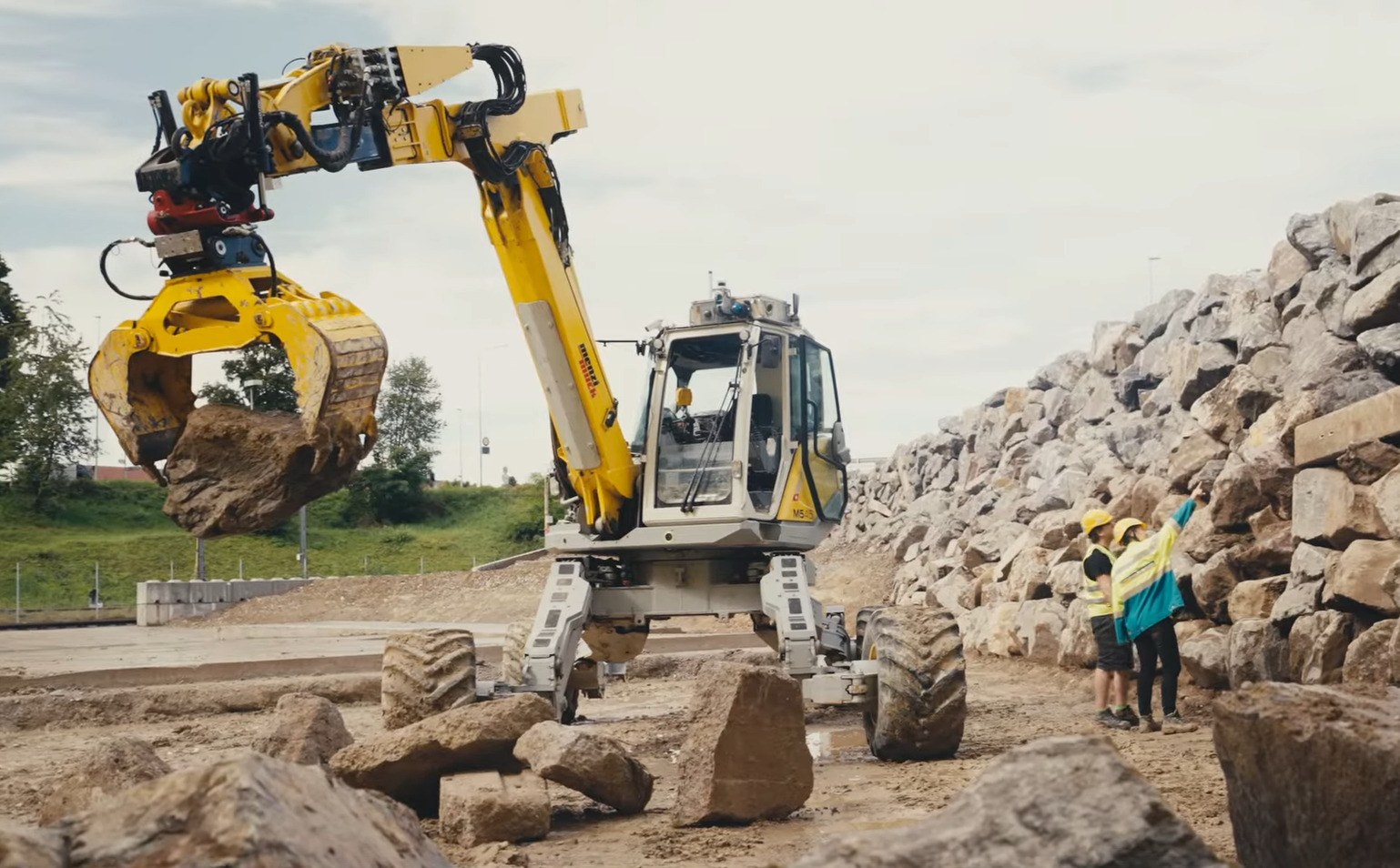
Masayoshi Son's robotics shopping spree has reached the construction site. SoftBank Group is considering an acquisition of Gravis Robotics, the Zurich-based startup that makes excavators drive themselves, in a deal that could value the four-year-old ETH Zurich spinout at more than US$500 million, according to people familiar with the matter cited by Bloomberg.
The structure tells as much of the story as the target. SoftBank plans to build a large interest in Gravis in stages, acquiring existing shares and injecting fresh capital over time, and to hold the position inside Roze, a new AI-and-robotics company the group is establishing with plans for a US listing. Neither SoftBank nor Gravis commented, and the people cautioned that no final decisions on size or structure have been made.
For a company that raised US$23 million in venture funding as recently as November, a valuation above half a billion dollars represents a repricing of more than twentyfold against the scale of its last round in a matter of months. That is not a number generated by construction-industry economics. It is a number generated by what SoftBank believes physical AI assets will be worth once they are packaged for public markets.
What Gravis Actually Does
Gravis sits in the least glamorous and arguably most commercially honest corner of robotics. Founded in 2022 out of ETH Zurich's robotics labs, the company builds hardware and software that converts conventional earthmoving equipment, excavators above all, into autonomous machines. Its systems have placed multi-ton boulders into dry stone walls under algorithmic control and have been trialed on live construction sites, including an autonomous excavator program with contractor Taylor Woodrow at Manchester Airport.
Think of it as autonomy that arrives as a retrofit rather than a replacement. Instead of asking construction firms to buy new robot fleets, Gravis teaches the diggers they already own to work without an operator in the cab. The economics write themselves in an industry that is chronically short of skilled operators, runs equipment worth hundreds of thousands of dollars at utilization rates constrained by human shifts, and performs work that is repetitive, dangerous, and precisely the kind of task autonomy absorbs first. Construction remains one of the least digitized major industries on earth, which is exactly why the ceiling here is higher than the sector's modest press coverage suggests.
A common misconception is that construction autonomy is a niche next to the humanoid spectacle dominating robotics headlines. The arithmetic argues otherwise. Earthmoving is a globally standardized task performed by millions of machines, the labor shortage is structural across developed markets, and a system that lifts one excavator's productivity pays for itself in months rather than investment cycles. While humanoid developers hunt for their first durable commercial use case, autonomous heavy equipment already has one.
The Roze Blueprint
The Gravis approach makes most sense read against the vehicle it would sit in. Bloomberg reported in April that SoftBank plans to establish Roze as an AI-and-robotics company and list it in the United States. A staged acquisition of a European autonomy startup, warehoused inside a pre-IPO vehicle, is exactly what building such a company by acquisition looks like from the outside.
Roze would not start empty. SoftBank spent last year consolidating its robotics holdings into a new entity, Robo HD, transferring roughly twenty investments including warehouse automation firm Berkshire Grey, Germany's Agile Robots, and foundation-model developer Skild AI. In October it agreed to buy ABB's industrial robotics business outright for US$5.4 billion, a transaction expected to close in the second half of 2026 that would hand SoftBank one of the world's four largest industrial robot makers. It is separately in talks to deepen its stake in Agile Robots through a new funding round.
Assemble the pieces and the outline is unmistakable: industrial arms from ABB, warehouse systems from Berkshire Grey, robot software and foundation models from Skild and Agile, and now site autonomy from Gravis. Son is not picking a winner in robotics. He is buying the index, and preparing to sell shares in it to American public investors under a single ticker.
The Track Record Skeptics Will Cite
The skepticism SoftBank's robotics history has earned deserves its paragraph. The group unveiled the Pepper humanoid in 2014 with predictions that robots would live among us, then halted production in 2020 after the business never found its market. It acquired Boston Dynamics in 2017, then sold its majority stake to Hyundai Motor Group within four years, exiting the most famous robotics company on earth before the current boom repriced everything it makes. An investor with a perfect nose for robotics assets and imperfect patience for robotics timelines is a complicated buyer.
The staged structure of the Gravis approach may be the tell that lessons were absorbed. Rather than the headline-grabbing outright purchases of the Pepper era, SoftBank is reportedly building its position incrementally, existing shares first, fresh capital later, size and structure still undecided. That is the behavior of an acquirer optimizing entry price and preserving optionality, not one buying a trophy. It is also, worth noting, a deal that can quietly shrink or disappear, and until definitive agreements exist, this remains an intention reported through sources rather than a transaction.
Where Gravis Sits in the Construction Autonomy Race
Gravis is not alone in teaching construction machines to work unsupervised, and the competitive map explains SoftBank's urgency. In the United States, Built Robotics has retrofitted excavator fleets for solar-farm and pipeline work for years, and San Francisco's Bedrock Robotics, founded by Waymo veterans, emerged in 2025 with US$80 million to pursue the same retrofit thesis. Caterpillar and Komatsu, the incumbents whose machines all of these startups modify, run their own autonomy programs, with Komatsu's Smart Construction platform already deployed across thousands of Japanese job sites. What distinguishes Gravis is pedigree and problem selection: it grew out of ETH Zurich's legged-robotics and digital-fabrication groups, and it chose free-form manipulation tasks, placing irregular boulders, sculpting terrain, that are meaningfully harder than the repetitive dig-and-dump cycles most rivals automate first.
That technical depth is also the strategic risk. Free-form autonomy is a research showcase; commercial buyers pay for boring reliability at scale. Bridging that gap requires exactly the kind of capital and patience a US$23 million Series A does not buy, which is the most straightforward explanation for why a conversation with SoftBank exists at all.
The ABB Logic
The Gravis approach also completes a circuit with SoftBank's largest robotics purchase. ABB's industrial robots dominate factories, structured environments where every motion is programmable in advance. Construction sites are the opposite: unstructured, weather-dependent, different every day. A portfolio that owns ABB's structured-environment dominance and adds Gravis's unstructured-terrain autonomy spans the two ends of the physical-AI difficulty spectrum, and the software lessons flow in one direction. Autonomy that survives a rain-soaked Swiss construction site tends to generalize; factory choreography does not. If Roze is to persuade public investors it is a physical-AI platform rather than a holding company with a theme, that spectrum is the argument its bankers will draw.
Europe Builds, Others Buy
The pattern the deal extends will be read with unease in Brussels and Zurich. Gravis is precisely the kind of company European technology policy exists to celebrate: a spinout from a world-class technical university, commercializing genuinely hard robotics research, in a vertical with real customers. And like so many before it, its likely destiny is absorption into a foreign capital structure before its Series B, with the value of scaling accruing to Tokyo and, via Roze's planned listing, to New York.
The counterargument is that this is what success looks like for a four-year-old company with US$23 million raised: a payday for founders and ETH's ecosystem, resources to scale globally, and a validation that will pull more capital toward European robotics. Both readings are true, which is what makes the pattern durable. Europe's deep-tech pipeline produces assets priced attractively enough that Asian and American acquirers can buy them earlier than European capital markets can grow them.
For the construction-technology sector specifically, a SoftBank-scale endorsement changes the fundraising weather. Autonomous heavy equipment has spent years as the sober cousin of the humanoid boom, attracting steady but unspectacular rounds. A half-billion-dollar mark on a retrofit-autonomy startup gives every founder in the category a new comparable, and every investor a reason to look again at the machines that were working all along.
What happens next is unusually legible for a sources-based story. If SoftBank proceeds, the Gravis position becomes part of the Roze prospectus narrative, and the deal's real test arrives when US public investors decide what a bundled bet on physical AI is worth. If it does not, Gravis remains one of Europe's most quietly commercial robotics companies, now wearing a public price tag it never asked for. The names to watch in the interim are procedural: a Swiss merger-control filing, a Gravis funding announcement that suddenly includes a Japanese strategic investor, or the Roze registration documents that Bloomberg's April reporting suggested were already in preparation. Staged deals leave paper trails, and this one has just started printing. Either way, the signal already sent is the durable one: the world's most aggressive technology investor believes the next robotics fortunes will be made not where robots look human, but where they move earth.
Disclaimer: This article is for general information purposes only and does not constitute investment, legal, or procurement advice. Readers should verify details with primary sources before making business decisions.












