
Hyundai Shareholders Pursue SoftBank’s Remaining Boston Dynamics Stake
Hyundai Motor Group is pursuing the acquisition of SoftBank's remaining stake in Boston Dynamics following a put option exercise, as the automaker prepares to deploy the Atlas humanoid robot in its US manufacturing facilities by 2028.
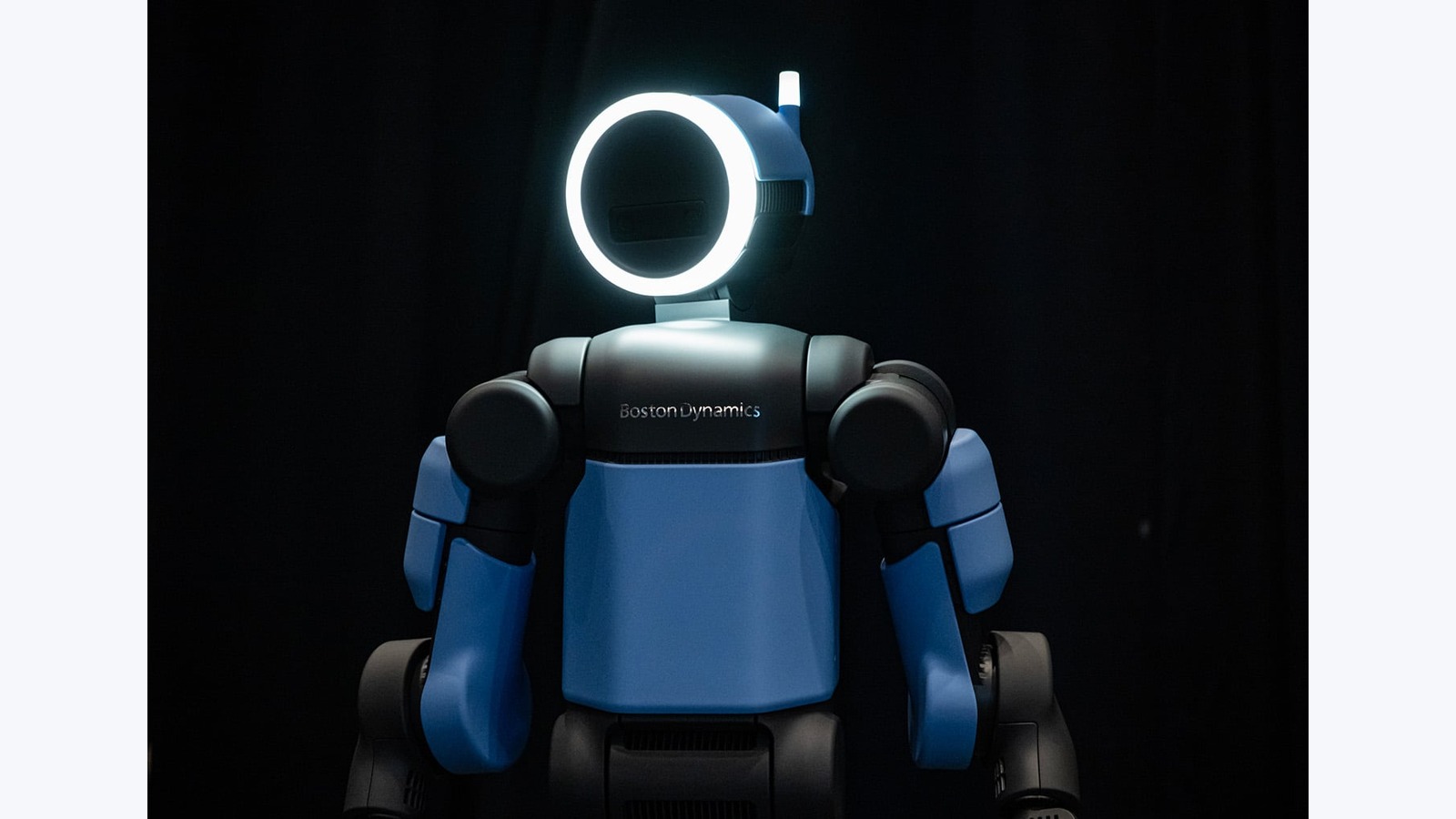
The ownership structure of one of the world's most recognized robotics companies is shifting as its parent organization prepares to move from research and development into scaled industrial deployment. Hyundai Motor Group is pursuing the acquisition of SoftBank's remaining stake in Boston Dynamics following SoftBank's exercise of a put option. The transaction, which remains subject to applicable approvals and settlement procedures, aligns with Hyundai's concrete timeline to deploy the Atlas humanoid robot in its own manufacturing facilities starting in 2028.
This development signals a critical transition for Boston Dynamics. The company, long celebrated for its viral demonstrations of robotic agility, is now being integrated into an end-to-end AI robotics value chain combining its physical AI expertise with Hyundai Motor Group's manufacturing capabilities. The shift from a research-oriented organization to an industrial automation provider requires significant capital and operational alignment, making the consolidation of ownership a logical strategic step for the South Korean automaker. The move also highlights the increasing vertical integration within the robotics industry, where major manufacturers are seeking to own the core automation technologies that will drive future productivity gains.
What is the status of Hyundai's acquisition of SoftBank's Boston Dynamics stake?
Hyundai Motor Group is pursuing the acquisition of SoftBank's remaining stake in Boston Dynamics after SoftBank exercised a put option. The transaction is currently in progress and is not yet complete, as it remains subject to continued technology validation, operational readiness, business requirements, applicable approvals, settlement procedures, and decisions by relevant parties.
The Shift to Scaled Production
The potential consolidation of ownership coincides with a definitive timeline for commercial deployment. Hyundai Motor Group plans to deploy the Atlas humanoid robot for parts sequencing at the Hyundai Motor Group Metaplant America in 2028. This initial deployment is expected to expand to component assembly by 2030, subject to continued technology validation and operational readiness. This timeline represents a significant milestone for the humanoid robotics industry, moving beyond pilot projects and proof-of-concept demonstrations into core manufacturing operations.
Boston Dynamics (headquartered in Waltham, Massachusetts, specializing in advanced mobile robots including the Atlas humanoid and Spot quadruped) has designed the latest iteration of Atlas for enterprise-grade industrial use. The robot features 56 degrees of freedom, continuous range of motion, and tactile and 360-degree camera sensing. It boasts a 50-kilogram instant weight capacity and a 30-kilogram sustained weight capacity, capabilities recently demonstrated when the robot lifted and transported a 23-kilogram compact refrigerator. These specifications are not merely technical achievements; they are direct responses to the rigorous demands of automotive manufacturing, where robots must handle heavy, awkwardly shaped components with precision and reliability.
These specifications address the exact problem Hyundai aims to solve: automating manufacturing processes, specifically parts sequencing and component assembly, to enhance safety, productivity, and operational efficiency in smart factories. The integration of physical AI technologies, mobility, whole-body coordination, and object manipulation is essential for these complex industrial tasks. By deploying Atlas in its own facilities, Hyundai is creating a closed-loop feedback system where real-world manufacturing challenges directly inform the ongoing development of the robot's hardware and software.
Translating Agility into Industrial Utility
The transition from viral videos to factory floors requires a fundamental shift in engineering priorities. While backflips and parkour demonstrate impressive dynamic control, industrial manufacturing demands relentless reliability, precision, and endurance. The challenge is no longer just making a robot move like a human; it is making a robot work like a machine while retaining human-like adaptability. This requires a deep understanding of the specific tasks the robot will perform, the environment in which it will operate, and the safety protocols it must adhere to.
This is the core of the end-to-end AI robotics value chain Hyundai is building. By combining Boston Dynamics' expertise in physical AI and mobility with its own deep knowledge of automotive manufacturing, Hyundai is attempting to bridge the gap between laboratory demonstrations and industrial utility. The deployment at the Georgia metaplant will serve as the ultimate proving ground for this strategy, testing whether Atlas can deliver consistent value in a high-volume production environment. The success of this integration will depend on the seamless coordination between the robot's physical capabilities and the factory's overarching manufacturing execution systems.
The focus on parts sequencing and component assembly is particularly telling. These tasks require a combination of strength, dexterity, and spatial awareness that traditional industrial robots often lack. By targeting these specific applications, Hyundai is positioning Atlas not as a general-purpose replacement for human workers, but as a specialized tool designed to augment human capabilities and improve overall manufacturing efficiency. This targeted approach increases the likelihood of successful deployment and provides a clear path to return on investment.
The Reality of Commercial Deployment
Despite the concrete timeline and impressive demonstrations, the commercialization of humanoid robots remains fraught with challenges. The industry often conflates successful pilot projects with scaled deployment, underestimating the friction of integrating complex robotic systems into existing manufacturing workflows. The transition from a controlled laboratory environment to a dynamic factory floor introduces a multitude of variables that can impact performance and reliability.
The reality is that the deployment of Atlas at the Hyundai Motor Group Metaplant America is heavily caveated. The expansion to component assembly by 2030 is explicitly subject to continued technology validation, operational readiness, and business requirements. This cautious approach reflects the immense difficulty of achieving the reliability and safety standards required for automotive manufacturing. The success of this initiative will depend not only on the capabilities of the robot but also on Hyundai's ability to adapt its manufacturing processes to accommodate this new technology.
"The consolidation of ownership under Hyundai Motor Group provides the operational alignment necessary to transition Boston Dynamics from a research organization into a core component of an industrial automation strategy."
This operational alignment is crucial for overcoming the inevitable hurdles that will arise during deployment. By bringing Boston Dynamics fully in-house, Hyundai can ensure that the robot's development is tightly coupled with the specific needs of its manufacturing operations. This close collaboration will facilitate rapid iteration and problem-solving, increasing the likelihood of a successful rollout. However, it also places the burden of success squarely on Hyundai's shoulders, as the company must now prove that its investment in Boston Dynamics can deliver tangible business value.
Competitive Landscape and Specifications
The industrial humanoid market is becoming increasingly crowded, with several companies targeting manufacturing and logistics applications. While direct comparisons are difficult due to varying target applications and deployment stages, the following table provides a snapshot of the current landscape based on official specifications.
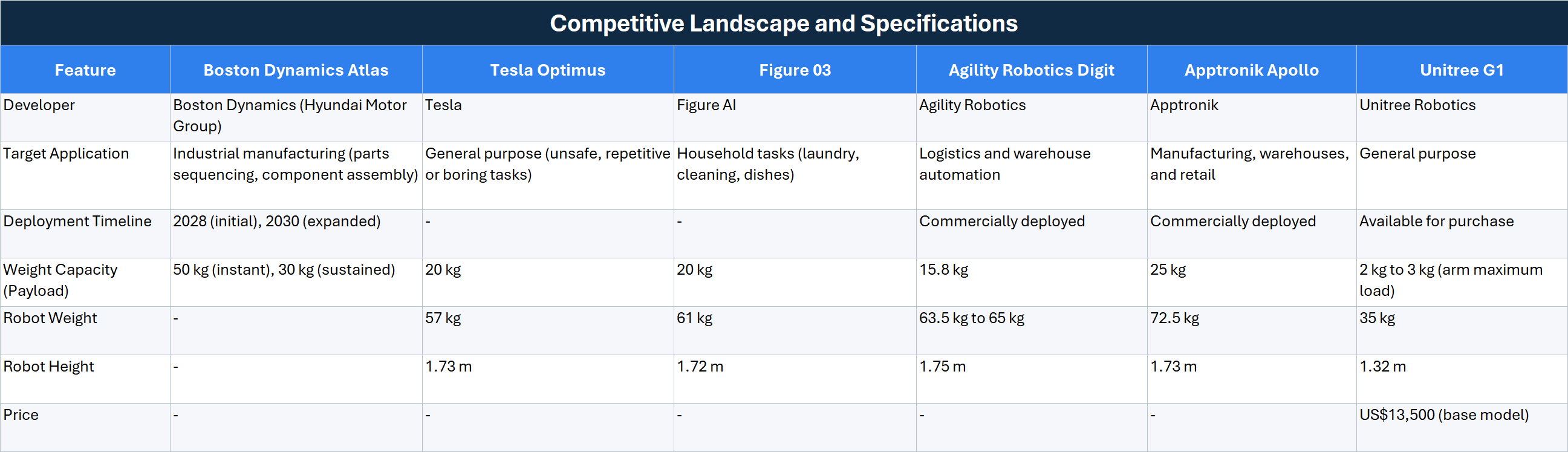
Note: Tesla Optimus, Figure 03, Agility Robotics Digit, Apptronik Apollo, and Unitree G1 are illustrative reference points for general-purpose or logistics humanoid robots, rather than direct like-for-like competitors exclusively focused on automotive manufacturing parts sequencing and component assembly like the Hyundai-deployed Atlas.
Strategic Implications for Automation Buyers
The potential acquisition of SoftBank's remaining stake by Hyundai Motor Group highlights the increasing vertical integration within the robotics industry. For automation buyers and procurement teams, this trend suggests that the most advanced robotic systems may become tightly coupled with specific manufacturing ecosystems. This vertical integration offers several advantages, including tighter integration between hardware and software, faster development cycles, and more customized solutions. However, it also raises concerns about vendor lock-in and the potential for reduced interoperability between different robotic systems.
Hyundai's approach demonstrates a clear preference for owning the core technology rather than relying on third-party vendors for critical automation infrastructure. This strategy provides greater control over the development roadmap and ensures that the technology is optimized for the company's specific operational requirements. However, it also raises questions about the broader availability of these advanced systems to other manufacturers. As humanoid robots transition from research projects to industrial tools, the competitive advantage will increasingly belong to those who can successfully integrate these systems into their production environments.
For procurement teams evaluating automation solutions, the Hyundai-Boston Dynamics relationship serves as a powerful case study in the importance of strategic alignment. When evaluating potential vendors, buyers must consider not only the technical capabilities of the robot but also the long-term viability of the vendor and its commitment to supporting the specific needs of the buyer's industry. The consolidation of ownership under Hyundai suggests that Boston Dynamics will be well-resourced and highly focused on the automotive manufacturing sector, making it a formidable competitor in this space.
The transaction for Hyundai Motor Group to acquire SoftBank's remaining stake is in progress but not finalized, and the timeline for deploying Atlas in its own manufacturing facilities signals a shift from research and development to commercial industrial application, though heavily caveated by validation requirements.
This analysis synthesizes company statements and public market information.
Disclaimer: This article is provided for informational purposes only and does not constitute investment, financial, legal, procurement, or other professional advice. Readers should verify specifications, pricing, availability, regulatory requirements, and commercial terms directly with the relevant company or authority before making decisions.












