CMU Robotics Cracks Peg-in-Hole Docking for Satellite Refueling
A Carnegie Mellon Robotics Institute team led by Howie Choset helped Northrop Grumman solve a precision docking problem that now lets its Mission Robotic Vehicle refuel and service satellites in geosynchronous orbit.

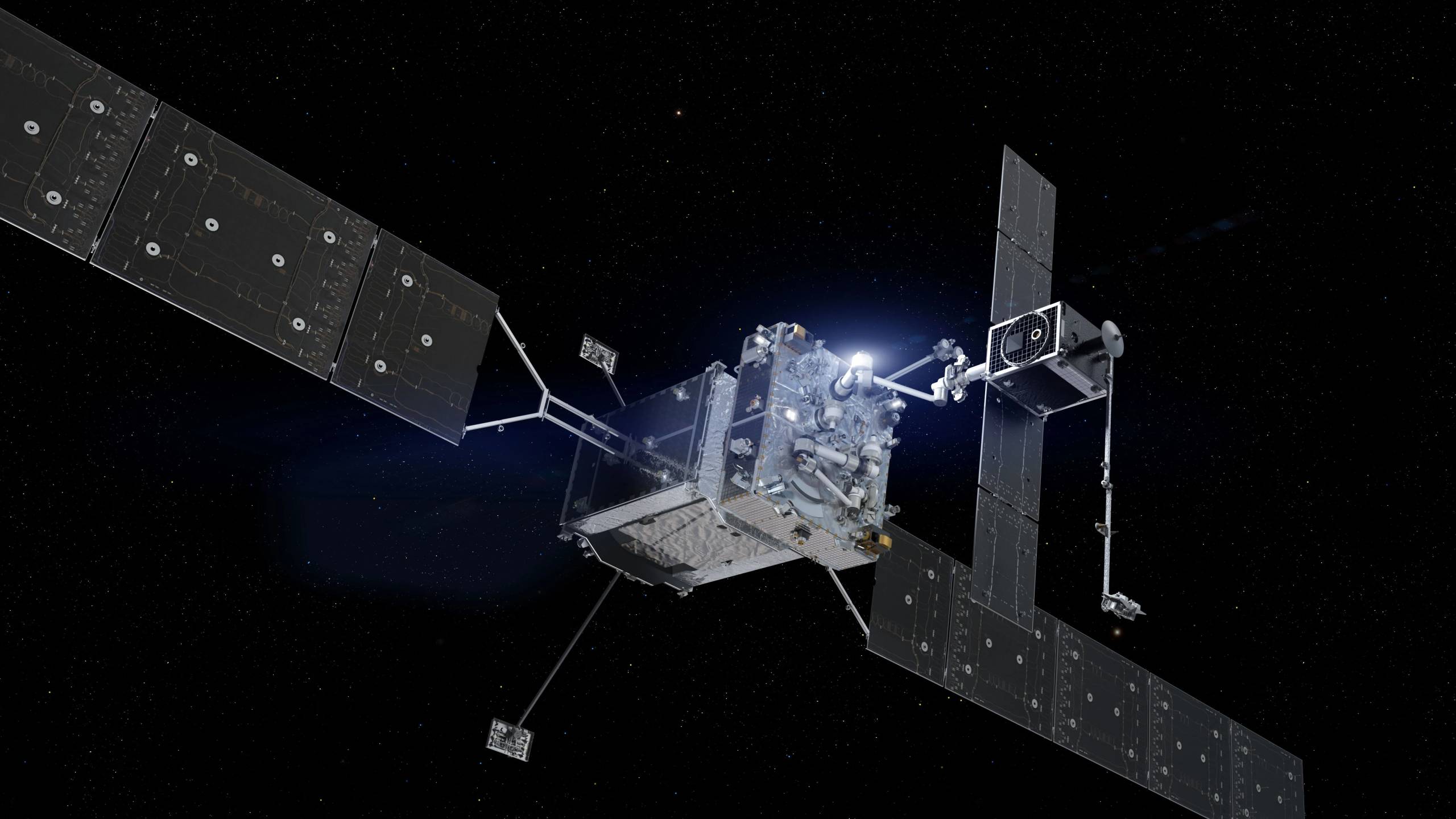
Carnegie Mellon University's Robotics Institute disclosed this week that a team led by professor Howie Choset has spent several years helping Northrop Grumman solve a deceptively simple problem, inserting a probe into a narrow port, that is now letting satellites refuel in geosynchronous orbit roughly 22,000 miles above Earth. The technique, developed for Northrop Grumman's Mission Robotic Vehicle, has already been performed multiple times on orbit since the spacecraft launched from Cape Canaveral this past July, giving operators of aging, fuel-depleted satellites a way to extend their working lives instead of abandoning them as space debris.
The capability addresses a problem that has quietly accumulated for decades. Thousands of satellites currently orbiting Earth are no longer functional, Choset said, most often because they simply ran out of fuel rather than suffering any mechanical failure. "There's been this paradigm in aerospace, 'launch once, use once,'" said Choset, the Kavčić-Moura Professor of Computer Science at the Robotics Institute. "Now we're poised to break that paradigm, so a satellite could remain in service indefinitely." For commercial satellite operators and the insurers who underwrite them, that shift changes the basic economics of a multi-hundred-million-dollar asset: a fuel-exhausted communications or imaging satellite becomes a candidate for a service call rather than a write-off.
Why a Peg and a Hole Are Harder Than They Sound in Orbit
The Mission Robotic Vehicle, about the size of a short school bus, has to approach a target satellite that was never designed to be serviced and make a precise mechanical connection without any cooperative docking hardware to guide it in. Andrew Kwas, senior fellow at Northrop Grumman Space, said his engineers worked with Choset and his students to devise a technique that lets the MRV safely approach and dock with another satellite using a probe that inserts into the nozzle of the target's liquid apogee engine, typically a spacecraft's main engine, to create a stable mechanical connection. Previously, satellites historically "did not have an easy way to grapple and make a tight connection" for stable robotic refueling, Kwas said, so the team targeted a part every satellite already carries. The engine nozzle, built to withstand repeated firings, turned out to be the one structural feature reliably present on almost every satellite design, making it a practical docking target even though it was never intended for that purpose.
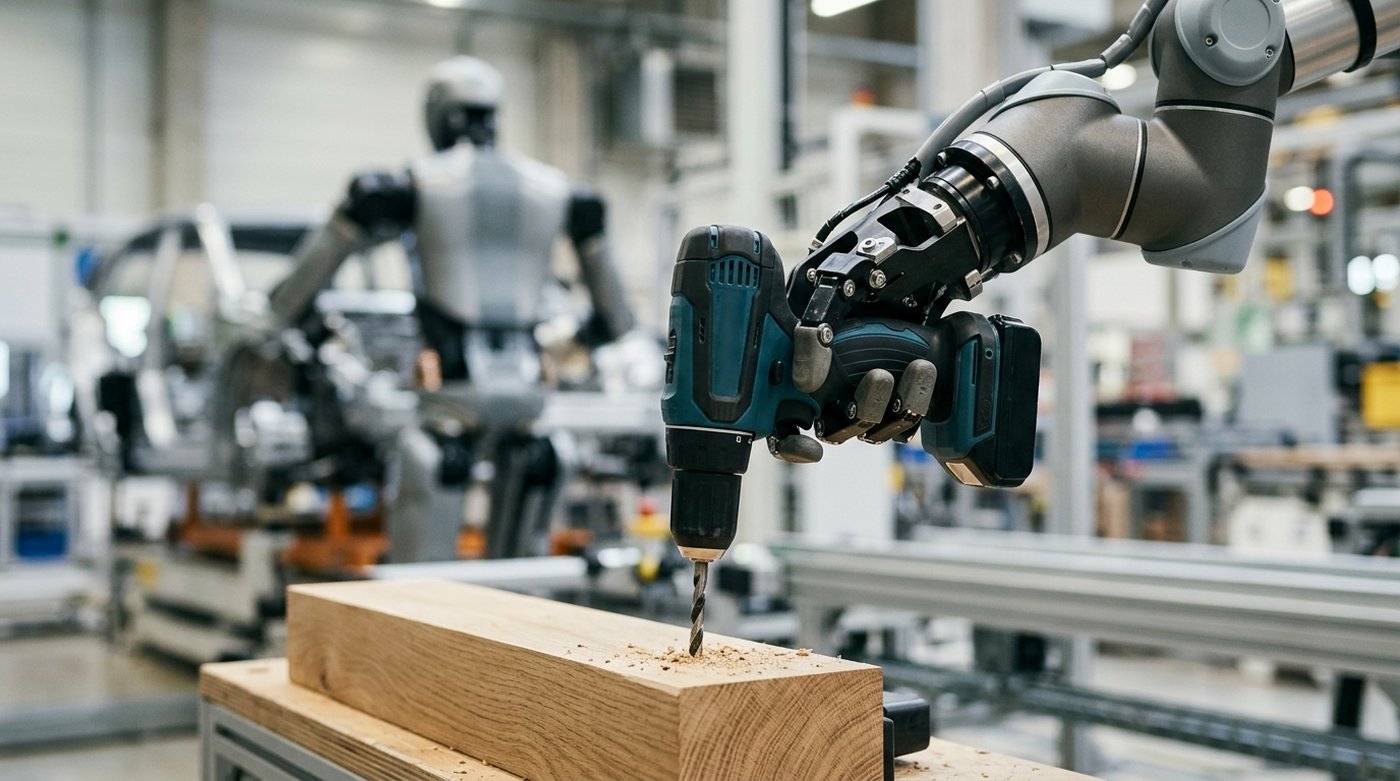
Aligning a peg with a hole in a factory setting, with gravity holding both parts still and a worker able to feel resistance through a wrench, is a solved problem. Doing it in microgravity, at geosynchronous distance, with no possibility of a human correcting the approach in real time, is a different class of challenge entirely. Choset drew on years of prior peg-in-hole research inside the Robotics Institute, work that depends on combining visual tracking with haptic, or touch-based, feedback so a robotic arm can sense contact forces and adjust its approach the way a person would feel a bolt starting to thread. "It's just like your muscles," Choset said: pressing on a surface delivers force while simultaneously sensing the resistance pushing back, the same dual sense of effort and feedback a robotic manipulator needs to feel its way toward a target satellite's engine nozzle without a camera feed alone to guide it.
A Testbed Built to Simulate Weightlessness on the Ground
Validating a docking maneuver that cannot fail on its first real attempt required testing infrastructure that does not exist off the shelf. Choset's group built what it calls a holodeck, a facility using two robotic arms mounted on a rail system to simulate how free-floating objects behave and interact in the weightlessness of space. That testbed, combined with actuator technology Choset's lab had already developed for an unrelated line of research, let the Robotics Institute model and rehearse the MRV's docking approach on the ground before Northrop Grumman committed it to an actual orbital mission. "CMU and Northrop Grumman worked together to assess all contingencies for several years before the first successful mission," Kwas said. "Now the process has been repeatedly performed on orbit several times."
The actuator expertise behind that testbed traces back to Choset's earlier work on snake-like robots, a research line he is independently known for and that his team has used for search-and-rescue missions, including deployments in the rubble left by the June earthquake in Venezuela. A former student, David Rollinson, built a "series elastic actuator" for those snake robots, a motor that can measure the amount of force it applies as it moves, and went on to co-found HEBI Robotics, a company Choset started in 2014 to commercialize that actuator technology. The same force-sensing principle that let a snake robot thread through collapsed rubble without crushing a survivor trapped beneath it turned out to transfer directly to a robotic arm that needs to feel its way into a satellite engine nozzle without a camera feed alone to guide it.
What Comes After Refueling: Repair, Upgrades, and In-Orbit Assembly
Refueling has been the Mission Robotic Vehicle's primary function to date, but Kwas said the same docking capability opens the door to repairs, part swaps, and in-orbit upgrades, not just topping off propellant. He pointed to dislodging or repairing a stuck solar panel, another frequent reason satellites get retired early, as one example of the kind of mission the capability now enables. For satellite operators, that distinction matters commercially: a servicing spacecraft that can only refuel addresses one failure mode, while one that can also replace a stuck solar panel or swap a failed component addresses several of the most common reasons satellites are retired early.
Choset frames the long-term implication in more ambitious terms than incremental maintenance. "You solve that and you can assemble structures in space. You can maintain structures in space," he said, arguing that a reliable, repeatable peg-in-hole docking capability is a prerequisite for building larger structures in orbit rather than launching them pre-assembled from Earth. A structure built or assembled in orbit never has to survive the vibration, acceleration, and thermal stress of a rocket launch in its final configuration, which could let future space stations, telescopes, or solar arrays use lighter, less launch-hardened designs than anything flying today. That is a materially different proposition for aerospace primes and government space agencies than a single refueling contract, and it is the reason Northrop Grumman's partnership with an academic robotics lab has outlasted any single program milestone.
Funding Behind the Partnership Points to a Longer Program
The multi-year relationship between Choset's lab and Northrop Grumman has been supported in part by two Space University Research Initiative grants from the US Space Command, with one of the grants directly funding the Northrop Grumman collaboration. Defense-adjacent research funding of that kind typically signals an institutional commitment measured in years rather than a single contract cycle, and it suggests the Robotics Institute's role in satellite servicing is structured as an ongoing research partnership rather than a one-time engineering consult. For competing aerospace primes and the broader in-orbit servicing industry, Northrop Grumman's multiple successful dockings are now the benchmark other entrants, several of which are still working through their own first demonstration missions, will be measured against.
The timing also matters for the satellite insurance and finance side of the business, an audience that rarely gets mentioned alongside robotics research but stands to benefit the most directly from a mature servicing capability. Satellites are typically insured against total loss, and a fuel-exhausted but otherwise healthy spacecraft has historically had no salvage option once its propellant ran out, forcing insurers and operators to write off assets that still carried working sensors, transponders, and electronics. A repeatable, demonstrated refueling service changes the risk calculus underwriters use when pricing a satellite's remaining useful life, and it gives operators a servicing option to negotiate into contracts before a satellite ever launches rather than after it is already stranded in orbit with no propellant left.
That shift is still early. Northrop Grumman has performed the MRV's docking procedure only a handful of times since the July launch, and Kwas's comments describe repair and upgrade missions as capabilities the platform enables rather than services already under contract with a paying customer. For satellite operators and the insurers underwriting them, the near-term signal to track is not a repair mission announcement, which has not happened yet, but whether Northrop Grumman publishes performance data from its completed refueling dockings that would let other operators model the economics of booking a similar service for their own aging fleets.
The next development worth watching is whether Northrop Grumman extends the Mission Robotic Vehicle's docking technique beyond refueling into an actual repair or component-replacement mission, which would be the first public test of Kwas's claim that the same peg-in-hole capability generalizes to a broader set of in-orbit services.
This analysis synthesizes institutional statements and public research disclosures as of the publication date and should not be read as investment, financial, or professional advice; it is provided for general information purposes only.