Humanoid Robot Soccer Just Became the Industry's Most Honest Benchmark
A Tsinghua-led team published a reinforcement learning controller in Science Robotics that fuses vision and motion on Booster T1 humanoids, cutting ball-tracking error 46 percent and reaching a 90 percent kick rate with zero real-world fine-tuning. The platform math underneath matters as much: Booster hardware now carries most of competitive robot soccer, and the training method points at every dynamic task humanoids will face.


Three numbers from a Beijing laboratory say more about the state of humanoid robotics than any keynote delivered this year. A 46 percent cut in ball-tracking error. A 64 percent cut in the time a robot needs to line up a kick. A roughly 90 percent success rate on shots taken from the front half of a soccer field, achieved by a machine that learned to see, run, and strike as a single reflex rather than as separate software modules.
The work behind those figures appeared on August 19 in Science Robotics, on the cover of the journal's special issue on humanoid robots. Researchers at Tsinghua University's Department of Automation, with collaborators at ByteDance Seed and China Agricultural University, trained a humanoid to chase and kick a moving ball through one reinforcement learning controller, then ran it on physical robots with no real-world fine-tuning.
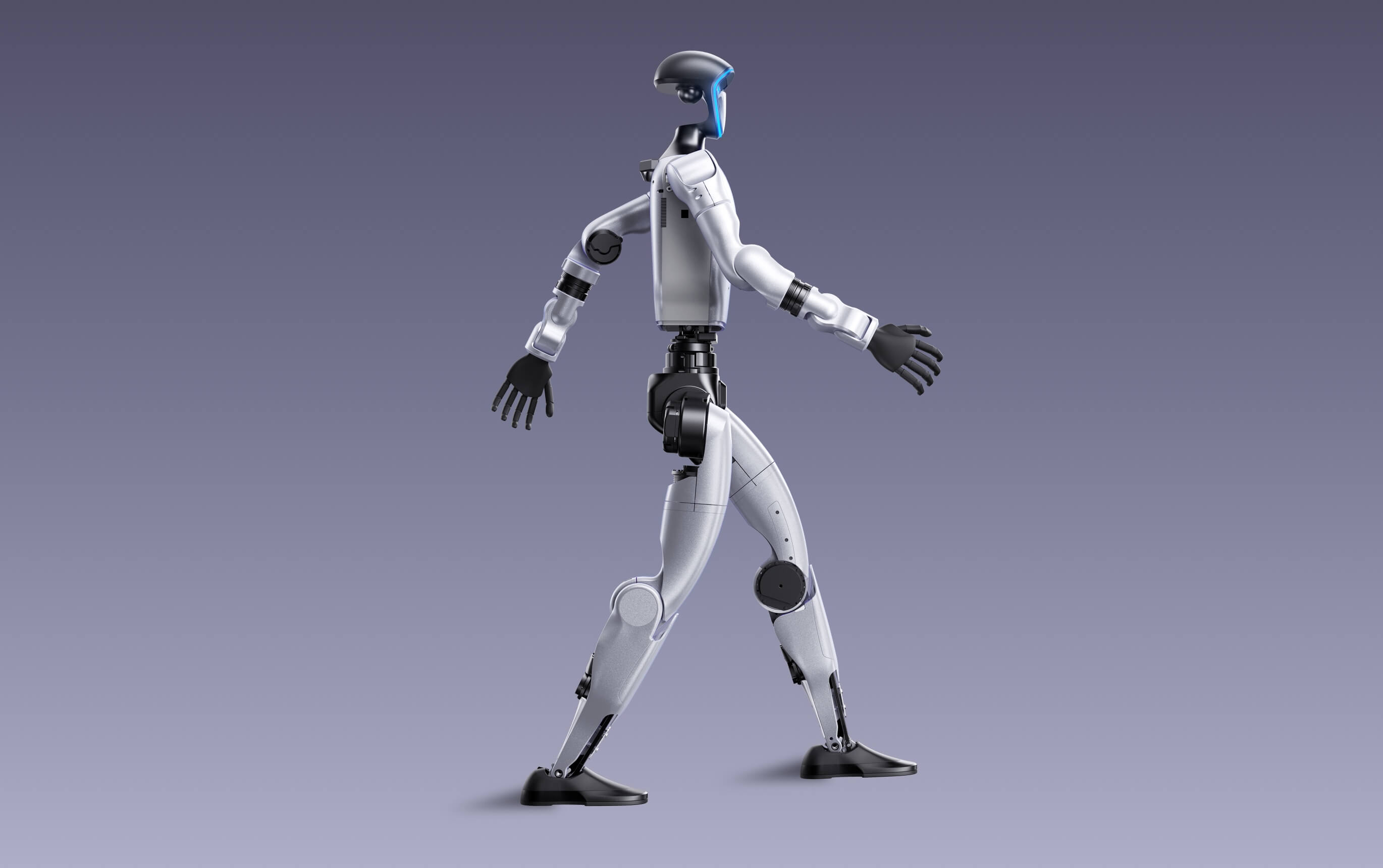
The hardware came from Booster Robotics, a Beijing company that builds developer-focused humanoid platforms rather than factory labor. Its T1 has become the default machine of competitive robot soccer, its new T2 Pro flagship carries an NVIDIA Thor chip rated at 2,070 trillion operations per second, and its entry-level K1 starts at US$5,999, a price closer to a gaming PC than to an industrial robot. In interviews published on August 31, the paper's lead author Yushi Wang and corresponding author Professor Mingguo Zhao explained why they built the system the way they did, and their answers matter to anyone evaluating humanoid robots for real work.
The Reflex Problem Modular Software Never Solved
For decades, robot autonomy has been assembled as a relay race. A camera feeds a detector, the detector feeds a state estimator, the estimator feeds a planner, and the planner hands instructions to a gait controller. Each handoff costs milliseconds and each module trusts that the one before it told the truth. On a soccer field, none of them can be trusted. The ball blurs when the robot's head moves, floodlights wash out the white hexagons, and an opponent's leg hides the target at exactly the wrong moment.
Zhao, who has spent years fielding teams in RoboCup, the international robot soccer competition that has served as an autonomy benchmark since 1997, describes the sport as a compressed version of every hard problem in embodied machines. The robot must, in his words, "perceive a moving ball, understand its position relative to the goal, move its whole body, maintain balance, and make precise contact with the ball," and it must do all of that simultaneously on onboard sensors and onboard compute, with no engineer permitted to touch it mid-match.
Sequential pipelines respond to that pressure by stalling. The perception module reports, the planner deliberates, and by the time the foot swings the ball has moved. The Tsinghua team's answer was to stop treating sight and motion as separate departments. As Wang puts it, "we wanted the robot to learn how to react to visual information through its own motion." One network learns the entire loop: search for the ball, close the distance, shape the gait, orient the body, kick.
Training the Blind Spots Into the Simulator
The framework rests on three design choices. The first is that coupling: perception and control optimized under a single reinforcement learning objective instead of two systems negotiating across an interface. The second is an extension of adversarial motion priors, a technique that keeps learned movement looking natural rather than twitchy, into settings where the robot must act on live camera input. The third is an encoder-decoder memory that compresses one second of observations, 50 frames, into a 64-dimensional summary of the world, from which the system reconstructs where the ball is and where it is heading even while a defender's shin is blocking the view.
The training happened entirely in simulation, and the simulator was built to lie. The team wrapped the learning process in a virtual perception system that deliberately corrupts what the robot sees with detection failures, sensor noise, latency, a restricted field of view, and shifting frame rates. A robot that learns under those conditions treats imperfect vision as the normal case, not an exception to be handled by a fallback routine. The published result is zero-shot transfer: policies moved from simulation onto physical Booster T1 units with no on-hardware adjustment, and beat the rule-based baseline by the margins in the opening paragraph.
There is a plain-language way to see what changed. A human striker does not compute the ball's coordinates, select a locomotion plan, and then execute a kick as three billable phases. Sight flows into stride, and the adjustment happens in the legs before it is ever a conscious decision. That is the behavior this controller learns, and it is why the robots recover coherently when the ball briefly disappears instead of freezing while the software committee reconvenes.
The US$5,999 Machine Under Nearly Every Jersey
The quieter story in the paper is printed on the robots' jerseys. By Booster's own count, 38 of the 59 teams in July's RoboCup humanoid league ran its platforms, and Booster-equipped squads took the gold medal in every humanoid division. Wang himself captains Tsinghua's Huoshen side, which defended its RoboCup humanoid title in July on the same hardware. A month later, at the Beijing games where AGIBOT's production robots topped the medal table, the company says 92 percent of teams in the football events, 56 in all, played on Booster machines.
That concentration is a business model, not a coincidence. Booster sells the research market the way instrument makers once sold oscilloscopes: put an affordable, durable, well-documented platform in every lab, and the ecosystem's talent learns to think in your toolchain. The company ships Booster Studio, an integrated development environment for exactly the simulation-to-hardware workflow the Science Robotics paper validates. Every graduate student who trains a policy on a T1 today is a hiring manager who specifies Booster-compatible stacks tomorrow. The academic podium is the top of the sales funnel.
For buyers watching the humanoid sector, this is the metric worth tracking. Platform standardization in research has historically preceded commercial consolidation, because the software, datasets, and muscle memory accumulate where the hardware is. A vendor whose machines carry two-thirds of RoboCup and nine-tenths of the Beijing football bracket is not yet a vendor of working factory humanoids. It is, however, positioned where the next thousand robotics engineers are being trained.
What a Kick Rate Does Not Tell a Buyer
The counterpoint deserves equal weight. A soccer pitch is flat, uniformly lit by comparison with a loading dock at dusk, bounded by painted lines, and governed by rules that never change mid-game. A 90 percent kicking success rate in front-field positions is a real research milestone and a meaningless procurement number. Nothing in this paper certifies a humanoid to pick totes, tend machines, or share an aisle with forklifts, and the authors do not claim otherwise. The T1 is a research-grade platform, not an industrial payload machine.
What transfers is the method, not the skill. Zhao makes the bridge himself: the capabilities the sport forces together, "whole-body coordination, visual perception, rapid decision-making, balance recovery, and reactive motion, are also important for humanoid robots operating in everyday environments." His lead author points the same direction, saying the perception-action coupling extends to "navigation, object interaction, and mobile manipulation." The honest reading is that this is a proof of trainability under realistic sensory failure, published in a peer-reviewed venue with measurable margins, on hardware anyone can buy. That last clause carries commercial weight of its own. Zero-shot transfer means the expensive part of the work, training against corrupted perception, happens in software, and a lab that buys the same platform inherits a validated path from simulator to field rather than a bespoke integration project.
The benchmark that matters in humanoid robotics is no longer how fast a robot walks on a stage. It is how sensibly the robot moves in the seconds when its eyes fail. Procurement teams evaluating humanoid vendors over the next two years should borrow the Tsinghua test protocol in spirit: ask how the stack behaves under occlusion, glare, and dropped frames, and ask whether the demonstration survives conditions the vendor did not choreograph. A machine that has only ever seen clean input is a machine that has never been outdoors.
The research team's own demonstration footage makes the point without narration. A T1 in a red match jersey crosses an ordinary outdoor running track in Beijing, adjusts its stride as the ball rolls, and kicks toward a portable goal, frame after overlaid frame, under whatever light the afternoon happened to provide. No stage, no tether, no second take. The moment a stunt becomes an instrument looks exactly this unremarkable, and it is on the cover of Science Robotics.
This analysis synthesizes the peer-reviewed Science Robotics publication, public statements from the research team, and company disclosures from Booster Robotics; figures reflect those sources as of September 1, 2026.
Image: Tsinghua University / Booster Robotics research demonstration, via the Association for Advancing Automation.
This article is provided for general information purposes only and does not constitute investment, procurement, legal, or engineering advice.