Why Deployment Speed, Not Cleaning Power, Should Drive Your Robot Buy
Gausium argues that deployment friction, not cleaning performance, is the hidden cost line that determines whether a commercial cleaning robot rollout succeeds, a claim worth testing against any vendor's pitch.

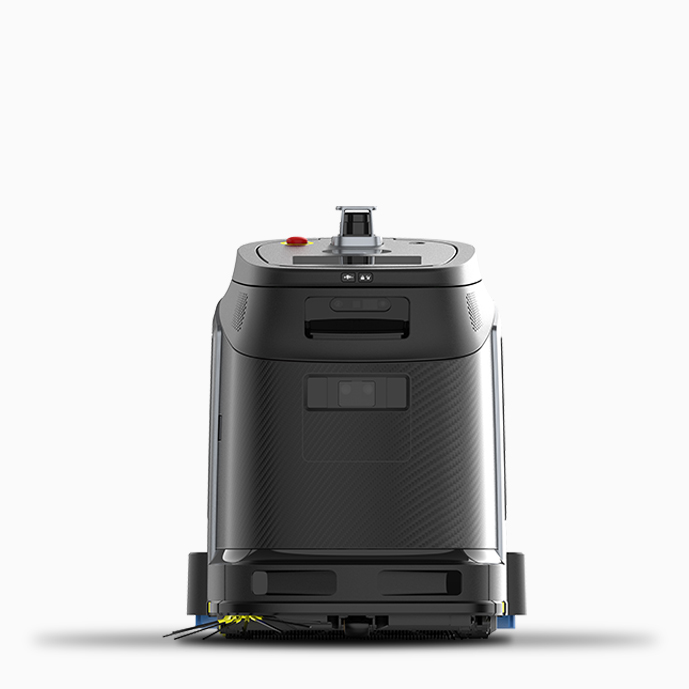
Facility operators shopping for commercial cleaning robots have spent the past two years comparing suction power, battery runtime, and navigation specs, while the cost that actually determines whether a deployment succeeds rarely shows up on a spec sheet: the labor and downtime required just to get the machine mapped, configured, and running on day one. Gausium, the commercial cleaning robot maker, used a company blog post this week to make a case that deployment speed, not cleaning performance alone, should be the deciding factor for buyers, and the argument is worth taking seriously regardless of which vendor a facility chooses, because it names a failure mode that shows up only after the purchase order is signed.
Gausium, founded in China and now selling cleaning robots into retail, transit, warehousing, healthcare, and education sites globally, built its case around a feature it calls Smart Deployment, which shifts the mapping and site-configuration work that traditionally required a specialist engineer onto whichever staff member happens to be on shift. The company's own demonstration claims a 3,000 square-meter supermarket site can go from an unconfigured robot to a running cleaning schedule in roughly 20 minutes, compared with the one to two days a comparable site previously needed when an engineer had to travel on-site, walk the space, and manually commission the mapping and route logic. That gap, days versus minutes, is the kind of operational detail a buyer evaluating total cost of ownership should weigh at least as heavily as the headline cleaning specifications most vendor comparisons lead with.
The Hidden Cost Line That Spec Sheets Skip
The mechanics of how Smart Deployment claims to close that gap are straightforward enough to evaluate on their own merits, independent of Gausium's marketing framing. A staff member pushes the robot through the site's main aisles once while onboard 3D LiDAR builds a map and automatically identifies shelf zones, after which the system generates workstations and task zones from one-tap prompts rather than a manually drawn floor plan. During that mapping pass, the system is designed to auto-detect virtual walls, flooring transitions such as carpet and glass, escalators, and permanent no-go zones, while filtering out temporary obstacles like shopping carts or people so they do not get baked into the permanent map by mistake. For a facilities manager who has never configured a cleaning robot before, the promise is that the skill previously concentrated in a vendor's field-engineering team becomes something an existing employee can execute during a normal shift.
Whether that promise holds at the complexity level of a real, cluttered facility rather than a controlled demonstration is the detail every buyer should press on before signing. Gausium's own post is unusually candid about the limits here, noting that real-world mapping times vary with site complexity and that the Smart Deployment flow does not solve the preparation work that still has to happen before the robot ever starts mapping, specifically the physical placement of a docking station with reliable power access and, for wet-cleaning units, drainage. A site that has not planned for where the robot will dock and recharge will not see a 20-minute deployment regardless of how automated the mapping software is, which means the labor savings this feature promises depend on a facilities team doing the unglamorous site-readiness work in advance, not on the software alone.
What Changes When the Floor Plan Changes
The more durable value in this kind of automated mapping shows up after the initial deployment, when a retail or warehouse floor plan inevitably changes, a seasonal aisle reset, a new fixture, a reconfigured loading zone. Gausium's pitch is that layout changes update in the robot's map automatically without requiring an engineer to revisit the site, which, if accurate across a large multi-site rollout, changes the ongoing cost structure of running a fleet of cleaning robots rather than just the one-time setup cost. A facilities operator running cleaning robots across dozens of locations has historically had to budget for a steady trickle of engineer site visits every time a store resets its floor plan, and software that can absorb those changes without a service call is a recurring operating expense a buyer can actually model, not just a one-time convenience.
Gausium backs this operational pitch with a maintenance claim that is equally relevant to a buyer's total cost of ownership calculation: the company says its Remote Maintenance Center resolves roughly 70 percent of faults remotely, paired with free over-the-air software updates that do not require a technician visit. Combined with the deployment claims, the pattern across Gausium's pitch is consistent, concentrate the specialist labor in a remote team and software layer rather than requiring it on-site at every customer location, which is the same structural bet that has driven cost reduction in other hardware-plus-software categories once the software layer matures enough to substitute for dispatched technicians.
How to Evaluate the Claim Without Taking the Vendor's Word for It
None of this is a reason to take Gausium's 20-minute figure as a guaranteed outcome for every site, and a buyer running a serious evaluation should treat it the way any single-vendor demonstration claim deserves to be treated: as a best-case benchmark to test against, not a contractual promise. The right diligence step is a pilot deployment at one representative site, timed independently rather than by the vendor's own staff, covering a facility with the layout complexity, lighting conditions, and foot traffic the buyer's other locations actually have, not a showroom floor optimized to make the mapping pass easy. A vendor confident in a deployment-speed claim should have no objection to a buyer timing that pilot themselves and comparing the result against the current incumbent process, whether that incumbent is a different robot vendor's engineer-led commissioning or a facility's own in-house IT staff doing the work manually.
The broader lesson for procurement teams evaluating any commercial cleaning robot, not just Gausium's lineup, which the company markets across models it calls Mira, Phantas, Omnie, and Beetle, is that deployment friction compounds across a multi-site rollout in a way a single pilot site does not reveal. A feature that saves a day and a half of engineer time per site is a rounding error for a single pilot location and a material line item for an operator planning a fifty-site rollout, where the engineer travel costs, scheduling delays, and the opportunity cost of a site running without its cleaning robot while commissioning drags on all scale with the number of locations. Buyers building a request for proposal for a multi-site cleaning robot deployment should ask every vendor under consideration, not just the ones marketing a Smart Deployment-style feature, to quote a verifiable, site-specific commissioning timeline and to stand behind it with a service-level commitment, since the gap between a vendor's deployment-speed marketing claim and its actual field performance is exactly the kind of detail that only shows up once the contract is signed and the rollout is already underway.
The Competitive Backdrop Buyers Should Know About
Gausium is making this deployment-speed argument into a market that has grown crowded enough that cleaning performance alone no longer differentiates one vendor's robot from another's. Brain Corp, which supplies the navigation software behind cleaning robots sold under several retail and janitorial brands, has built its own business on a similar insight, that a cleaning robot's useful life depends on how easily it slots into an operator's existing staffing and facility workflow rather than on raw suction specifications. Chinese manufacturers beyond Gausium, building on the country's dense supply base for LiDAR, motor, and battery components, have pushed hardware costs down fast enough that most commercial cleaning robots in the mid-market price band now offer broadly comparable cleaning performance. When the underlying hardware converges, the parts of the product that are harder to copy quickly, deployment workflow, remote fault resolution, and software update cadence, become the actual battleground, which is exactly where Gausium has chosen to make its public case.
That competitive context should change how a buyer reads any vendor's deployment-speed claim, including this one. A feature that looks like a nice-to-have convenience in a vendor's marketing post is, in a market where cleaning performance has become table stakes, closer to the core of the purchasing decision than it first appears. A procurement team that treats deployment speed as a secondary consideration behind cleaning specifications is evaluating the market the way it looked two or three years ago, before the current wave of Chinese and Western cleaning-robot makers closed the performance gap on each other. The practical implication is that a request for proposal built primarily around suction power, coverage area per charge, and obstacle-avoidance specifications is asking the wrong primary question of a market where those specifications have mostly converged.
Where the Deployment-Speed Pitch Still Has to Be Tested
The harder question for any buyer is how a self-service mapping flow behaves at the edge cases that a vendor's own demonstration site is unlikely to surface, a warehouse with frequently shifting pallet racking, a hospital corridor with variable foot traffic by time of day, or a transit hub with glass surfaces and reflective flooring that have historically confused LiDAR-based mapping systems. Gausium's post addresses some of these directly, citing glass and escalator detection as part of the mapping pass, but a vendor's own written claims about edge-case handling are not a substitute for watching the system handle a buyer's actual edge cases during a pilot. The responsible way to use a claim like this one is as a hypothesis to test during procurement, not as a conclusion to accept because it appeared on the vendor's own site rather than a third party's marketing copy.
There is also a sequencing question worth raising with any vendor pitching rapid deployment: what happens when the robot's automated mapping disagrees with a facility's own understanding of its space, for instance flagging a seasonal display rack as a permanent no-go zone when staff intend to move it again in six weeks. A system that defaults toward over-caution, treating too many temporary features as permanent, will generate support tickets and manual corrections that erode the labor savings the fast initial deployment was supposed to deliver. A system that defaults toward under-caution risks the robot colliding with fixtures it should have treated as permanent obstacles. Buyers should ask vendors directly how their mapping systems resolve that tradeoff, and should expect a specific answer rather than a reassurance that the software handles it well.
This analysis synthesizes company statements and publicly available product information as of the publication date and should not be read as investment, financial, or professional advice; it is provided for general information purposes only.