UBTECH and FAW-Volkswagen Will Test Humanoid Robots in Factory Logistics
UBTECH and the FAW-Volkswagen joint venture will jointly develop and test humanoid robots for logistics applications across the automaker's China operations, a cautious testing-phase cooperation rather than a disclosed deployment.

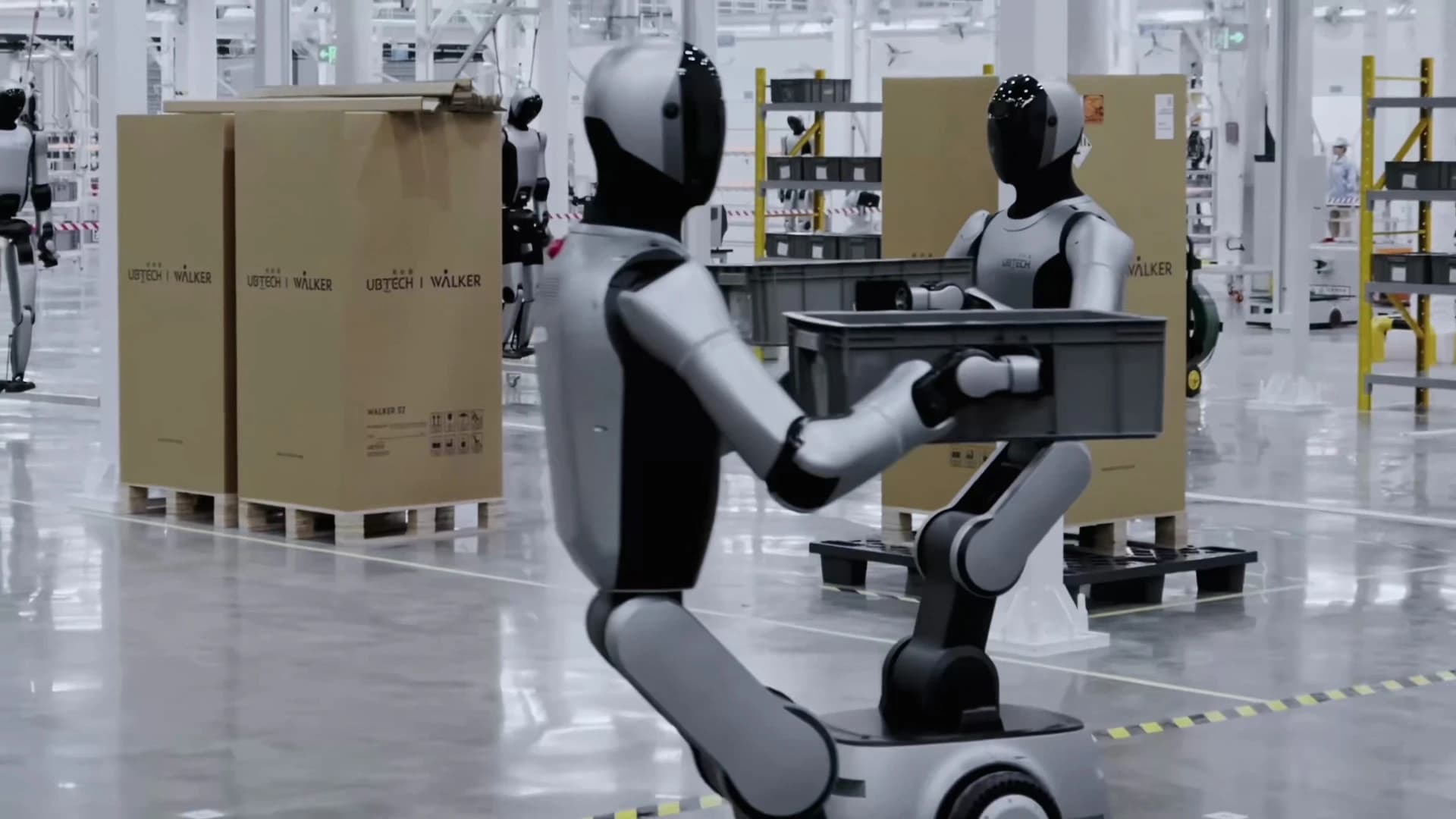
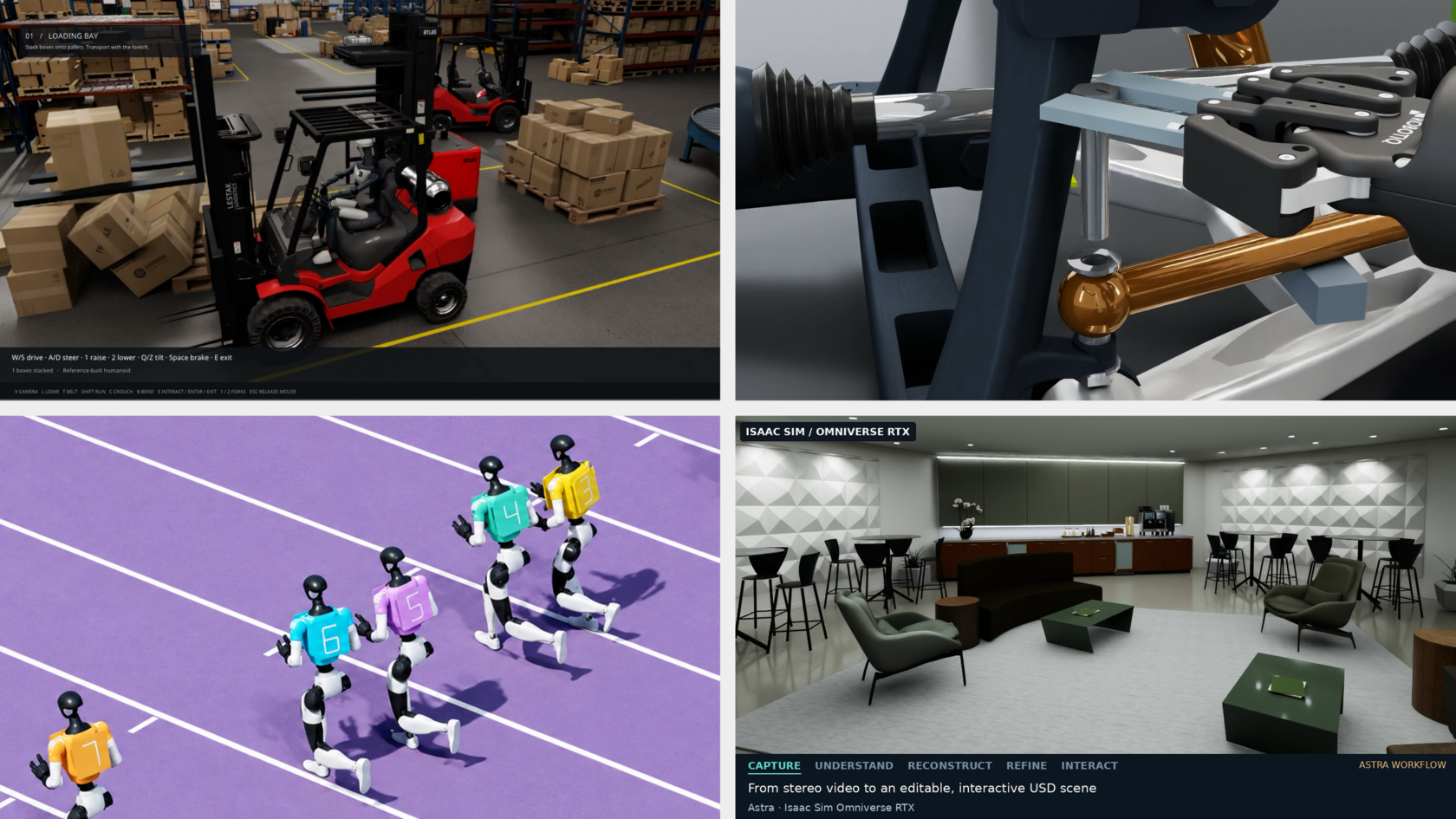
UBTECH Robotics and FAW-Volkswagen have agreed to jointly develop and test humanoid robots for logistics work inside the automaker's China operations, the companies confirmed this week, extending a legacy automotive manufacturer's robotics experiments beyond the factory floor and into the warehouse aisles that feed it. The cooperation covers joint development, field testing, and demonstration scenarios aimed at proving whether general-purpose humanoids can handle materials movement reliably enough to earn a permanent place on a production logistics line, a test that has tripped up far better-funded humanoid programs elsewhere.
FAW-Volkswagen is the Chinese joint venture between FAW Group and Volkswagen, built across three decades of operation and more than 30 million vehicles produced under its Volkswagen, Audi, and Jetta nameplates in China. UBTECH, the Shenzhen-based humanoid maker, enters the agreement claiming the top global position in humanoid robot revenue and unit sales, backed by what it describes as a 10,000-unit-capacity "superfactory." Neither company disclosed a contract value, a target deployment date, or the specific plant where testing will run, and FAW-Volkswagen's public materials list five production bases in China without naming one as the site for this particular logistics initiative.
Why Logistics, Not the Assembly Line, Is the Entry Point
The choice of logistics rather than final assembly as the proving ground is itself a signal worth reading carefully. Automotive final assembly lines run on sub-second cycle times, millimeter-level tolerances, and decades of fixed-automation investment that a bipedal robot cannot easily justify displacing. Materials movement between stations, by contrast, is unevenly automated, tolerant of variable cycle times, and still staffed by workers doing repetitive carrying, sorting, and kitting tasks that do not require the dexterity a final-assembly station demands. For a buyer evaluating where humanoid robotics can plausibly earn its keep first, logistics and kitting are the more defensible near-term bet, and FAW-Volkswagen's choice to start there rather than on the paint or body shop line suggests its own engineering team reached the same conclusion.
That caution matters because the humanoid robotics sector has built a credibility problem around the gap between demo performance and deployment reality. Trade-show choreography, backed by teleoperation or heavily scripted motion sequences, has repeatedly been mistaken for production-ready autonomy, only for the same robots to struggle with the variability of an actual facility: inconsistent lighting, workers moving unpredictably nearby, parts arriving out of sequence. A joint development and testing phase, rather than an announced deployment with a unit count and go-live date, is the more honest framing, and it is one procurement teams evaluating their own humanoid pilots should take as the template rather than the exception. Any vendor promising a turnkey logistics humanoid without a comparable testing phase deserves more scrutiny, not less.
UBTECH's Bet on Automotive as a Reference Customer
For UBTECH, landing a cooperation with a joint venture tied to one of the world's largest automakers is less about the immediate revenue than about the reference-customer effect inside China's crowded humanoid field. Chinese humanoid makers, including UBTECH, Unitree, and a long tail of well-funded startups, are competing as much for credibility signals as for near-term contract value, because procurement teams at other manufacturers use a rival's automotive deployment as evidence that a robot has cleared a bar that a trade-show demo cannot prove on its own. An automotive logistics cooperation, even one still described as development and testing rather than commercial deployment, gives UBTECH a concrete case study to cite in sales conversations with other manufacturers evaluating whether the category is ready for their own floors.
UBTECH's claimed scale, the 10,000-unit superfactory and the top ranking in global humanoid revenue, is self-reported and has not been independently verified against a disclosed production count or audited revenue figure. Buyers should treat vendor-stated capacity numbers in this sector the way they would treat any unaudited claim from a private company: a useful signal of ambition, not a substitute for a site visit or a reference check with an existing customer running the robot at volume. The gap between announced manufacturing capacity and units actually shipped and running in production has been a recurring theme across the humanoid robotics industry in 2026, and FAW-Volkswagen's own willingness to commit only to testing, not deployment, is consistent with a market where even the automaker on the other side of the table is hedging.
What a Logistics Humanoid Still Has to Prove
A humanoid robot earning a permanent logistics role inside an automotive plant has to clear several bars that a demonstration video cannot show. Uptime across a full shift, not a curated ten-minute segment, is the first. Battery life and charging logistics that do not interrupt a continuous materials-flow schedule is the second. Safe coexistence with human workers moving through the same aisles without dedicated robot-only lanes is the third, and it is the one automotive safety teams tend to scrutinize hardest, because a materials-handling area without the fencing common on a traditional industrial robot cell puts a bipedal machine in close, unstructured proximity to people. None of these are addressed in the companies' current disclosures, which is exactly why the cooperation is described as joint testing rather than a deployment announcement.
The commercial calculus for FAW-Volkswagen also deserves scrutiny from a buyer's perspective, separate from UBTECH's marketing framing. A legacy automotive joint venture testing humanoid logistics robots is not obviously cheaper than continuing with conventional automated guided vehicles, conveyor systems, or simply better-scheduled human labor, at least not yet. The case for humanoids in this setting rests on flexibility: a bipedal robot can, in principle, work in spaces designed for people without facility retrofits, handle irregular object shapes that a fixed-path AGV cannot, and be redeployed to a different task as production needs shift. Whether that flexibility premium justifies the current cost and reliability tradeoff compared with mature automation is the open question this testing phase is meant to answer, and it will not be answered by a press statement alone.
The Signal for Other Manufacturers Watching From the Sidelines
What this cooperation offers the broader manufacturing sector is a data point on timeline realism. Humanoid robotics marketing has, across 2026, repeatedly compressed the distance between "we tested this" and "this is deployed at scale," and the resulting disappointment when pilots stall has made some procurement teams more skeptical of vendor timelines generally. FAW-Volkswagen and UBTECH describing this explicitly as development and testing, without a unit count, go-live date, or disclosed contract value, is a more conservative posture than much of the sector's recent announcements, and it is the posture that other manufacturers evaluating their own humanoid logistics pilots should expect to see from a vendor relationship handled carefully. The detail worth tracking next is whether this testing phase produces a disclosed pilot result, a specific plant assignment, or a unit count with a firm timeline, since that transition from testing language to deployment language is the signal that will separate this cooperation from the announcements that quietly stalled at the demonstration stage.
How This Compares With Automotive Humanoid Bets Elsewhere
FAW-Volkswagen is not the first automaker to put a humanoid robot inside its own operations, and the comparison is instructive for a buyer trying to calibrate how aggressive this cooperation really is. Mercedes-Benz and BMW have each run pilots with US-based humanoid makers inside final-assembly-adjacent roles, and those programs were disclosed with more specificity about task scope, typically a single repetitive station rather than an open-ended logistics mandate, even when the headline unit counts stayed small. The UBTECH and FAW-Volkswagen cooperation, by contrast, is described in broader terms: logistics applications generally, rather than one named task at one named station. That breadth could reflect genuine ambition to prove flexibility across multiple warehouse functions, or it could simply reflect that the testing scope has not yet been narrowed to a specific, auditable task. Buyers comparing vendor pitches across this sector should ask for the same specificity FAW-Volkswagen has not yet disclosed: which task, how many units, what cycle time, and what the fallback plan is if the robot cannot sustain the role.
The component supply chain behind China's humanoid push is also worth a buyer's attention here, separate from the robot vendor itself. UBTECH's claimed superfactory capacity depends on a domestic supply base for actuators, reduction gears, and sensing hardware that has scaled rapidly across 2026 as Chinese component makers chased the humanoid demand signal, often before firm order books existed to justify the capital spent on new production lines. A cooperation like this one, even in a testing phase, feeds that signal further, reinforcing the case for component suppliers to keep expanding capacity on the expectation that automotive logistics will become a durable demand source. If the FAW-Volkswagen testing phase stalls without converting to a disclosed deployment, the component suppliers who scaled against that expectation will be the ones left holding excess capacity, a dynamic that has already played out once this year when earlier humanoid pilots failed to convert at the pace their component suppliers had bet on.
There is also a policy dimension that a purely commercial reading of this cooperation would miss. Chinese industrial policy has explicitly targeted humanoid robotics as a strategic manufacturing category, and a joint venture between a state-linked automaker and a leading domestic humanoid maker testing logistics applications fits a pattern Beijing has encouraged: pairing legacy manufacturing champions with robotics upstarts to generate real operating data rather than laboratory demonstrations. That alignment of incentives does not guarantee the technology works at the reliability bar FAW-Volkswagen's logistics operation actually needs, but it does mean the testing phase is likely to receive more patience and more follow-on support than a purely market-driven pilot might get if early results are mixed. Foreign manufacturers watching this cooperation should weigh that policy tailwind when deciding how much weight to put on China-based humanoid logistics results as a benchmark for their own, less politically supported, pilots.
This analysis synthesizes company statements and public corporate disclosures as of the publication date and should not be read as investment, financial, or professional advice; it is provided for general information purposes only.