Chinese Startup Deploys Embodied AI Welding Robot Across 10 Factories
Xinhua reports a Chinese startup has deployed an embodied AI welding robot across 10+ factories in shipbuilding, steel structures, and bridge construction. The system uses 3D vision, force sensing, and real-time path planning to weld complex curved surfaces without pre-programmed trajectories. The article covers the economics (effective hourly cost below 80 RMB vs. 120-180 RMB for human welders), the labor shortage driving adoption, quality improvements (95%+ first-pass inspection rates), and competitive positioning against Path Robotics and Novarc Technologies.
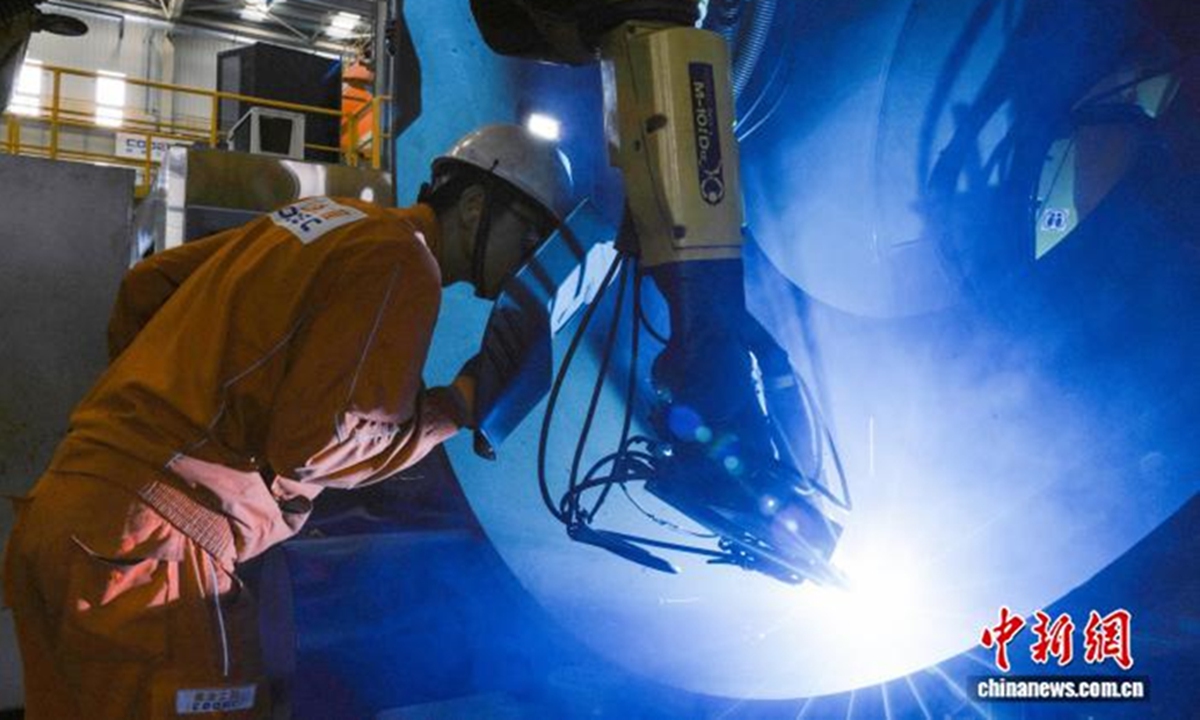
A Chinese robotics startup has deployed what it describes as the industry's first embodied AI welding robot across more than 10 factories specializing in shipbuilding, steel structure fabrication, and bridge construction. The deployment, reported by Xinhua News Agency on July 12, represents a material step in the commercialization of embodied intelligence for heavy industrial applications. Unlike laboratory demonstrations or controlled pilot programs, these deployments involve sustained operation in active production environments where the robot must adapt to variable workpiece geometries, environmental conditions, and production schedules without constant human supervision.
The startup, based in eastern China and operating in the industrial welding automation segment, has built its system around a combination of 3D vision, force sensing, and real time path planning that allows the robot to weld complex curved surfaces without pre programmed trajectories. This approach differs fundamentally from traditional robotic welding, which requires engineers to program exact weld paths for each workpiece geometry in advance.
Industrial Welding as the Proving Ground for Embodied Intelligence
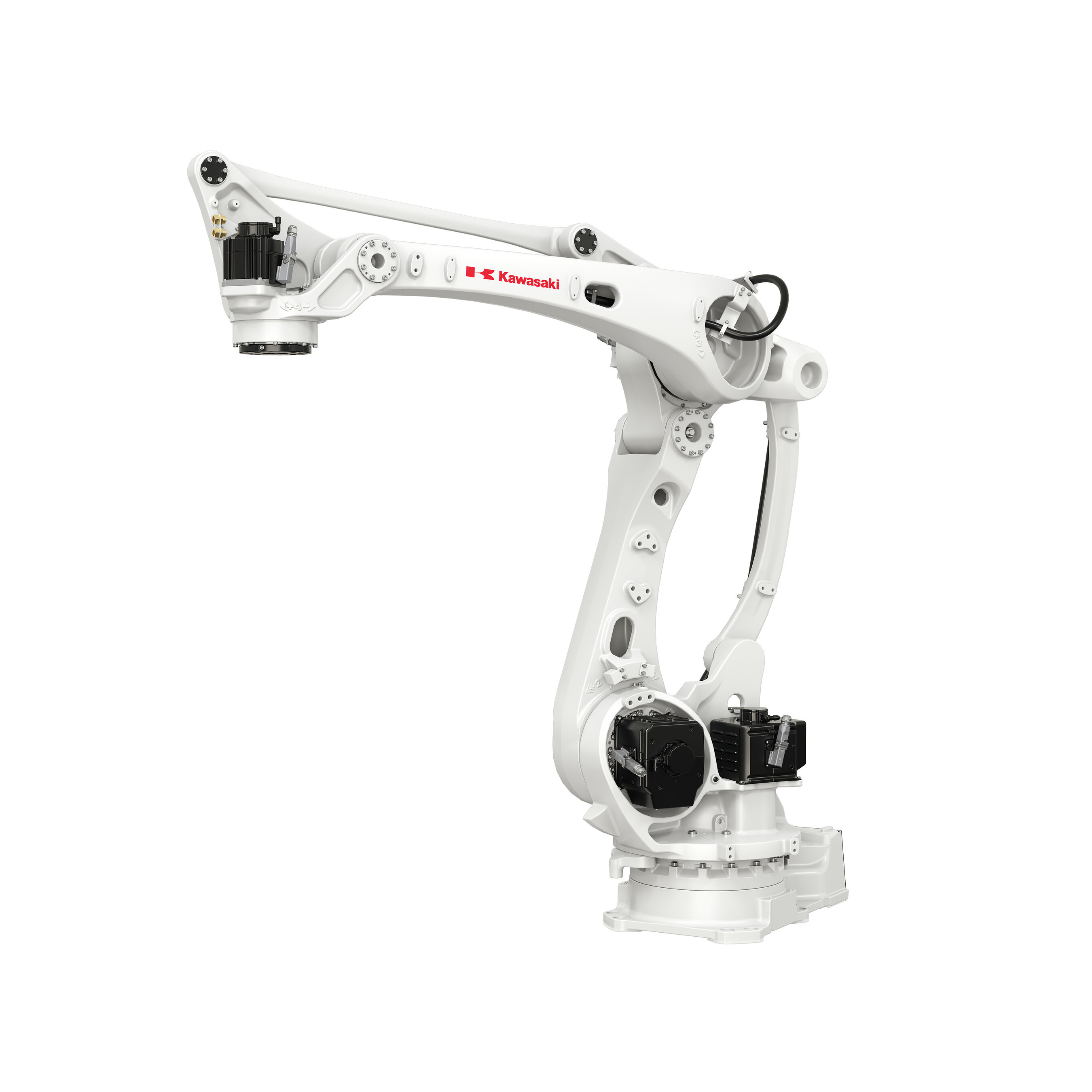
Welding is among the most demanding applications for robotic automation. The task requires simultaneous control of multiple variables including torch angle, travel speed, wire feed rate, shielding gas flow, and arc voltage, all while maintaining precise positioning relative to a workpiece that may be irregularly shaped, poorly fixtured, or thermally distorted during the welding process itself. Traditional robotic welding systems handle this complexity through extensive offline programming, but this approach fails when workpieces vary significantly from unit to unit.
Shipbuilding and bridge construction present exactly this challenge. Each hull section, each structural beam, and each bridge segment has unique geometries that make pre programming impractical at scale. Human welders adapt to these variations intuitively, adjusting their technique in real time based on visual feedback and tactile sensation. The embodied AI approach attempts to replicate this adaptability through machine learning rather than explicit programming.
The commercial significance of this deployment is that it addresses a genuine labor shortage rather than simply reducing cost. China's shipbuilding industry faces a structural deficit of qualified welders as experienced workers retire and younger workers prefer less physically demanding occupations. The average age of certified welders in Chinese shipyards has risen steadily over the past decade, and training new welders to the required certification level takes three to five years.
The Economics of Automated Heavy Industry Welding
A qualified welder in Chinese heavy industry earns between 15,000 and 25,000 RMB per month depending on certification level and geographic region. The fully loaded cost including benefits, safety equipment, supervision, and downtime for fatigue and shift changes brings the effective hourly cost to approximately 120 to 180 RMB. The startup claims its robotic welding system can operate continuously for 20 hours per day with maintenance windows, achieving an effective hourly cost below 80 RMB when amortized over a three year deployment period.
However, the economic case is not purely about labor cost replacement. The quality consistency of automated welding reduces rework rates, which in shipbuilding can consume 10 to 15 percent of total welding labor hours. The reduction in workplace injuries, particularly from arc flash exposure and repetitive strain, reduces insurance costs and regulatory compliance burden. And the ability to operate in confined spaces and elevated positions that present safety risks for human workers expands the range of tasks that can be automated.
For procurement managers in heavy industry, the relevant metric is not the cost per weld but the total cost of quality, including rework, inspection, repair, and the downstream consequences of weld defects in structural applications where failure carries catastrophic risk.
Scaling Across Unstructured Factory Environments
The deployment across 10 or more factories indicates that the system has progressed beyond single site validation. Each factory presents different environmental conditions, different workpiece types, different fixturing approaches, and different production workflows. A system that operates successfully across multiple sites demonstrates a level of generalization that single site deployments cannot prove.
The technical challenge of multi site deployment is significant. Each factory has different lighting conditions that affect vision systems, different electromagnetic interference patterns that affect sensor accuracy, different ambient temperatures that affect thermal management, and different floor conditions that affect mobile base navigation. The startup's ability to deploy across this range of conditions suggests that its embodied AI architecture has achieved meaningful robustness rather than narrow optimization for a single environment.
The production target of 1,000 units per year indicates confidence in market demand and manufacturing scalability. This volume is modest by consumer robotics standards but significant for industrial systems that typically cost between 500,000 and 2,000,000 RMB per unit. At 1,000 units per year, the startup would generate annual revenue between 500 million and 2 billion RMB, placing it among the larger industrial robotics companies in China by revenue.
The Practical Reality of Embodied AI in Production
Consider the difference between a GPS navigation system and a human taxi driver in an unfamiliar city. The GPS follows a pre computed route and fails when the road is blocked. The human driver adapts in real time, finding alternative paths based on visual cues and general knowledge of urban layouts. Traditional robotic welding is the GPS. Embodied AI welding is the human driver. The value is not in following the plan perfectly, but in adapting when the plan no longer matches reality.
This distinction matters for procurement decisions because it determines which applications are suitable for automation. Tasks with high variability, low batch sizes, and complex geometries that previously required skilled human judgment are now entering the automation envelope. This expands the addressable market for robotic welding from high volume repetitive applications to low volume high complexity applications that represent the majority of welding labor hours in heavy industry.
The Verification Standard for Deployment Claims
Xinhua News Agency, as a state media outlet, provides credibility for the existence of the deployment but limited technical detail. The claim of being the industry's first embodied AI welding robot should be interpreted as a marketing positioning statement rather than a verified technical distinction. Several international companies including Path Robotics in the United States and Novarc Technologies in Canada have deployed AI assisted welding systems in production environments, though their approaches differ in architecture and application focus.
The relevant question for procurement teams is not whether this is truly the first, but whether the system delivers consistent weld quality at a cost and reliability level that justifies the capital investment. The 10 factory deployment provides evidence of commercial traction, but independent quality data and customer retention rates would provide stronger evidence of sustained value delivery.
The deployment of embodied AI welding robots across multiple Chinese factories confirms that industrial welding is emerging as one of the first commercially viable applications for embodied intelligence. The combination of labor shortage, quality requirements, and safety considerations creates a strong economic case that does not depend on theoretical cost reduction alone.
Quality assurance for autonomous welding requires non destructive testing methods including ultrasonic inspection, radiographic examination, and visual inspection by certified welding inspectors. The startup claims that its system achieves first pass inspection rates above 95 percent, compared to typical human welder first pass rates of 85 to 92 percent depending on joint complexity and welder experience level. If verified independently, this quality improvement alone justifies the capital investment by reducing rework costs that can consume 10 to 15 percent of total project labor hours in shipbuilding.
The regulatory environment for autonomous welding in China is evolving rapidly. The Ministry of Emergency Management has issued guidelines for AI assisted operations in hazardous industrial environments, and several provincial governments have established pilot zones where autonomous welding systems can operate under relaxed certification requirements. This regulatory support accelerates deployment in China relative to markets where safety certification processes are more established but also more time consuming. The speed of Chinese deployment creates a data advantage that compounds over time, as each operational hour generates training data that improves system performance.
The competitive landscape for AI welding systems includes both Chinese and international players. Path Robotics, based in Columbus, Ohio, has raised over 100 million dollars for its autonomous welding platform targeting heavy fabrication. Novarc Technologies in Canada focuses on pipe welding automation. Cobot welding systems from Universal Robots and FANUC address lighter duty applications. The Chinese startup's differentiation lies in its focus on the specific challenges of shipbuilding and heavy structural welding, where workpiece scale, environmental variability, and access constraints differ materially from the lighter fabrication tasks addressed by Western competitors.
This analysis synthesizes state media reporting, industry wage data, and public market activity as of July 2026.