Challenging the Humanoid Paradigm: Genesis AI Unveils 'Eno' Triple-Fold Robot
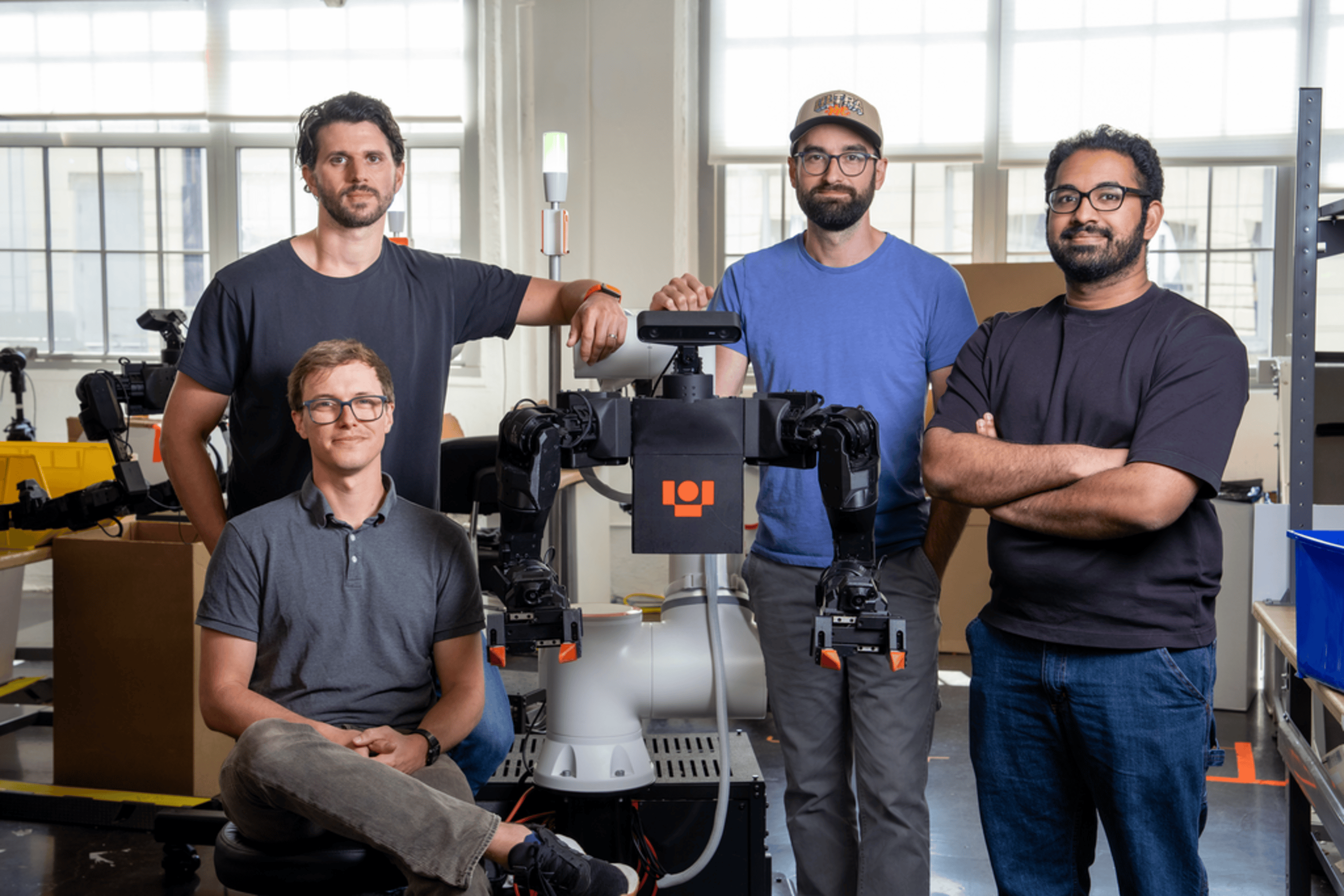
While the global robotics industry races to perfect bipedal humanoids, Genesis AI, led by Chinese-American CEO Zhou Xian, has unveiled 'Eno', a radically different non-humanoid robot. Featuring a 'no head, no feet, triple-folding' form factor, Eno prioritizes functional versatility and spatial adaptability over anthropomorphic aesthetics, suggesting that the ultimate form factor for embodied AI may not be a reflection of human biology.
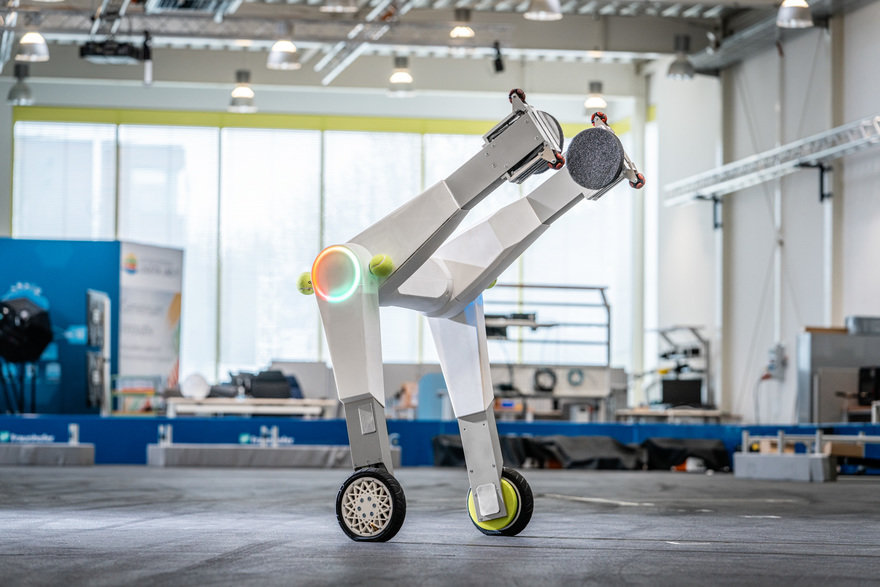
While the global robotics industry remains largely fixated on perfecting the bipedal humanoid form factor, Genesis AI, a US-based full-stack robotics company led by Chinese-American CEO Zhou Xian, has unveiled a radical departure from the norm. The company recently introduced 'Eno,' a general-purpose robot that deliberately abandons anthropomorphic design in favor of functional optimization.
The Architecture of Functional Versatility
Eno is characterized by an unconventional 'no head, no feet' architecture, utilizing a wheeled base for mobility and a unique triple-folding physical structure. This design philosophy prioritizes spatial adaptability and mechanical efficiency over the aesthetic appeal of a human-like appearance. By eliminating the complex, compute-intensive balance and control requirements inherent in bipedal locomotion, Genesis AI aims to accelerate the reliable deployment of embodied intelligence in real-world environments. The triple-folding body allows Eno to adjust its height dynamically, enabling it to interact with objects at floor level or reach standard countertops with equal proficiency.
A Counter-Narrative to the Humanoid Hype
The introduction of Eno represents a critical counter-narrative in the current robotics discourse. The prevailing assumption has been that because human environments are designed for humans, general-purpose robots must be human-shaped. Genesis AI challenges this premise, arguing that a wheeled, folding form factor is inherently more stable, safer, and faster to commercialize for a wide range of domestic and industrial tasks. The focus shifts from solving the physics of walking to perfecting the intelligence of manipulation and task execution.
Commercialization and Deployment Strategy
Genesis AI, backed by a massive $105 million seed round, is positioning Eno not as a sci-fi spectacle, but as a practical appliance. The company plans to begin shipping Eno to actual customers in the fourth quarter of 2026, with initial production targeted at dozens of units. This aggressive timeline suggests high confidence in the robustness of the platform. Furthermore, the company plans to release a version equipped with a torso screen to display the robot's 'thoughts' and intentions, addressing the crucial issue of user trust and human-robot interaction in domestic settings.
Eno is a necessary reality check for the embodied AI industry. It proves that the ultimate vessel for general-purpose AI does not need to look like us to serve us. By sidestepping the massive engineering overhead of bipedal walking, Genesis AI can dedicate its resources to what actually matters: reliable, intelligent manipulation. This pragmatic approach may offer a significantly faster path to commercial viability than the humanoid paradigm.
Primary Sources:
1. Jiqizhixin (机器之心) — Zhou Xian Team Releases Non-Humanoid Robot Eno (June 18, 2026
Disclaimer: All editorial content is independently written by RobotAIGeek based on publicly available Chinese and English-language sources. Quoted material is attributed to its original publisher. Vendor performance claims have not been independently verified by RobotAIGeek.ot been independently verified by RobotAIGeek.