Boston Dynamics Unveils Stretch Gen2 for Warehouses
Boston Dynamics unveiled the second generation of its Stretch trailer-unloading robot, prioritizing serviceability and reliability over raw throughput after a year of commercial deployment data.

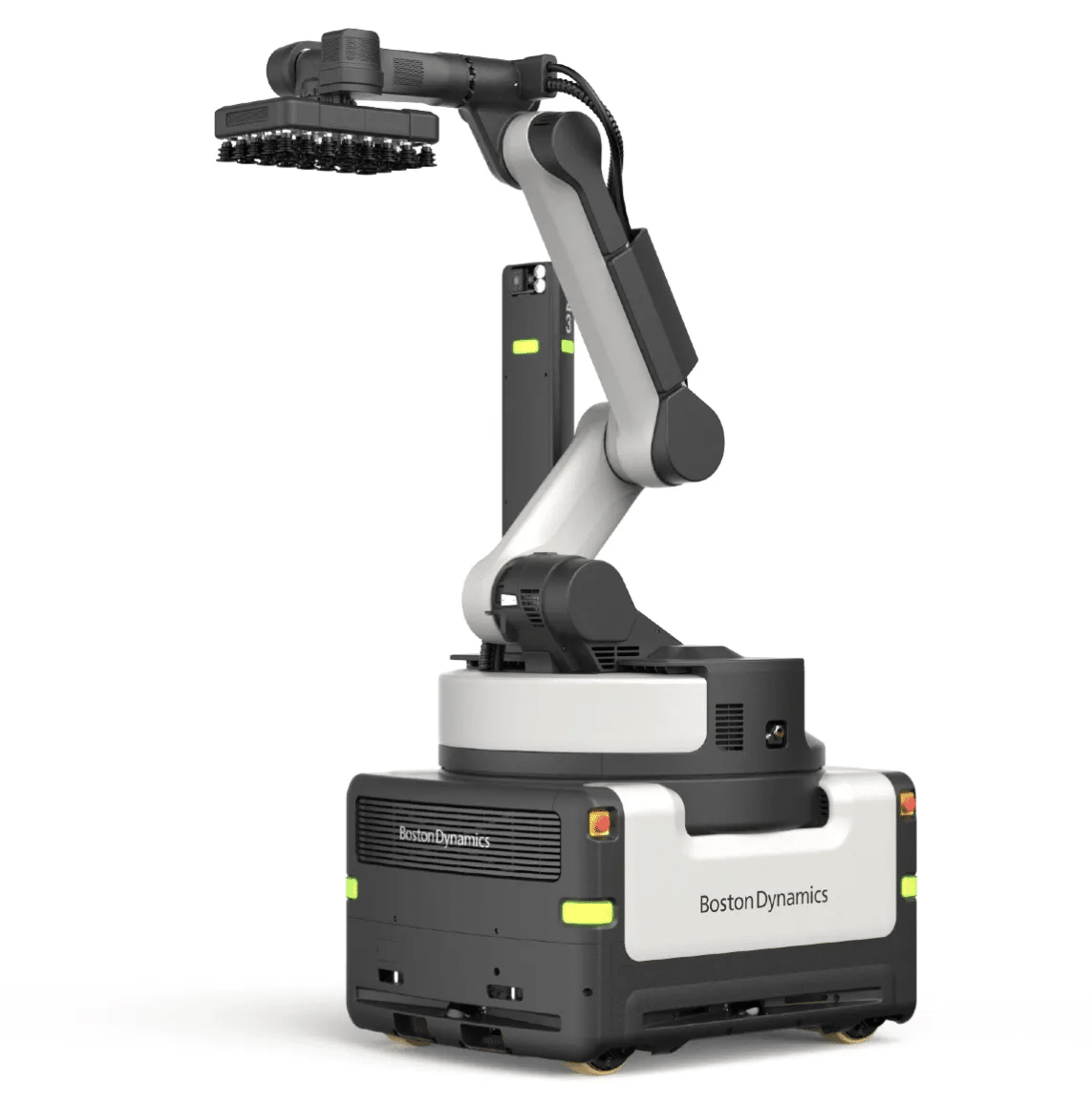
Boston Dynamics unveiled the second generation of its trailer-unloading robot, Stretch, on Tuesday, positioning the update around reliability and serviceability rather than raw throughput. The Hopkinton, Massachusetts-based robotics maker says Gen2 still tops out near 1,000 cases unloaded per hour, the same ceiling as the original Stretch, but rebuilds the robot's internals around data pulled from more than 100,000 hours of commercial operation and tens of millions of boxes already moved by the first-generation fleet.
That distinction matters more to a warehouse operations director than a faster unload rate would. Boston Dynamics is telling buyers, in effect, that the first version of Stretch proved the throughput case and the second version exists to fix everything that made the robot expensive to keep running.
Reliability Engineering Built From a Year of Dock Data
The headline changes in Gen2 target failure points that only show up after sustained use in a working dock, not in a product demo. Boston Dynamics replaced internal wiring runs with automotive-grade connectors and cut total internal cabling by roughly 81 percent, a change the company says reduces the intermittent electrical faults that dogged early deployments. The robot's gripper got new valve systems and more precise sensing, and its joints now rotate continuously past 360 degrees instead of stopping hard at a mechanical limit, removing a wear point that repeated motion had been grinding down.
Physical durability changes follow the same logic. The emergency stop sits lower and recessed rather than exposed, and new exterior panel materials are built to survive falling boxes without the dents and cracked housings that triggered unnecessary safety stops on the first-generation hardware. None of this shows up in a spec sheet comparison the way throughput numbers do, but it is the difference between a robot that runs a full shift unattended and one that pulls a technician off other work every time a box falls the wrong way.
The Maintenance Math That Actually Decides Adoption
Gen2's most consequential change for a buyer's total cost of ownership is serviceability. Boston Dynamics redesigned the robot around modular, swappable parts and standardized fasteners, and the clearest example is the drivetrain: a full swerve-drive swap that took a trained technician roughly a day on the original Stretch now takes about an hour. Onboard diagnostics are built to flag which module failed, so a site's own maintenance staff can handle routine service calls that previously required an escalation to Boston Dynamics' field team.
That shift is the real product story here, more than the pre-trained vision system that the company says can detect most packages on day one without site-specific programming, or the redesigned onboard computing platform that pushes case-detection and motion-planning improvements to the installed fleet as over-the-air software updates rather than hardware swaps. A warehouse operator does not buy a trailer-unloading robot because it is clever. They buy it because the alternative is a job with one of the highest injury rates in logistics, and they keep it because the maintenance bill stays predictable. Gen2's real innovation is not the 1,000-case-an-hour ceiling; it is cutting the average repair from a wasted day to a wasted hour, which is the line between a robot that pays for itself on a reasonable schedule and one that quietly becomes a second maintenance contract nobody budgeted for.
Why Boston Dynamics Is Optimizing for the Boring Part
Brian Donnelly, Boston Dynamics' vice president and general manager of logistics robotics, framed the update around uptime rather than capability. "Every hour a robot sits idle is an hour of work that piles up on the dock," he said, describing a team that had "made it tougher" to break and "made it simpler to service." That framing is a tell about where Boston Dynamics thinks the trailer-unloading category actually competes. Throughput ceilings converge quickly once a handful of vendors have all shipped a working product; what separates a robot a site keeps running three years later from one quietly pulled from the floor is whether its failure modes are cheap and fast to fix.
Stretch also operates with onboard lighting that lets it work inside dark, poorly lit trailers without added site infrastructure, and a battery rated for two full shifts with a fast charger that reaches 90 percent in about 75 minutes, enough to cover most meal-break or shift-change windows without idling the robot overnight. Boston Dynamics did not name specific customers taking Gen2 or disclose pricing or availability timing, which keeps the near-term commercial picture for this launch incomplete; buyers evaluating the robot will need to work that detail out directly with the company rather than from Tuesday's announcement.
Reading the Robot's Total Cost of Ownership Correctly
Procurement teams evaluating trailer-unloading automation tend to anchor on the wrong number first. A 1,000-case-an-hour ceiling is easy to compare across vendors and easy to put in a slide deck, but it says nothing about the second and third years of ownership, when a robot either keeps running close to that rate or starts losing hours to unplanned maintenance. Boston Dynamics' own framing of Gen2, built from a full year of fleet data rather than a lab benchmark, is an implicit admission that the first-generation Stretch's real limiting factor was not unload speed but uptime: a robot stuck waiting on a technician is a robot producing zero cases an hour, regardless of what its spec sheet says it can do when healthy.
That is also why the swerve-drive swap time, cut from a full day to about an hour, deserves more weight in a buying decision than it is likely to get in a first look at the announcement. A warehouse running two or three shifts cannot absorb a full day of downtime on a single automation asset without a contingency plan, usually meaning idle dock doors, overtime for the human crew held in reserve, or a trailer sitting unloaded past its appointment window. An hour-long repair that a site's own maintenance staff can execute, flagged by onboard diagnostics rather than diagnosed by a visiting field technician, changes that calculus from a scheduling emergency to a routine work order. For a logistics operator pricing out whether to lease or buy a fleet of these robots, that single change in repair time is close to the whole story.
The Labor Argument Underneath the Engineering Story
Trailer unloading is among the most physically demanding and injury-prone tasks inside a modern distribution center, which is precisely why it has become one of the earliest logistics jobs robotics vendors have targeted for full automation rather than partial assistance. The task displacement pattern already visible in logistics is not a story about a single robot replacing a single worker; it is a slower, cumulative shift in which the most repetitive, highest-injury-risk roles are the first to go fully automated, while roles requiring judgment, exception handling, and flexible movement stay staffed for longer. Stretch's narrow focus, one task, done well, done reliably, fits that pattern more cleanly than a general-purpose humanoid platform still working out which warehouse tasks it can perform without supervision.
That narrowness is also what separates a demo robot from a deployable one. The distinction between a demo and a deployable system is almost entirely about what happens after the ribbon-cutting: whether the machine still works the way it did on day one after a thousand hours of real use, dropped boxes, dusty trailers, and a maintenance team learning its failure modes on the job. Boston Dynamics is explicit that Gen2 exists because the company has the dock data to answer that question for Gen1, and is now applying the answer to a second generation of hardware before competitors with less deployment history have the same evidence to work from.
Where This Sits in Boston Dynamics' Broader Robot Lineup
Stretch is one of three robots Boston Dynamics currently sells or fields: Spot, the quadruped used mainly for industrial inspection; Stretch, now in its second generation for logistics and box-moving work; and Atlas, the electric humanoid still in early production and aimed at more general manufacturing tasks. Of the three, Stretch is the one with the clearest, most measurable return on investment, because trailer unloading is a single, well-defined, physically grueling task that warehouse operators already pay dearly to staff. That narrowness is also why Gen2's upgrade list reads the way it does: this is not a robot trying to prove it can do more things, it is a robot trying to prove it can keep doing the one thing it does without breaking as often.
The gap between a robot that looks capable in a demo and one that survives a full year on an actual loading dock is where most warehouse automation projects quietly fail, and Boston Dynamics is betting that closing that gap, rather than chasing a faster unload rate, is what actually moves a logistics buyer's purchase decision. A robot that unloads trailers 20 percent faster but needs a technician on-site twice a week loses to one that unloads at the same rate and needs a technician once a quarter, and Gen2 is built almost entirely around winning that second comparison.
Whether that bet pays off will show up less in Tuesday's spec sheet than in how Gen2 performs over its own first year of commercial deployments, the same stretch of operating hours that produced the reliability fixes baked into this release. Boston Dynamics is explicit that Gen2 exists because the company has more than 100,000 hours of real dock data to learn from; the next test is whether that data translates into a machine that genuinely needs less of a maintenance team's attention than the one it replaces.
This article synthesizes Boston Dynamics' product announcement and public statements from company executives. It is for general information purposes only and does not constitute procurement, engineering, or investment advice.