DESCRIPTION
VMS V300 est un Agricultural-Robots de DeLaval. Il est conçu pour Agriculture, Service, Automated dairy milking with milk-quality and herd-health monitoring. Chiffres clés : sorti en 2018.
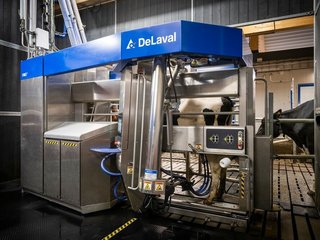
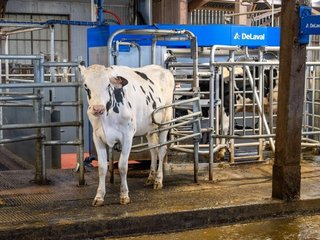
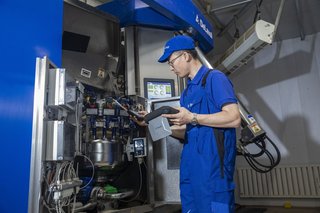
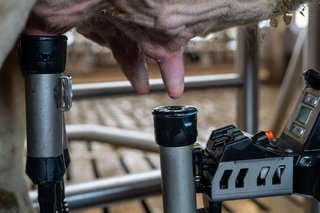
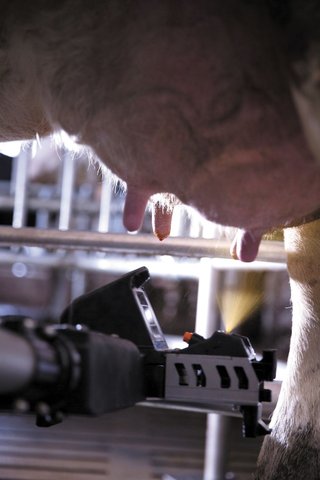
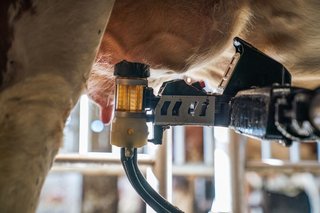
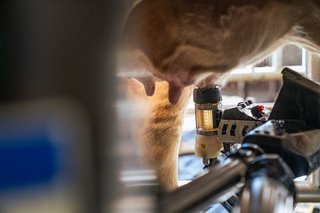
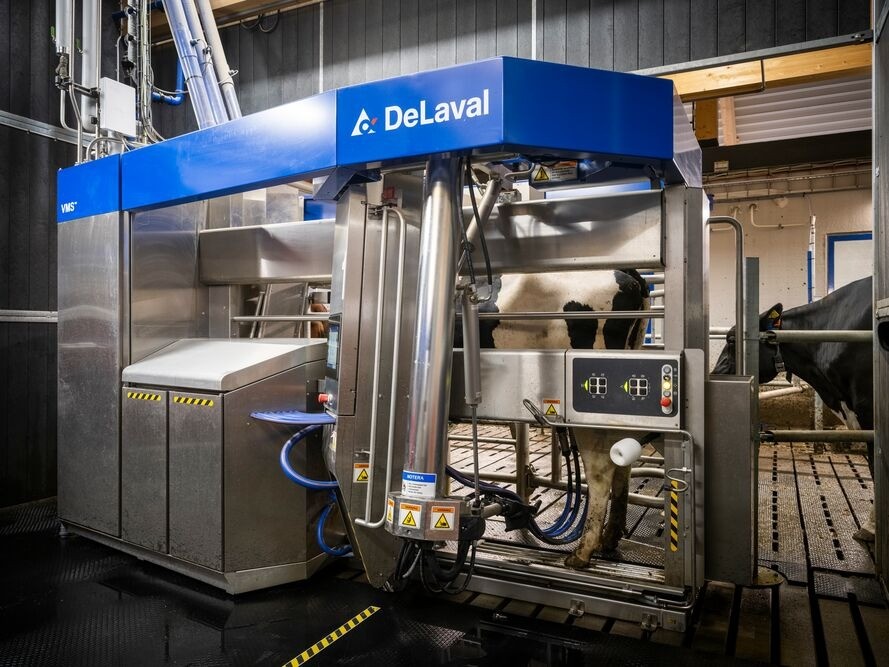
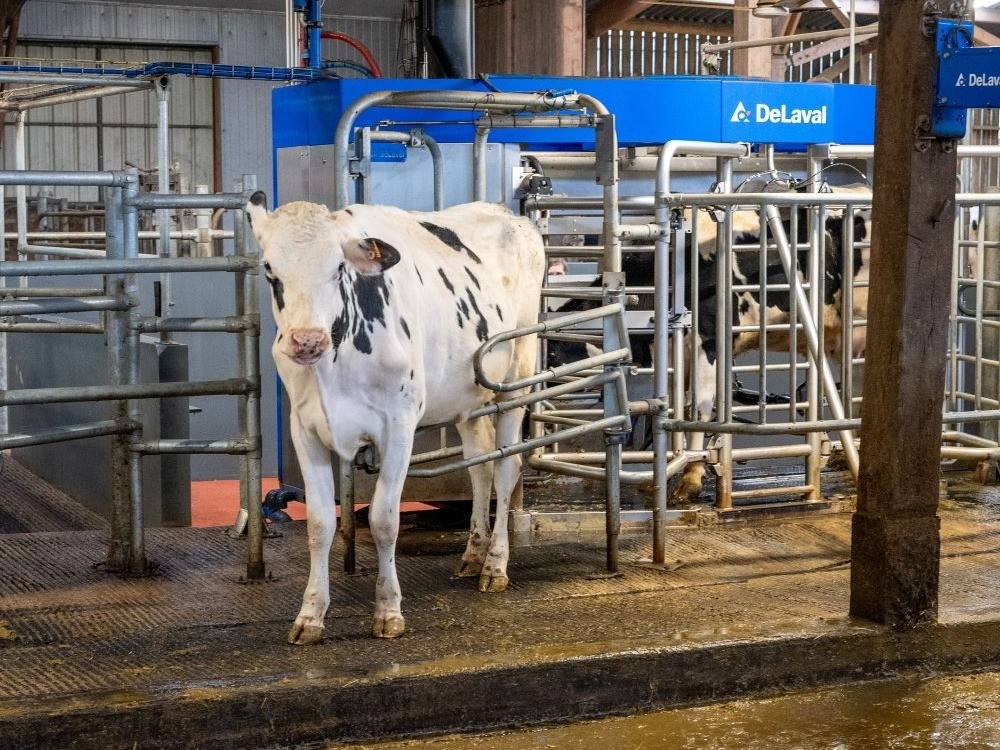
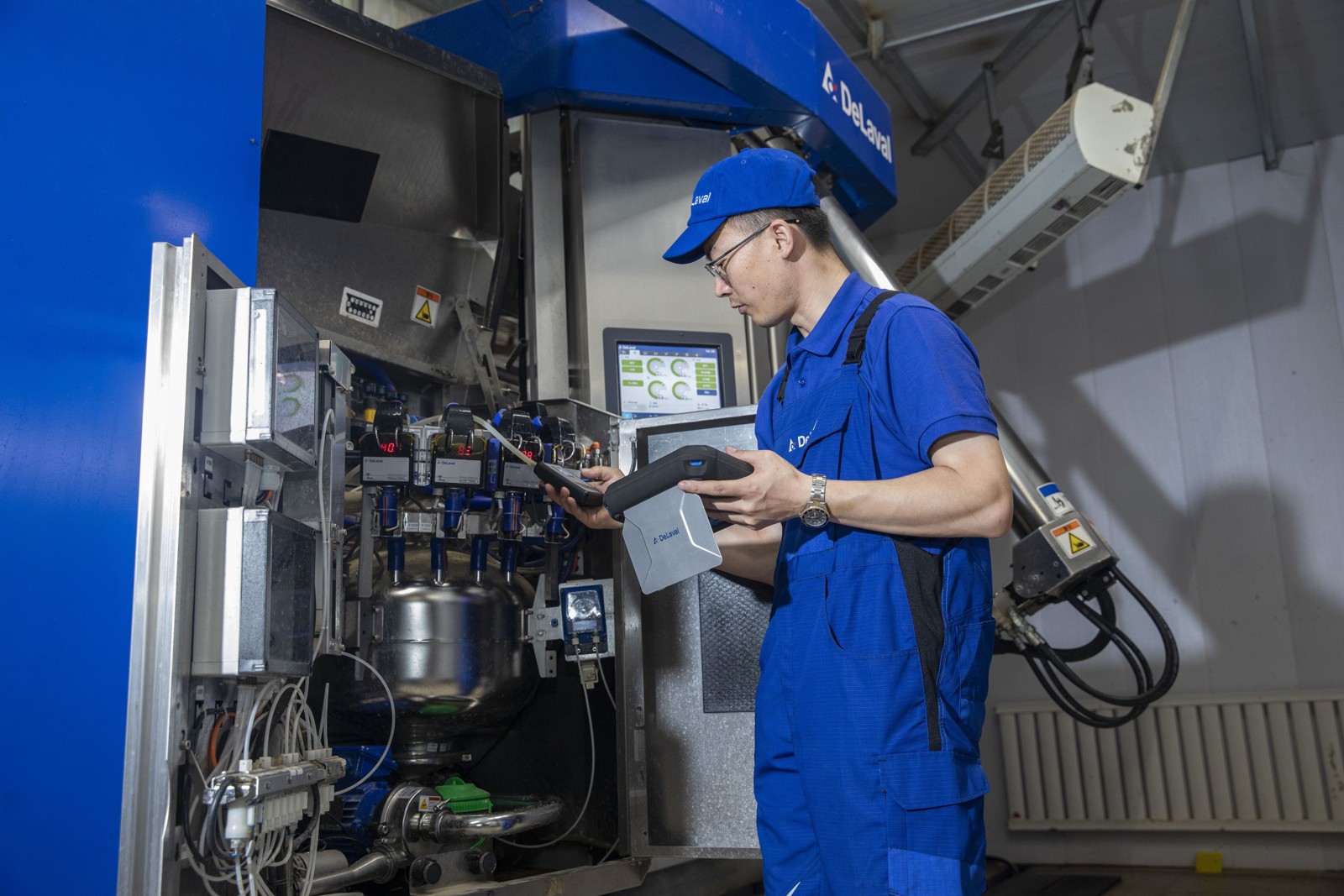
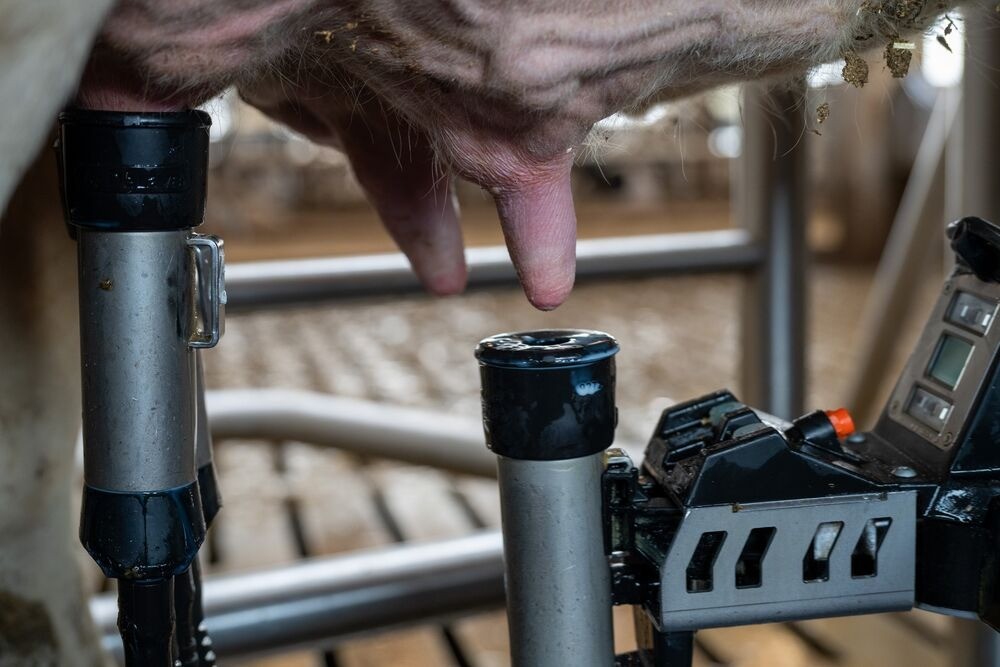
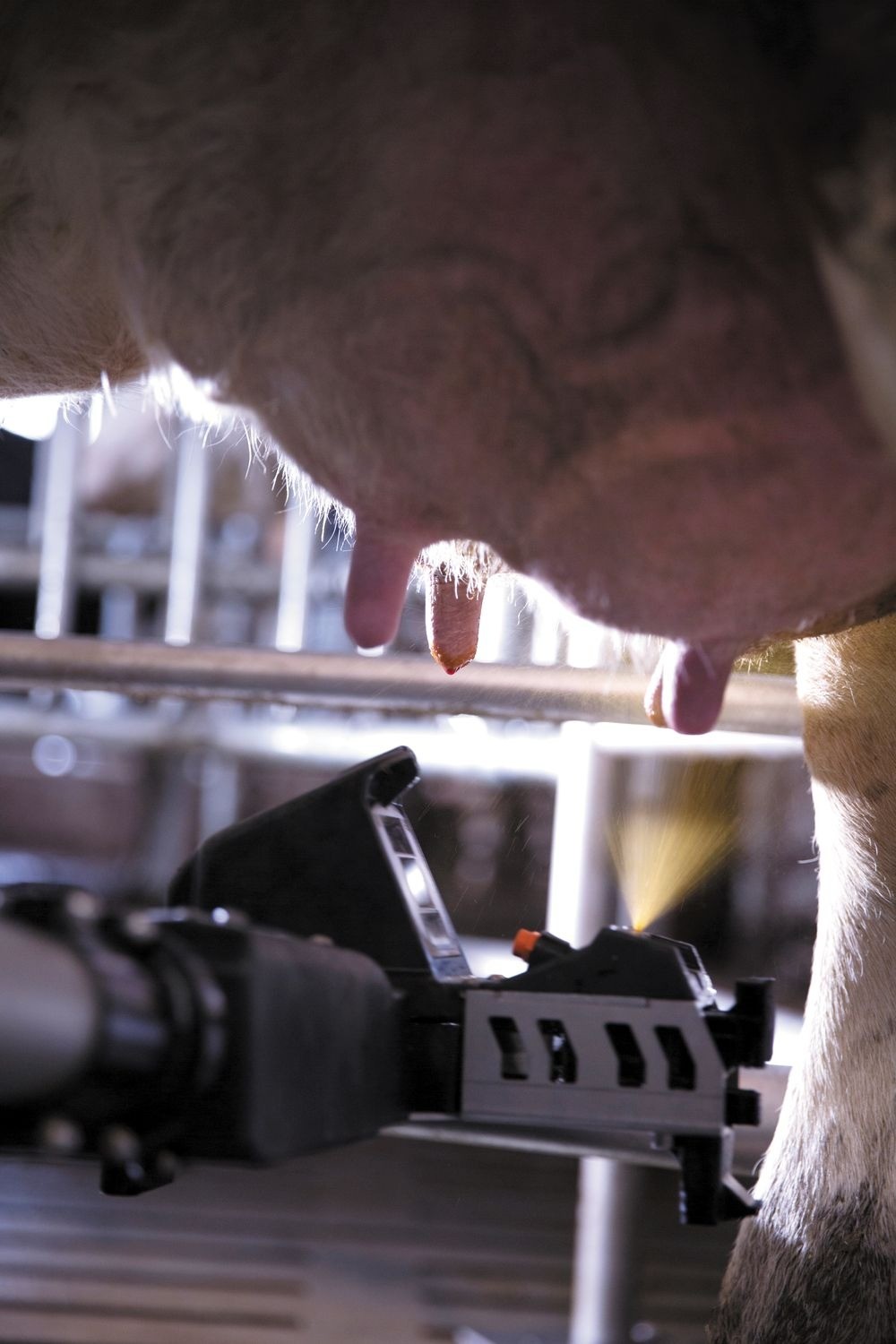
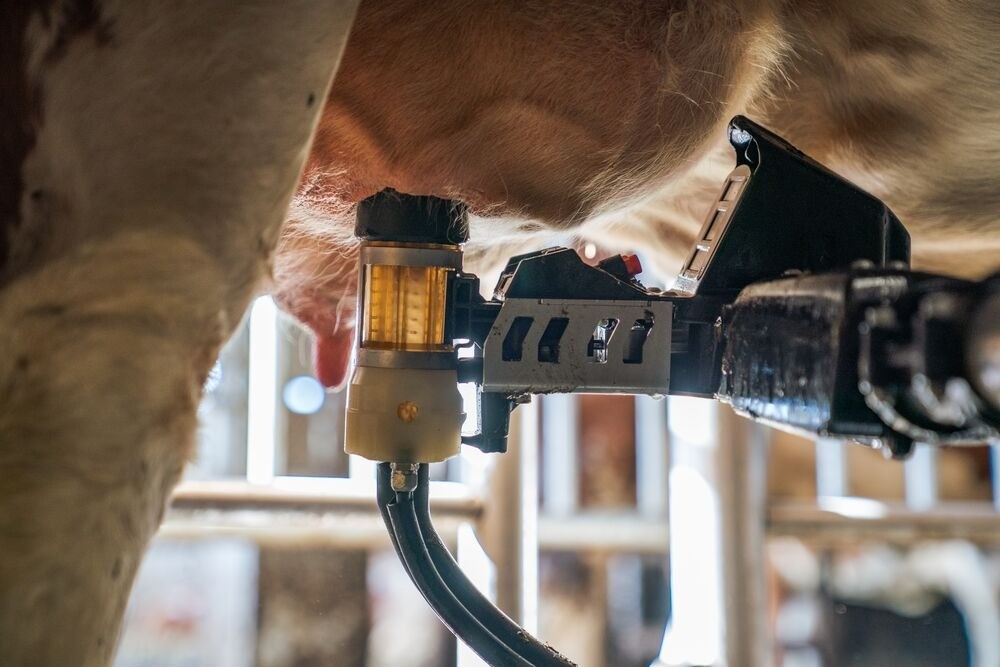
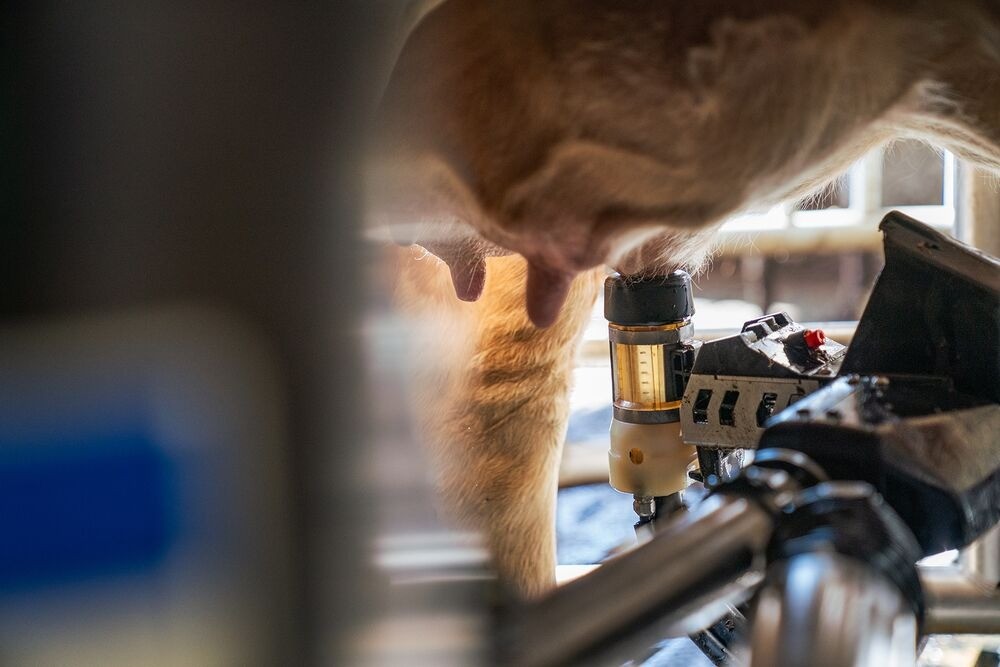
The DeLaval VMS V300 is a robotic milking system for dairy farms - a milking box that cows enter voluntarily, where a single robotic arm guided by DeLaval's InSight camera system cleans, stimulates and attaches cups to each teat, milks each quarter individually and sprays the teats afterwards. A transparent PureFlow preparation cup cleans every teat separately and diverts the pre-milk to waste. The 2025 model adds Flow-Responsive Milking, which adapts vacuum to each cow's milk flow, plus a roomier box for more breeds. Optional biosensors measure somatic cell count and milk fat, protein and lactose in line, and a time-of-flight camera can score body condition, all feeding DeLaval's DelPro and DeLaval Plus software, while farmers run the robot from the InControl screen or app. The V300 works in free, guided or batch cow traffic. DeLaval launched it on 26 June 2018 as a fully redesigned VMS, claiming 10 % more capacity, up to 50 % faster attachment and up to 99.8 % attachment success; its best-performing farms average 2.2 kg/min and 2,658 kg of milk per robot per day.
FONCTIONNALITÉS
- Voluntary robotic milking box: cow enters for milking at her own time
- automatic milking permission and identification
- DeLaval InSight vision with a single robotic arm: cleaning, preparing, treating, cup attachment and teat spraying (two spray nozzles)
- DeLaval PureFlow transparent teat-preparation cup: individual teat cleaning and stimulation, pre-milk separated to waste
- Flow-Responsive Milking (2025 model) and real quarter milking with smart take-off
- DeLaval InControl touch interface and remote app: routines, cow data, throughput statistics, live cameras
- Options: Milk Cell Analysis (somatic cell count), Milk Solids Analysis (fat/protein/lactose), Body Condition Scoring (ToF camera)
- Free, guided (milk-first/feed-first) or batch cow traffic
- larger box for a wider range of breeds
- Integrates with DeLaval DelPro / DeLaval Plus herd management
- DeLaval-reported results (best 500 farms): 2.2 kg/min harvest rate
- 14.5 kg per milking at 2.5 milkings/day
- 2,658 kg/day per robot
CARACTÉRISTIQUES TECHNIQUES
Vérifié| Mobilité | |
| Type de déplacement | Stationary |
|---|---|
| Environnement | Indoor dairy barns |
| Perception et calcul | |
| Capteurs | InSight 3D camera, milk flow sensors, optional SCC / milk solids biosensors, optional ToF body-condition camera |
| Logiciel / IA | DeLaval InControl; DelPro; DeLaval Plus |
FORUMS DU ROBOT
Chargement des forums...
CARACTÉRISTIQUES TECHNIQUES
Vérifié| Mobilité | |
| Type de déplacement | Stationary |
|---|---|
| Environnement | Indoor dairy barns |
| Perception et calcul | |
| Capteurs | InSight 3D camera, milk flow sensors, optional SCC / milk solids biosensors, optional ToF body-condition camera |
| Logiciel / IA | DeLaval InControl; DelPro; DeLaval Plus |
Images
 martti

 martti
 martti
 martti
 martti
 martti
 martti
Contributions d'images
Vidéos
FORUMS DU ROBOT
Chargement des forums...
NOTES
QUESTIONS FRÉQUENTES
What is the VMS V300?
The DeLaval VMS V300 is a robotic milking system for dairy farms - a milking box that cows enter voluntarily, where a single robotic arm guided by DeLaval's InSight camera system cleans, stimulates and attaches cups to each teat, milks each quarter individually and sprays the teats afterwards.
Who makes the VMS V300?
The VMS V300 is made by DeLaval, a robotics company based in Sweden.
How much does the VMS V300 cost?
DeLaval has not publicly announced pricing for the VMS V300. You can enquire through RobotAIGeek for current pricing.
What is the VMS V300 used for?
The VMS V300 is designed for agriculture, service, and automated dairy milking with milk-quality and herd-health monitoring. It is used in agriculture settings.
When was the VMS V300 released?
The VMS V300 was released in 2018.
COMPARER AVEC DES ROBOTS SIMILAIRES
Voyez comment ce robot se positionne face à ses alternatives les plus proches
- VMS V300 vs DairyRobot R9500
- VMS V300 vs DairyRobot R9600
- VMS V300 vs DairyRobot R9650
- VMS V300 vs DairyProQ
- VMS V300 vs VMS V310