DESCRIPTION
Unimate est un Industrial-Robot de Unimation Inc.. Il est conçu pour Packaging.
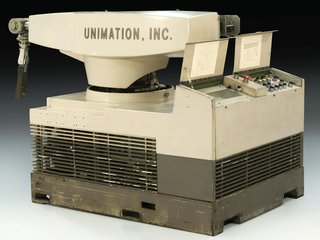
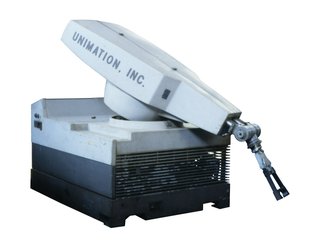
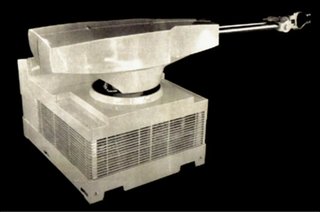
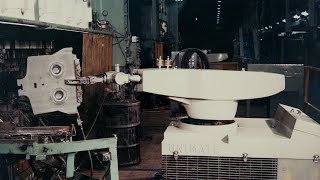
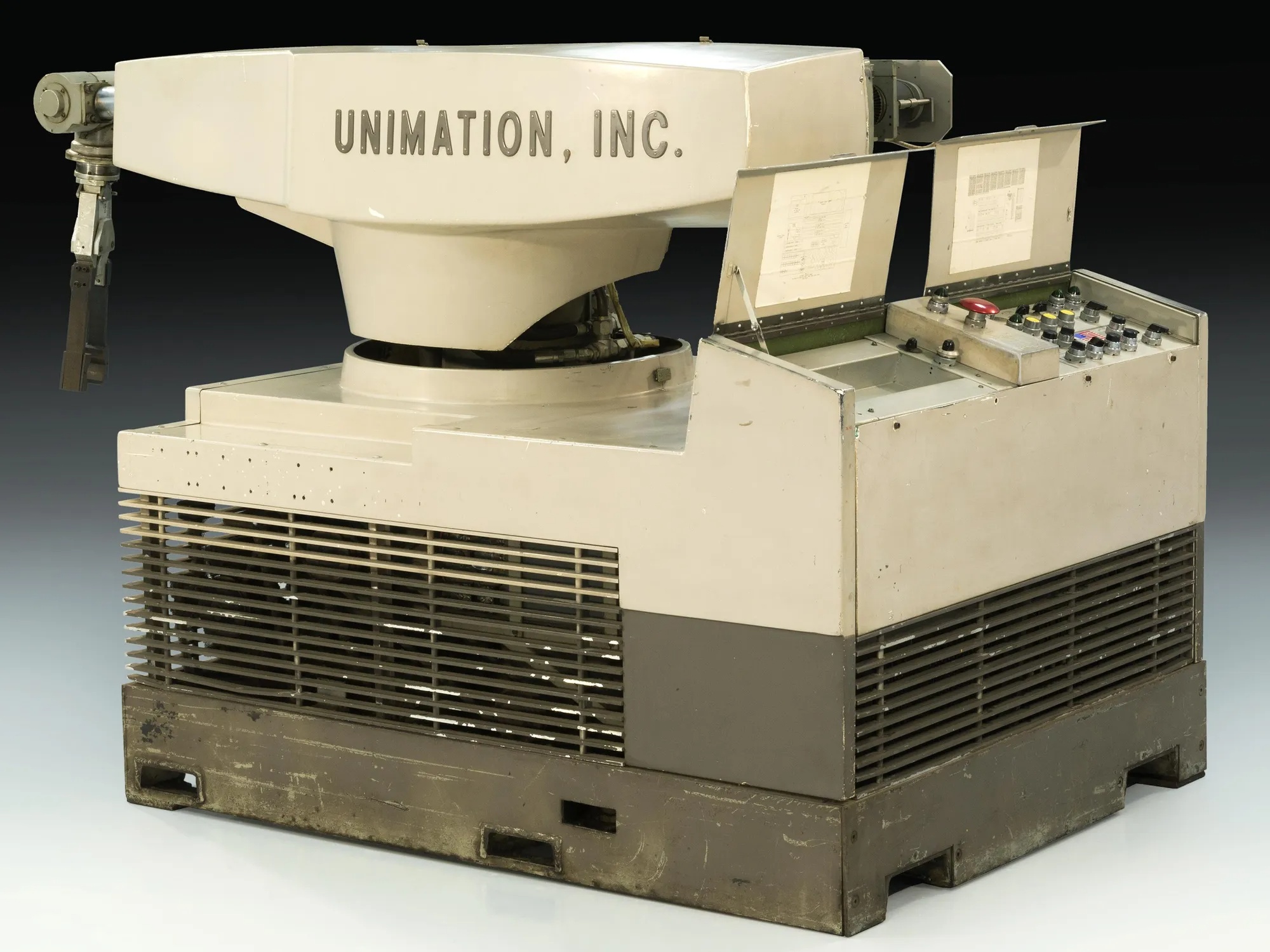
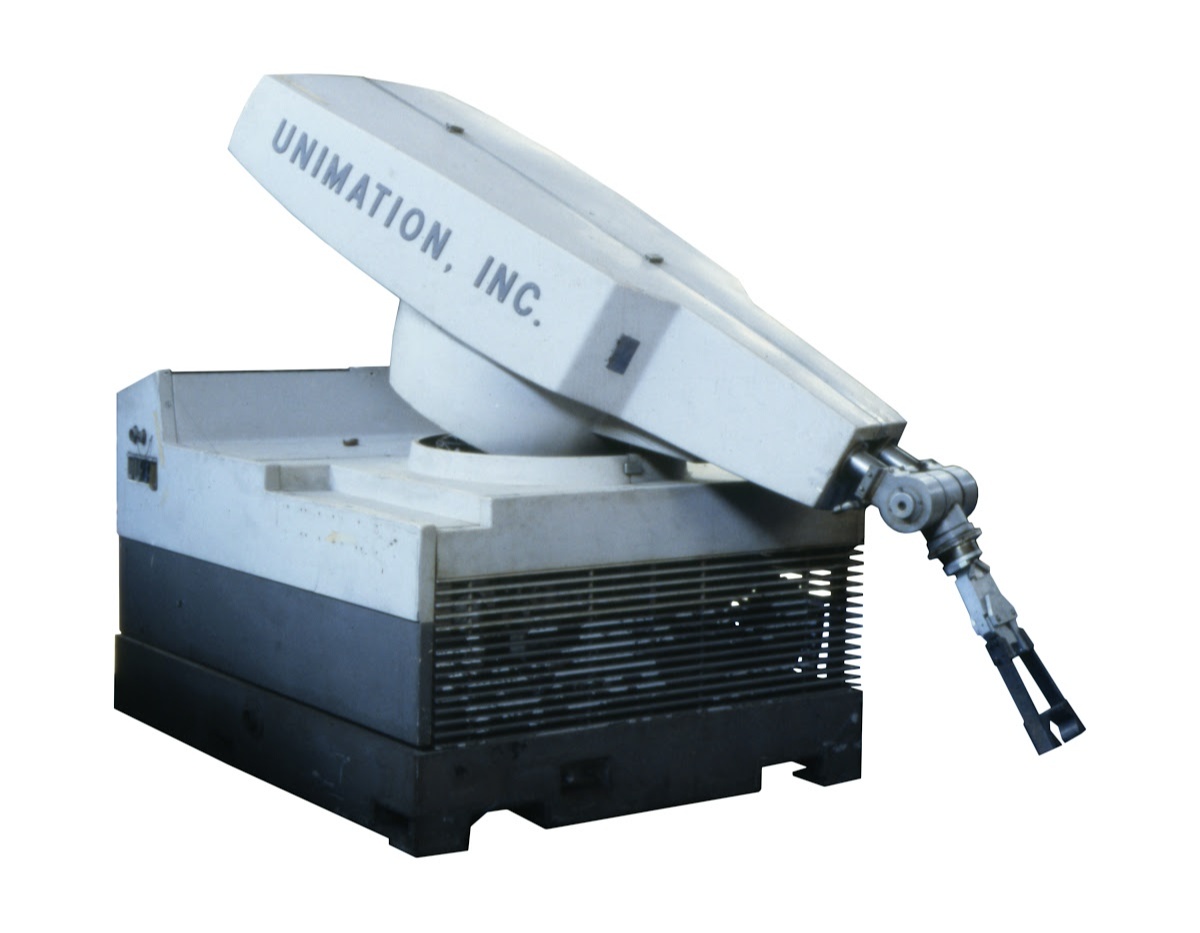
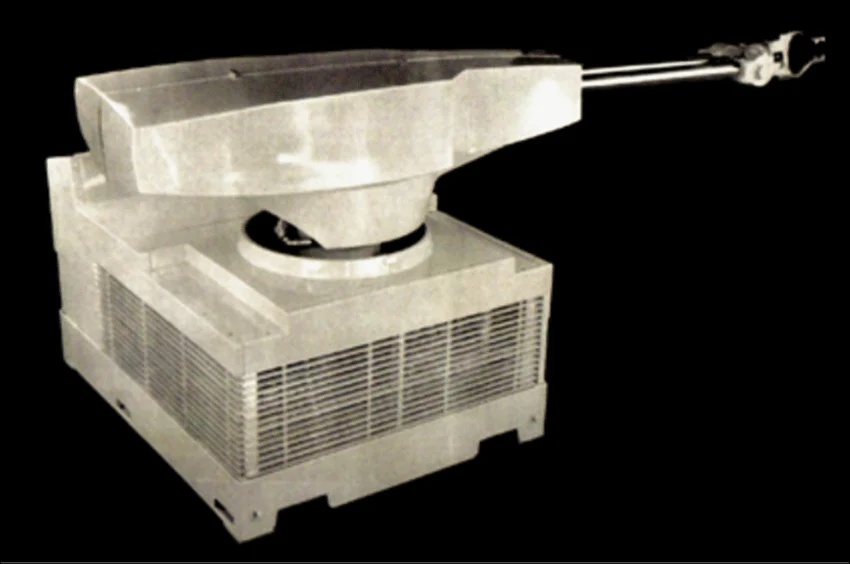
Unimate is the world's first successful industrial robot created by Unimation, representing the company's vision for using programmable machines to automate repetitive and hazardous factory work. Developed from George Devol's 1954 "Programmed Article Transfer" invention and commercialized by Joseph Engelberger and Unimation, the first production Unimate was installed at General Motors' plant in New Jersey in 1961. Unlike conventional fixed automation, Unimate could be programmed to perform sequences of movements and repeat them consistently. It initially handled hot die-cast components, removing workers from a dangerous task, and later versions were used for welding and other automotive manufacturing operations. Its development marked the beginning of modern industrial robotics and established the robotic arm as a core technology for automated manufacturing.
FONCTIONNALITÉS
- Hydraulic actuation
- Programmable point-to-point motion
- Magnetic-drum memory
- Approximately 200 sets of positional data on early systems
- 7-ft arm extension
- 220° horizontal rotation
- Wrist rotation and pivoting
- Interchangeable grippers
- Ability to manipulate power tools
- Automated machine tending
- Hot-part handling
- Later versions supported welding and broader automotive production
CARACTÉRISTIQUES TECHNIQUES
Vérifié| Physique | |
| Poids | Approx. 1,360–1,814 kg (3,000–4,000 lb), depending on version |
|---|---|
| Dimensions | H Original GM unit: approx. 1.61 m H × 1.22 m W × 1.52 m D; work envelope approx. 350 ft³ |
| Matériaux | Iron, Steel alloy, Metal, Plastic, Heavy industrial mechanical components |
| Mobilité | |
| Type de déplacement | Stationary |
| Alimentation | |
| Type de recharge | Industrial hydraulic power / AC electrical supply |
| Perception et calcul | |
| Capteurs | Position/shaft sensors and encoders, Mechanical limit/position sensing, Early control system used recorded joint positions rather than modern vision-based perception |
| Logiciel / IA | Magnetic-drum programmable control system |
FORUMS DU ROBOT
Chargement des forums...
CARACTÉRISTIQUES TECHNIQUES
Vérifié| Physique | |
| Poids | Approx. 1,360–1,814 kg (3,000–4,000 lb), depending on version |
|---|---|
| Dimensions | H Original GM unit: approx. 1.61 m H × 1.22 m W × 1.52 m D; work envelope approx. 350 ft³ |
| Matériaux | Iron, Steel alloy, Metal, Plastic, Heavy industrial mechanical components |
| Mobilité | |
| Type de déplacement | Stationary |
| Alimentation | |
| Type de recharge | Industrial hydraulic power / AC electrical supply |
| Perception et calcul | |
| Capteurs | Position/shaft sensors and encoders, Mechanical limit/position sensing, Early control system used recorded joint positions rather than modern vision-based perception |
| Logiciel / IA | Magnetic-drum programmable control system |
Images

Contributions d'images
FORUMS DU ROBOT
Chargement des forums...
NOTES
QUESTIONS FRÉQUENTES
What is the Unimate?
Unimate is the world's first successful industrial robot created by Unimation, representing the company's vision for using programmable machines to automate repetitive and hazardous factory work.
Who makes the Unimate?
The Unimate is made by Unimation Inc., a robotics company based in United States.
How much does the Unimate cost?
Unimation Inc. has not publicly announced pricing for the Unimate. You can enquire through RobotAIGeek for current pricing.
What is the Unimate used for?
The Unimate is designed for packaging. It is used in manufacturing settings.
How much does the Unimate weigh?
The Unimate weighs Approx. 1,360–1,814 kg (3,000–4,000 lb), depending on version.
COMPARER AVEC DES ROBOTS SIMILAIRES
Voyez comment ce robot se positionne face à ses alternatives les plus proches
- Unimate vs 6 Axis SZGH-T1500-C-6 General Robot Arm
- Unimate vs Universal robot KW1012B-1550
- Unimate vs Echo 7-Axis Humanoid Arm Series
- Unimate vs Echo 5
- Unimate vs Echo 15