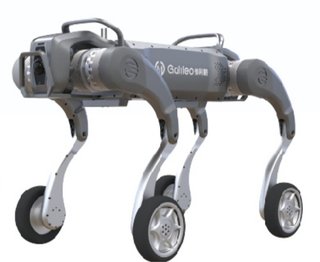
DESCRIPTION
Galileo S1-W est un Industrial-Robot de Galileo Technology. Il est conçu pour Inspection, Monitoring, Transport. Chiffres clés : 128 kg, 150 min d'autonomie, 100 kg de charge utile.
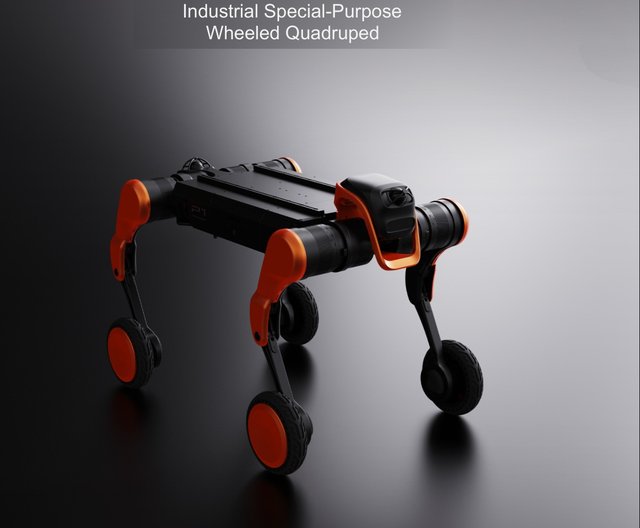
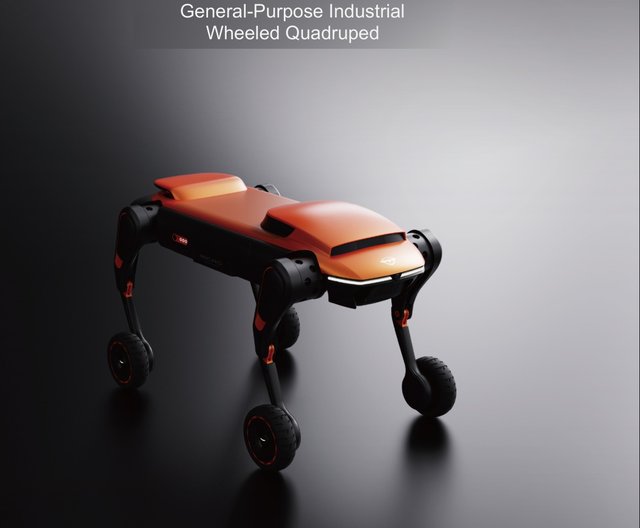
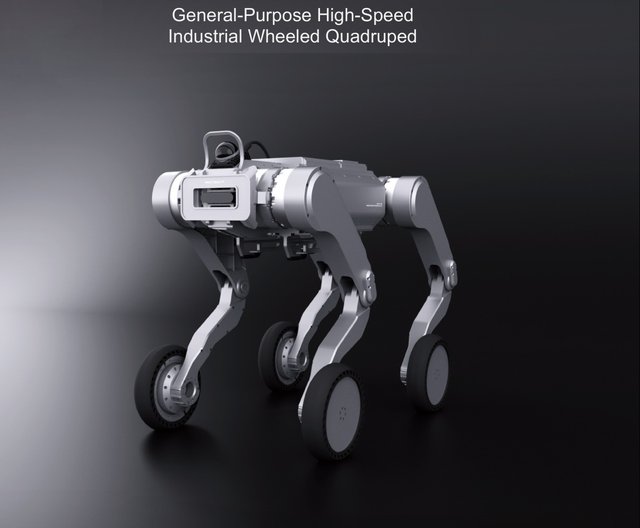
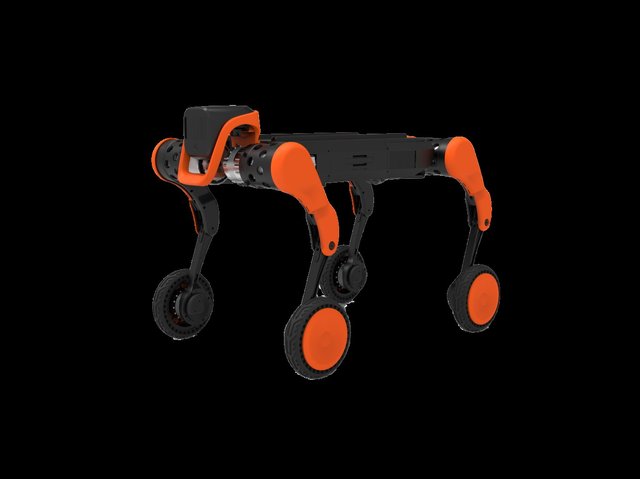
The Galileo S1-W is the heaviest machine Galileo makes at 128 kg and, with the E1-W, the fastest at 6 m/s — an unusual combination that comes from putting wheels on the feet of a large legged chassis rather than choosing between the two. It mounts a 110 cm platform head-on, the highest step-up figure the company publishes, and carries the same 100 kg rated and 170 kg maximum load as the legged S1 on the same dual-battery 59 V pack. The cost is endurance: two and a half hours under payload against the S1's three and a half. Standing 760 mm tall it is also the tallest, and like the rest of the large grade it runs twin LiDARs, dual ARM-plus-X86 compute, IP67 sealing and a -20 to 55 degree operating range.
FONCTIONNALITÉS
- Heaviest and joint-fastest in the family
- mounts a 110 cm platform head-on, the highest Galileo publishes
- 1200 x 550 x 760 mm standing at 128 kg
- Motion speed adjustable from 0 to 6.0 m/s
- 100 kg rated payload capacity with a 170 kg maximum load
- Continuous steps of 30 cm or more
- front-facing 110 cm elevation platform
- 60 Ah (3540 Wh), dual battery at 59 V battery giving 2.5 hours under payload and 4 hours unloaded, with a range of >15 km
- LiDAR: 2 units, one front and one rear, 30 m detection range, 0-360 degrees horizontal and 0-90 degrees vertical
- Domestic ARM-based low-power high-performance CPU with 8 cores and 8 threads, 8 GB RAM and 64 GB solid-state storage
- WiFi 6 wireless networking with optional 4G and 5G
- communication bandwidth of 6 Mbps or less
- 1920 x 1080 camera at 25 fps, 2 megapixels
- IP67 protection
- Operating temperature from -20 to 55 degrees Celsius
- Removable battery supporting automatic charging at up to 960 W
- Charger input 100-240 V
- Optional voice interaction
- supplied with a remote-control handle
- Customisable payloads including dual-spectrum gimbals, 4G/5G and BeiDou/GPS/RTK modules, robotic arms, compact radar, cargo carriers, demolition tools and explosion-proof equipment
- Low-power standby mode of 365 days or more with remote wake-up support
- Lithium battery with autonomous charging supported
- Secondary development supported
CARACTÉRISTIQUES TECHNIQUES
| Physique | |
| Poids | 128 kg |
|---|---|
| Dimensions | L 1.2 m × W 550 mm × H 760 mm |
| Charge utile | 100 kg |
| Mobilité | |
| Type de déplacement | Quadruped, Wheeled |
| Vitesse | 21.6 km/h |
| Environnement | All-weather industrial and outdoor use; IP67; -20 to 55 degrees Celsius, -20°C to 55°C |
| Actionneurs | Wheel-legged bionic quadruped with articulated legs and wheeled feet |
| Alimentation | |
| Autonomie de la batterie | 2.5-4 h |
| Perception et calcul | |
| Capteurs | LiDAR, 1920x1080 camera at 25 fps |
| Connectivité | WiFi 6, optional 4G and 5G; Ethernet, USB and RS485 external interfaces |
| Logiciel / IA | Autonomous navigation and obstacle avoidance with multi-sensor fusion |
FORUMS DU ROBOT
Chargement des forums...
CARACTÉRISTIQUES TECHNIQUES
| Physique | |
| Poids | 128 kg |
|---|---|
| Dimensions | L 1.2 m × W 550 mm × H 760 mm |
| Charge utile | 100 kg |
| Mobilité | |
| Type de déplacement | Quadruped, Wheeled |
| Vitesse | 21.6 km/h |
| Environnement | All-weather industrial and outdoor use; IP67; -20 to 55 degrees Celsius, -20°C to 55°C |
| Actionneurs | Wheel-legged bionic quadruped with articulated legs and wheeled feet |
| Alimentation | |
| Autonomie de la batterie | 2.5-4 h |
| Perception et calcul | |
| Capteurs | LiDAR, 1920x1080 camera at 25 fps |
| Connectivité | WiFi 6, optional 4G and 5G; Ethernet, USB and RS485 external interfaces |
| Logiciel / IA | Autonomous navigation and obstacle avoidance with multi-sensor fusion |
Images
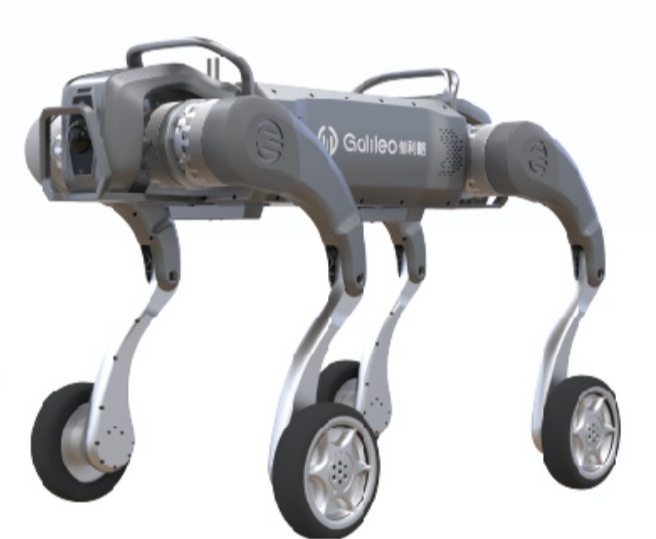
 martti

Contributions d'images
Vidéos
FORUMS DU ROBOT
Chargement des forums...
NOTES
QUESTIONS FRÉQUENTES
What is the Galileo S1-W?
The Galileo S1-W is the heaviest machine Galileo makes at 128 kg and, with the E1-W, the fastest at 6 m/s — an unusual combination that comes from putting wheels on the feet of a large legged chassis rather than choosing between the two.
Who makes the Galileo S1-W?
The Galileo S1-W is made by Galileo Technology, a robotics company based in China.
How much does the Galileo S1-W cost?
Galileo Technology has not publicly announced pricing for the Galileo S1-W. You can enquire through RobotAIGeek for current pricing.
What is the Galileo S1-W used for?
The Galileo S1-W is designed for inspection, monitoring, transport, and industrial inspection in toxic, hazardous and high-risk workplaces. It is used in energy, research, manufacturing, and security & patrol settings.
What is the payload capacity of the Galileo S1-W?
The Galileo S1-W has a payload capacity of 100 kg.
How much does the Galileo S1-W weigh?
The Galileo S1-W weighs 128 kg.
How fast is the Galileo S1-W?
The Galileo S1-W can move at speeds of up to 21.6 km/h.
What is the battery life of the Galileo S1-W?
The Galileo S1-W runs for 2.5-4 h on a charge.
COMPARER AVEC DES ROBOTS SIMILAIRES
Voyez comment ce robot se positionne face à ses alternatives les plus proches
- Galileo S1-W vs MagicDog Y1
- Galileo S1-W vs Galileo S1
- Galileo S1-W vs Galileo Ex2
- Galileo S1-W vs Strider M3
- Galileo S1-W vs Hypertron T01