
TRI Wind Turbine Blade Interior Inspection Robot



BESCHREIBUNG
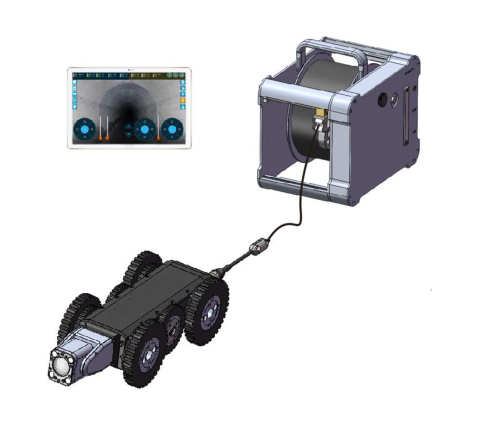
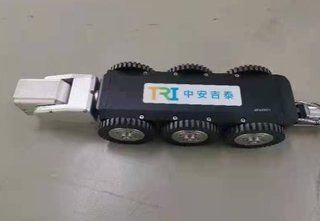
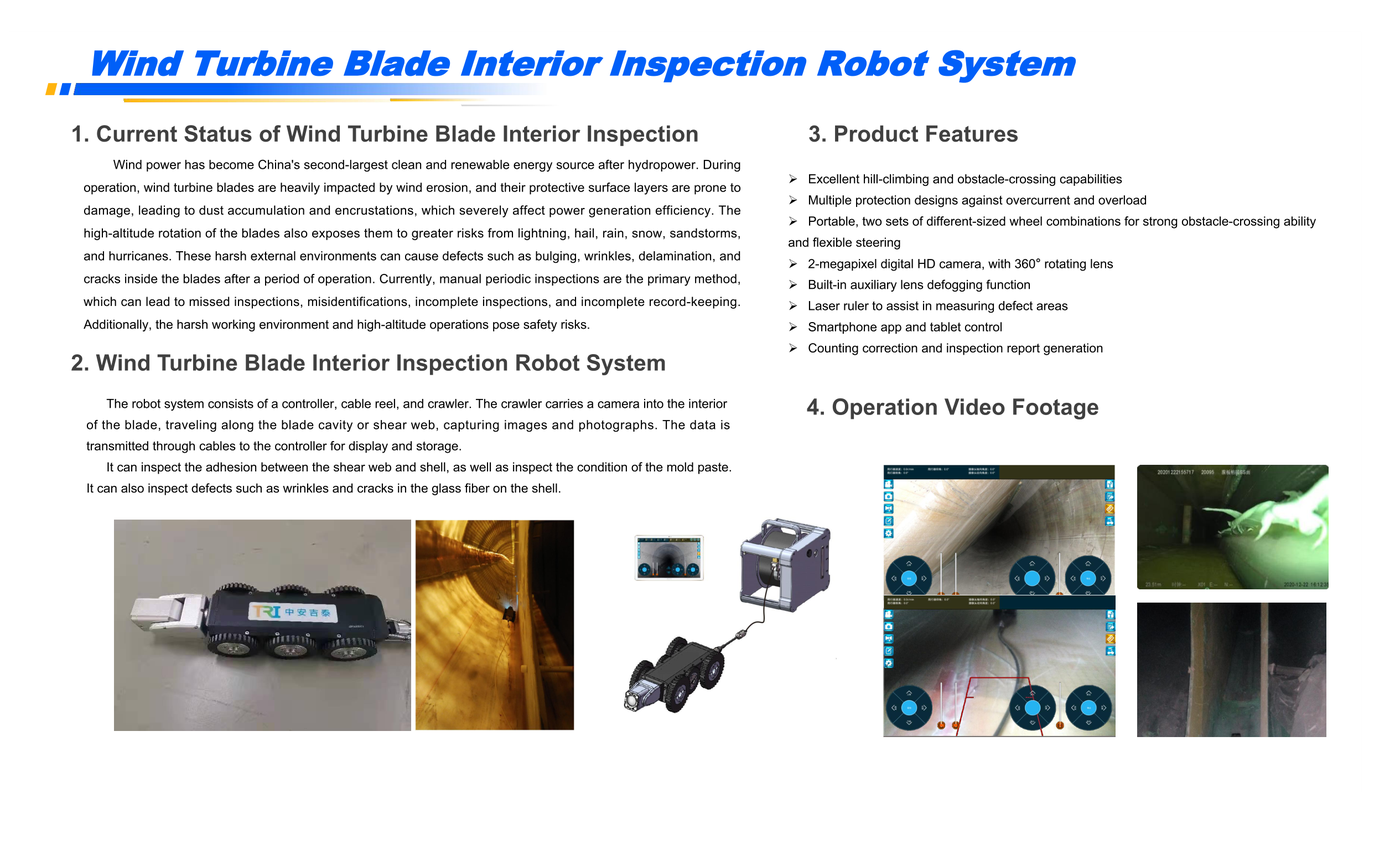
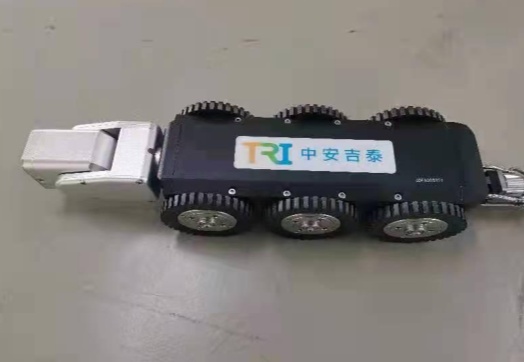
The inside of a wind turbine blade is a tapering composite cavity that no one can crawl very far into, and the defects that matter there — voids and cracks in the adhesive bonding the spar caps to the shell, cracks in the reinforcing adhesive inside the shear web, and whitening, wrinkles and cracks in the inner skin and main spar cap — are invisible from outside. TRI's robot drives in along the blade cavity or the shear web and reaches more than 85 per cent of the blade's length. Six-wheel drive on two imported motors, soft rubber tyres and a deliberately placed centre of gravity let it climb blade surfaces inclined up to 30 degrees; where the curvature inside the blade forces an extreme climbing angle, the wheels can rest against the spar and it drives on one side alone. It goes forward and back, turns on the spot, reverses direction and steers while moving, and ships with two sets of wheels — six small ones for tight sections, a mix of small and large where there is height to spare. Cameras are built into the front and rear of the body: 2-megapixel HD with 10x optical zoom, live video and stills. The measurement trick is a pair of laser pointers whose fixed separation gives the software a scale, so the size and area of a defect in the image can be measured rather than estimated. The camera gimbal rotates 360 degrees axially and 220 degrees radially, there is an auxiliary defogging function for the lens, and high-brightness LEDs let it work in total darkness. When the robot can go no further, zooming in extends the effective inspection length. The system is completed by a controller, a cable reel and smartphone or tablet control, with counting correction and inspection report generation.
FUNKTIONEN
- Reaches more than 85 per cent of the blade's length along the cavity or shear web
- Six-wheel drive on two imported motors with soft rubber tyres
- Climbs blade surfaces inclined up to 30 degrees
- can drive on one side against the spar at extreme angles
- Forward, reverse, turn on the spot, reverse direction and steer while moving
- Two sets of wheels: six small wheels for tight spaces, small and large combined where height allows
- 2-megapixel HD cameras front and rear with 10x optical zoom, live video and stills
- Twin laser pointers of fixed separation give the software a scale for measuring defect size and area
- Camera gimbal rotates 360 degrees axially and 220 degrees radially
- Auxiliary lens defogging function
- High-brightness LED lighting for work in complete darkness
- Zoom extends effective inspection length where the robot cannot travel further
- Multiple protection designs against overcurrent and overload
- Smartphone app and tablet control
- portable controller and cable reel
- Counting correction and inspection report generation
- Detects void and cracked adhesive between spar caps and shell, cracks in shear web reinforcing adhesive, and whitening, wrinkles and cracks in the inner skin and spar cap
TECHNISCHE DATEN
Verifiziert| Mobilität | |
| Bewegungsart | Radbasiert |
|---|---|
| Manipulation | Niedrig |
| Einsatzumgebung | Inside wind turbine blade cavities and shear webs - dark, tapering composite confined spaces |
| Aktoren | Six-wheel-drive tethered crawler on two motors with interchangeable large and small wheel sets, climbing inclines up to 30 degrees |
| Sensorik & Rechenleistung | |
| Sensoren | 2 MP HD cameras front and rear with 10x optical zoom, twin laser reference pointers, LED lighting |
| Software / KI | Controller software with live dual-camera video, laser-referenced defect measurement, counting correction and inspection report generation, with smartphone and tablet control |
TECHNISCHE DATEN
Verifiziert| Mobilität | |
| Bewegungsart | Radbasiert |
|---|---|
| Manipulation | Niedrig |
| Einsatzumgebung | Inside wind turbine blade cavities and shear webs - dark, tapering composite confined spaces |
| Aktoren | Six-wheel-drive tethered crawler on two motors with interchangeable large and small wheel sets, climbing inclines up to 30 degrees |
| Sensorik & Rechenleistung | |
| Sensoren | 2 MP HD cameras front and rear with 10x optical zoom, twin laser reference pointers, LED lighting |
| Software / KI | Controller software with live dual-camera video, laser-referenced defect measurement, counting correction and inspection report generation, with smartphone and tablet control |
Bilder
 martti
 martti
 martti
Bildbeiträge
Videos
ROBOTER-FOREN
Foren werden geladen...
BEWERTUNGEN
HÄUFIG GESTELLTE FRAGEN
What is the TRI Wind Turbine Blade Interior Inspection Robot?
The inside of a wind turbine blade is a tapering composite cavity that no one can crawl very far into, and the defects that matter there — voids and cracks in the adhesive bonding the spar caps to the shell, cracks in the reinforcing adhesive inside the shear web, and whitening, wrinkles and cracks in the inner skin an…
Who makes the TRI Wind Turbine Blade Interior Inspection Robot?
The TRI Wind Turbine Blade Interior Inspection Robot is made by TRI Jitai Intelligence, a robotics company based in China.
How much does the TRI Wind Turbine Blade Interior Inspection Robot cost?
TRI Jitai Intelligence has not publicly announced pricing for the TRI Wind Turbine Blade Interior Inspection Robot. You can enquire through RobotAIGeek for current pricing.
What is the TRI Wind Turbine Blade Interior Inspection Robot used for?
The TRI Wind Turbine Blade Interior Inspection Robot is designed for inspektion and scannen. It is used in energie settings.
MIT ÄHNLICHEN ROBOTERN VERGLEICHEN
Sehen Sie, wie sich dieser Roboter gegenüber seinen nächsten Alternativen schlägt
- TRI Wind Turbine Blade Interior Inspection Robot vs CivDot Mini
- TRI Wind Turbine Blade Interior Inspection Robot vs STAR Mobile Manipulator
- TRI Wind Turbine Blade Interior Inspection Robot vs Unitree A2
- TRI Wind Turbine Blade Interior Inspection Robot vs Unitree B1 Land Overlord
- TRI Wind Turbine Blade Interior Inspection Robot vs Unitree B1