Tekever Raises US$580M Series D at US$6.4B Valuation
Tekever closed a US$580 million Series D at a US$6.4 billion valuation, led by UC Investments and Baillie Gifford, weeks after winning a UK Ministry of Defence surveillance contract worth up to GBP 400 million.

Tekever, the Lisbon-founded maker of AI-enabled autonomous drones, has closed the first tranche of a US$580 million Series D round at a US$6.4 billion valuation, the company confirmed on September 23, 2026. UC Investments and Baillie Gifford led the round, with Merlyn Advisors joining as a new backer.
Tekever started in 2001 as a banking software shop founded by Ricardo Mendes and a handful of classmates from Instituto Superior Tecnico in Lisbon. It pivoted into unmanned aircraft by 2009 and now builds uncrewed aerial systems (UAS), the pilotless aircraft and the sensor, communications and AI software stack that fly and interpret what they see, for military and civil surveillance customers. The company is still headquartered in Portugal but has grown into a genuinely transatlantic operation, with sites in Bristol, Toulouse, Tallinn and North Carolina and a headcount near 900, up about 40 percent in the past year.
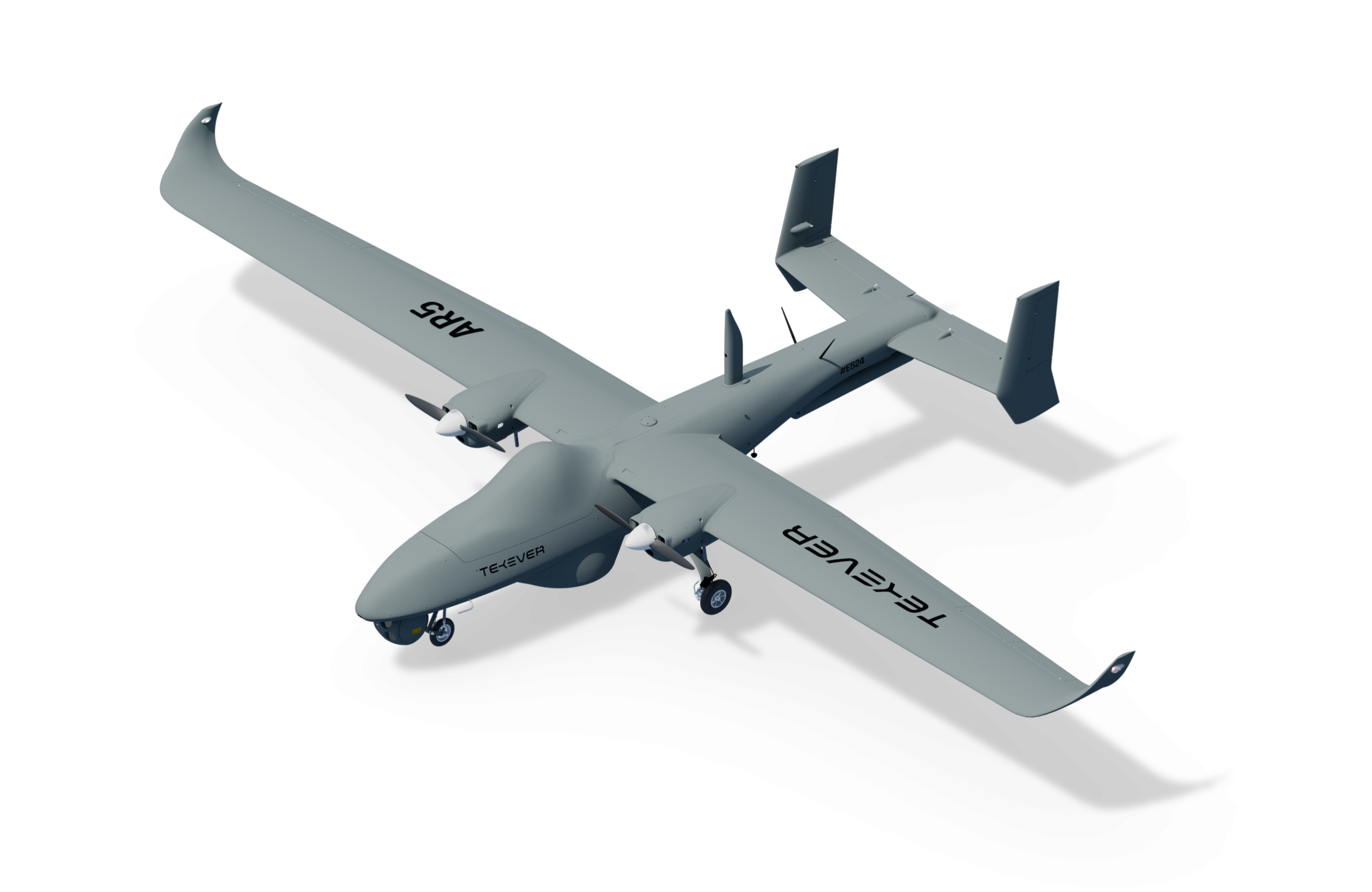
Its product line runs from the smaller, modular AR3 and AR3 EVO through to the AR5, a fixed-wing platform roughly the wingspan of a small glider that can stay airborne for close to 20 hours, cruise at around 100 kilometers per hour, carry up to 50 kilograms of payload, and launch from an unprepared airstrip with an effectively unlimited communications range. The company has since added a heavier-lift AR6 platform, unveiled in July 2026, and an intelligence-as-a-service software layer called ATLAS that packages the sensor data into something an analyst can act on rather than just watch. But the AR5 is the workhorse behind its two headline claims this year: more than 50,000 flight hours logged over Ukraine since Russia's 2022 invasion, covering battlefield intelligence, maritime patrol and border surveillance, and a fresh contract to supply the British Army.
A Valuation That Moved Nearly Five Times in a Year
The number that will get circulated on procurement desks this week is the multiple, not the headline dollar figure. Tekever was valued at roughly US$1.3 billion a little over a year ago. A US$6.4 billion mark today puts the increase at close to five times, in a sector where valuations more often creep than leap. UC Investments, the University of California's investment office, used this round for its first direct investment in a European company, a detail its chief investment officer Jagdeep Singh Bachher framed around the company having "built an exceptional technology platform over more than two decades with proven operational success." Baillie Gifford's Chris Evdaimon went further, calling Tekever "one of the defining technology companies in European dual use and autonomy." Merlyn Advisors, whose portfolio manager is former UK defence secretary Sir Ben Wallace, joined as new money alongside continuing shareholders Crescent Cove, Ventura Capital and Iberis Capital. Tekever says the first close will be followed by additional closings in the coming months, and that the proceeds fund international expansion, manufacturing and technology capacity, acquisitions and faster development of its autonomous systems.
Put plainly for anyone who has not spent time around this hardware: an uncrewed aerial system does the unglamorous, repetitive work that used to require a crewed aircraft, a rotating flight crew and a great deal of fuel. It loiters over a coastline or a stretch of front line for hours at a time, streams video and radar back to an operations room, and lets human analysts decide what matters. The pitch to a government buyer is not that the aircraft is clever. It is that the aircraft is cheap enough, and expendable enough, to keep doing that job for thousands of hours without anyone having to risk a pilot to do it.
Ukraine as the Reference Customer Every Buyer Now Asks About
Tekever's flight-hour count over Ukraine is doing real commercial work here, and it is worth being direct about why. Defense buyers, unlike most commercial robotics customers, cannot run a proper pilot program before a purchase order of any size. What they can do is ask a vendor to show hours flown in a live conflict, and Tekever now has an answer measured in the tens of thousands rather than the hundreds. That is a meaningfully different sales conversation than the one most autonomy vendors are having, and it is the reason a defense-focused UAS maker can command a valuation multiple that would look aggressive on a commercial robotics balance sheet.
A company that already has 50,000 combat flight hours is not asking investors to believe a forecast, it is asking them to price a track record that already exists.
That same concentration is worth treating with some skepticism rather than simple applause. A large share of Tekever's operational proof comes from a single conflict and, by extension, a small number of government customers whose procurement budgets and political priorities can shift quickly once that conflict changes shape. Defense-tech valuations at this stage of the market cycle tend to price in continued high defense spending and continued procurement urgency across Europe. Both are reasonable assumptions today. Neither is guaranteed to hold for the ten years that the company's biggest new contract runs.
The UK Contract That Actually Explains the Timing
The Series D did not happen in isolation. Weeks earlier, the UK Ministry of Defence selected Tekever to deliver CORVUS, the British Army's new battlefield surveillance capability, in a contract worth up to GBP 400 million over ten years, or roughly US$540 million at current exchange rates. CORVUS effectively replaces the Army's aging Watchkeeper drone fleet with the AR5 platform, and Tekever's AR3-based systems already patrol the English Channel for the UK Home Office. A government that has already bought a company's hardware for one mission and then handed it a decade-long surveillance contract for another is a stronger reference than any investor slide deck, and it is not a coincidence that the funding round closed so soon after the contract signature.
That sequencing also explains who is exposed by this round rather than helped by it. Legacy platforms like Watchkeeper, built around older crewed-aircraft-style procurement assumptions, look increasingly out of step with a buyer base that wants software-defined, quickly updatable systems and a vendor with combat data to back up its claims. Among the newer European entrants, Tekever is now bracketed with Helsing, valued near US$18 billion after its own recent raise, and Quantum Systems, near US$8 billion, as the continent's most capitalized autonomy vendors, all of them growing faster than the traditional prime contractors they increasingly compete against for the same surveillance and reconnaissance budgets. Global venture funding into defense technology reached roughly US$49.1 billion in 2025, up from US$27.2 billion the year before, and Tekever's round is one more data point confirming that the capital is concentrating in a handful of companies with fielded systems rather than spreading thinly across early-stage entrants. Other recent European rounds tell the same story: Helsing raised roughly US$2.4 billion in fresh capital in July, Quantum Systems raised a comparable sum the same month, Stark closed a round near US$670 million in June, and a smaller player like Cambridge Aerospace still managed a US$300 million round in August. None of that is small-check, early-stage financing. It is late-stage capital chasing a short list of vendors that can already point to fielded hardware.
What Governments Buying Autonomy Should Take From This
For a procurement officer or program manager evaluating autonomous systems vendors, the practical lesson is not that Tekever's valuation is necessarily fair value. Private valuations at this stage are set by a handful of institutional investors negotiating against each other, not by a public market, and Sir Ben Wallace's own description of the round, "Tekever's combination of AI, autonomy, operational experience and industrial ambition sets it apart," is a soundbite from a backer, not an audited fact. The more durable lesson is about what now counts as proof of readiness in this category. Buyers are increasingly discounting vendors who can only demonstrate autonomy in a controlled test range and rewarding those who can show it surviving contact with an actual adversary, actual weather and actual maintenance schedules over tens of thousands of hours.
That standard will keep raising the bar for entry. A startup with an elegant demo and no combat or long-duration civil deployment behind it is going to find it harder, not easier, to get a serious hearing from a defense ministry in the next procurement cycle, regardless of how sound its underlying technology is. Governments assembling multi-year surveillance and reconnaissance programs should treat operational hours, not press-release valuations, as the primary diligence signal, and should build contract structures that do not leave them fully dependent on a single vendor's continued access to capital markets that can, as this round shows, swing by a factor of five in either direction within a year.
Tekever's round confirms that European and allied governments are now willing to fund autonomous surveillance vendors at valuations that assume years of sustained defense spending, and that a company with fielded combat hours and a signed government contract can raise capital on terms that a lab-stage competitor simply cannot match. The clearer conclusion for buyers is that operational track record, not technical promise, has become the deciding factor in who wins the next generation of autonomy contracts, and vendors without it will need a very different pitch to compete.
This account synthesizes Tekever's public disclosures and industry reporting on the September 23, 2026 financing announcement. It is for general information purposes only and does not constitute investment, financial, or legal advice.
Hero image credit: Tekever.