Amazon Adds Robotics Manufacturing Plant in Greenwood, Indiana
Amazon said it will invest more than US$100 million in a 585,000-square-foot advanced manufacturing facility in Greenwood, Indiana, adding to the domestic factory base that has already built over one million of the robots powering its fulfillment network, with the plant expected to open by 2028 and create 300 skilled manufacturing jobs.

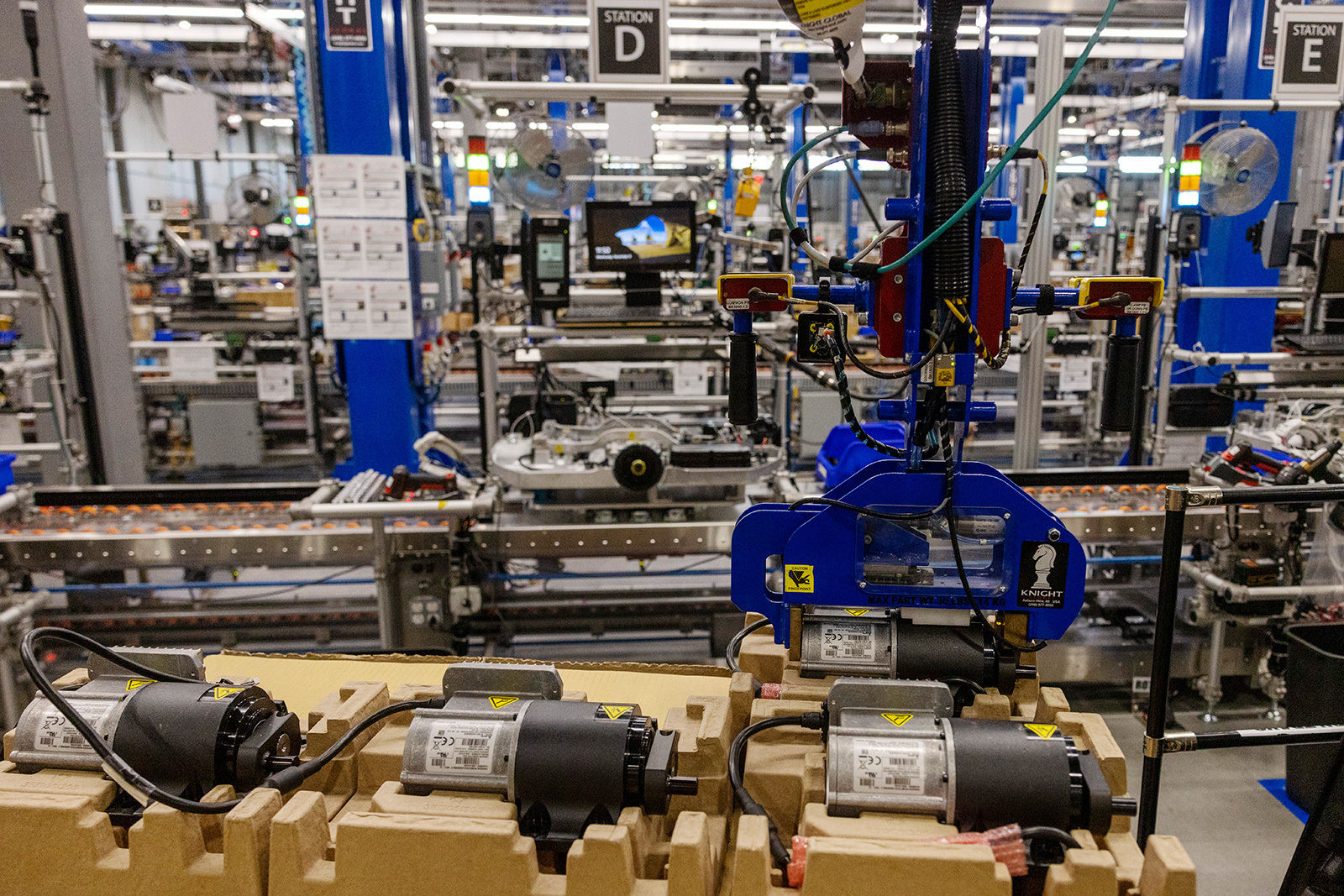
More than one million robots. That is the number Amazon now cites for how many of its warehouse and fulfillment robots it has manufactured domestically in the United States, deployed across more than 300 facilities worldwide and touching a majority of the packages the company ships. On September 24, 2026, Amazon said it would add to that manufacturing base with a new 585,000-square-foot advanced manufacturing facility in Greenwood, Indiana, a Johnson County suburb south of Indianapolis, backed by an investment of more than US$100 million and expected to open by 2028.
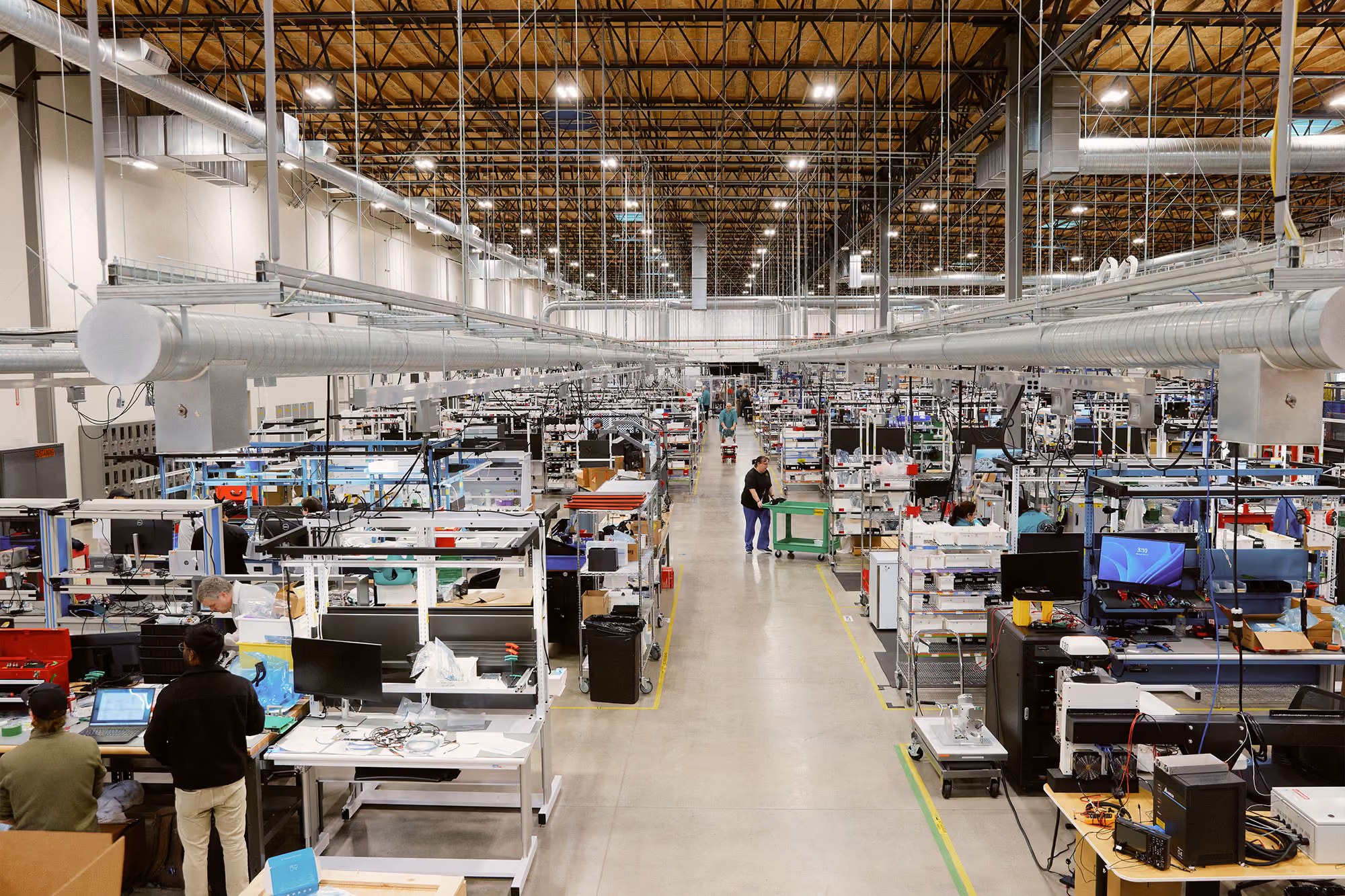
The facility will house advanced fabrication, robotic welding, automated powder coating, and assembly operations under one roof, coordinated by Amazon Web Services cloud infrastructure and AI-powered smart manufacturing software. It will create 300 skilled manufacturing and engineering jobs, including CNC operators, welders, powder coating technicians, assemblers, manufacturing engineers, quality assurance specialists, controls engineers, and program managers, at an average salary near US$100,000 a year, according to Amazon's announcement.
A Robot Maker Building Its Own Supply Chain
The Greenwood plant is not a fulfillment center. It is a factory that will build the hardware other Amazon facilities run on, the drive units, robotic arms, and mechanical components that move inventory through the company's warehouse network. That distinction matters for anyone tracking how Amazon competes in warehouse automation against vendors such as Locus Robotics, Geek+, and Symbotic, which sell robotics-as-a-service or systems integration to third-party warehouse operators. Amazon has taken the opposite path: rather than buying automation from outside suppliers at scale, it has built an internal manufacturing arm, centered on its Westborough, Massachusetts robotics headquarters, large enough to produce most of its own fleet in-house.
Greenwood extends that vertical integration into the Midwest. Indiana is not a random choice. Amazon has invested in the state continuously since 2008, and the Greenwood facility brings its cumulative Indiana investment past US$40 billion, supporting more than 27,000 jobs in a state that already hosts several of the company's fulfillment and sortation centers. Building the robots near the network of warehouses that will use them shortens the supply chain between manufacturing and deployment, a logistics advantage that a company shipping products has clear reason to want for the equipment that ships those products.
Why a 2028 Launch Date Still Counts as News Today
A facility that will not open for roughly two years might read as a groundbreaking notice rather than a robotics story, but the timing carries its own signal. Amazon is committing manufacturing capacity years ahead of the warehouse capacity it will eventually serve, which points to a company planning for sustained, multi-year growth in the number of robots it needs rather than treating its current fleet size as close to a ceiling. Holly Sullivan, Amazon's vice president of economic development, said the facility "represents a significant investment in the Indianapolis community," language that frames the announcement primarily around local jobs and wages well above the regional average. The more consequential reading for a robotics buyer or competitor is capacity planning: Amazon is pre-committing physical manufacturing square footage for robot production at a moment when humanoid and mobile-robot competitors across the industry are still raising capital to build their first factories.
Indiana Governor Mike Braun credited the state's manufacturing workforce for the decision, a framing state officials use for most large manufacturing announcements. What is specific to this one is the skills mix Amazon is hiring for: welders and powder-coating technicians sit alongside controls engineers and manufacturing engineers on the same job list, meaning the facility is designed to combine traditional metal-fabrication trades with the software and controls expertise that AI-coordinated manufacturing requires. That combination is itself a preview of what a robotics-adjacent factory floor looks like when a company builds one from scratch rather than retrofitting an existing plant.
Why Greenwood, Specifically
Indianapolis has marketed itself for decades as the Crossroads of America, sitting at the intersection of more interstate highway miles than any other US metro area, a geography that has made the region a standing choice for distribution and logistics investment long before robotics entered the conversation. Johnson County, where Greenwood sits, already hosts logistics and light-manufacturing employers drawn by that same highway access and by a labor market with a deeper bench of skilled-trades workers than many coastal manufacturing hubs, where wage competition from technology and finance employers has made hiring welders and CNC operators harder. Building a robot factory in a region that already trains and retains those trades, rather than in a market where Amazon would be competing for the same skilled labor against several other advanced manufacturers, is as much a workforce-sourcing decision as a logistics one.
The Competitive Read: Scale as a Moat
For a procurement team evaluating warehouse automation vendors, Amazon's own fleet is not a direct purchasing option, since the company does not sell its internal robotics systems to outside operators. What the Greenwood announcement does signal is the scale gap between Amazon and nearly every other robotics vendor competing for warehouse and logistics automation dollars. A company that has already built more than a million robots domestically, and is now adding dedicated manufacturing capacity specifically to keep building more, is operating at a unit-cost advantage that smaller vendors reliant on contract manufacturers or overseas suppliers cannot easily match. That advantage compounds: in-house manufacturing lets Amazon iterate robot designs faster, since engineering and production sit inside the same corporate structure rather than across a vendor negotiation, and it insulates the company from the supply-chain and tariff exposure that has repeatedly disrupted robotics hardware vendors dependent on imported components.
The AI-powered smart manufacturing software Amazon says will coordinate the facility is worth reading literally rather than as marketing language. A robot factory that uses AI-driven quality control and production scheduling to build robots is applying the same class of technology internally that automation vendors sell externally, which suggests Amazon is treating its own manufacturing operation as a proving ground for techniques it may eventually generalize elsewhere in its operations. That is a pattern the company has followed before with its fulfillment centers, testing automation internally before any version of it appears in a product or service offered to others.
The contrast with Symbotic, the publicly traded warehouse-automation company that supplies robotic systems to Walmart and other large retailers, is instructive on this point. Symbotic's business model depends on selling automation to operators who do not want to build their own robotics division, and its growth is a bet that most retailers and logistics companies will always prefer buying automation to manufacturing it. Amazon's Greenwood investment is the opposite bet, made possible only because Amazon's own warehouse footprint is large enough to justify the fixed cost of a dedicated factory. Few other logistics operators, even large ones, ship enough volume to make in-house robot manufacturing cheaper than buying from a vendor like Symbotic, which is precisely why Amazon's approach is not a template most competitors can copy, rather than a sign that vendor-supplied automation is losing ground.
What This Does Not Tell a Buyer
The announcement is short on the specifics that would matter most to a competitor trying to size the threat: no production capacity figures, no breakdown of which robot models or components the plant will build, and no confirmation of whether Greenwood output stays exclusively internal or eventually feeds any external offering. Amazon has occasionally licensed or spun out logistics technology, most notably through its investment arm and its AWS robotics tooling for third parties, so a facility built at this scale is not proof the company plans to stay a closed system indefinitely. But nothing in this announcement suggests a near-term change to that posture, and a buyer should treat Greenwood as evidence of Amazon's internal scale rather than as a new sourcing option.
The more durable takeaway is what the facility says about the trajectory of robot manufacturing costs across the industry. When the largest single buyer and builder of warehouse robots commits new domestic manufacturing capacity years in advance, it is a data point that demand for robotic material handling, from a company with the best visibility into its own future warehouse needs of anyone in the industry, is not plateauing. Vendors selling into the same warehouse automation market, and the procurement teams evaluating their pricing, are operating against a backdrop in which the largest player in the space keeps adding capacity rather than pausing it.
One million robots built domestically, and a second facility now committed before the first ones in that count have even reached the end of their service life, is the number that frames how far ahead Amazon is planning its own robotics supply chain relative to almost every other company building for the same warehouses.
This account synthesizes Amazon's public announcement and local and trade press coverage of the September 24, 2026 facility announcement. It is for general information purposes only and does not constitute investment, financial, or legal advice.
Hero image credit: Amazon.