AGIBOT and Chimelong Put 300+ Robots on Duty at Zhuhai Theme Park
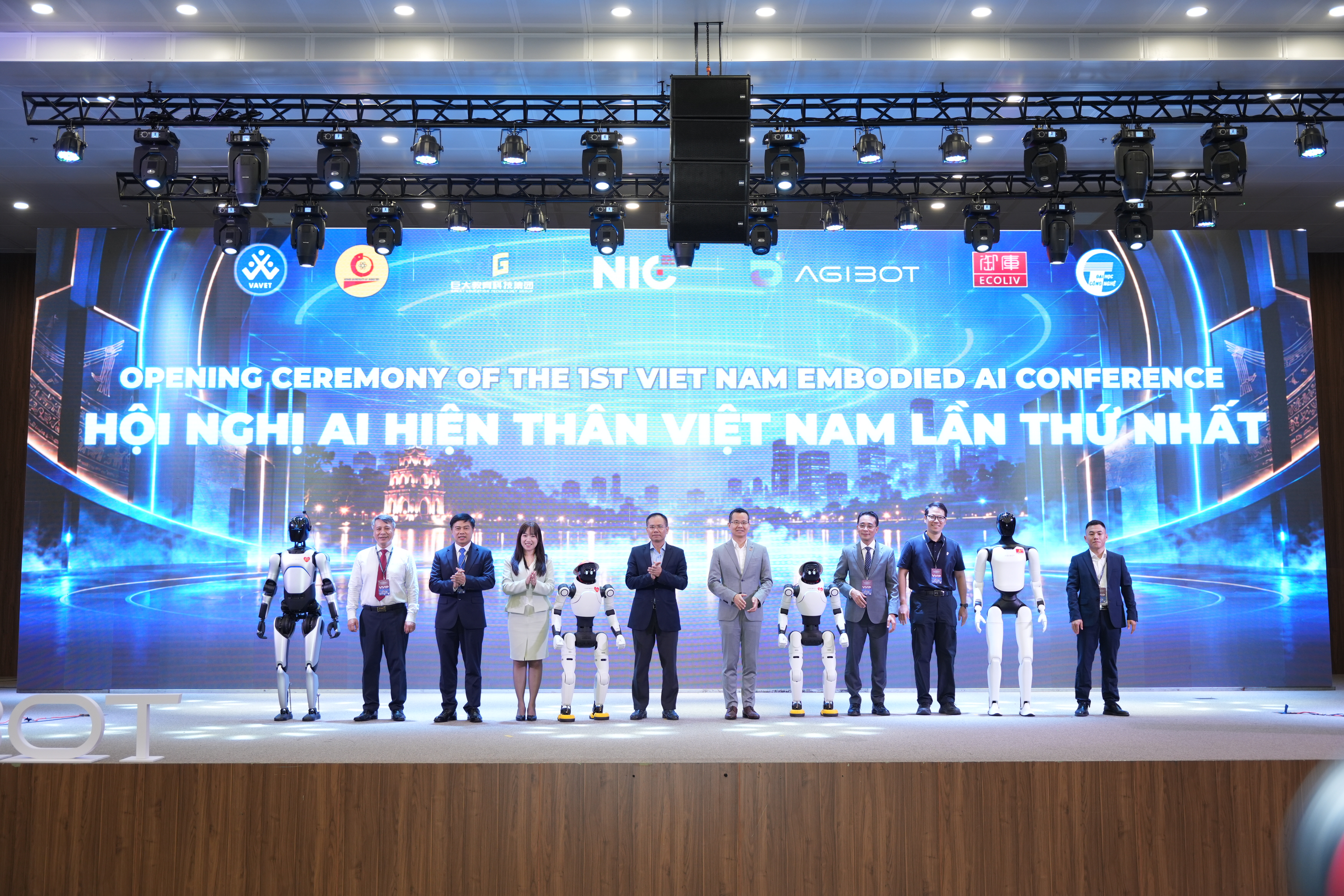
AGIBOT and Chimelong Group launched the first phase of a 300-plus-robot embodied-AI deployment across 100+ interaction points at Chimelong Spaceship Park in Hengqin, Zhuhai, pairing opening-day dance and aerial-acrobatics performances with the delivery of AGIBOT's 20,000th production robot, an Expedition A3 Ultra unit, and the unveiling of a joint embodied-AI tourism research institute.

On September 24, 2026, more than 300 robots went on duty across Chimelong Spaceship Park in Hengqin, Zhuhai, Guangdong Province, as AGIBOT and Chimelong Group opened the first phase of what the two companies call the world's largest embodied-artificial-intelligence (AI) theme park deployment. The robots now staff more than 100 interaction points spanning entertainment, education, visitor services, retail, and hotel operations.
AGIBOT, the Shanghai-headquartered embodied-AI robotics maker also known by its Chinese name Zhiyuan Robotics (智元机器人), builds its product line around what it calls a "Three Intelligences in One" architecture, combining locomotion, interaction, and manipulation control in a single humanoid platform. The company said in September 2026 that its 20,000th robot to roll off the production line, a 远征 (Expedition) A3 Ultra unit, was delivered directly to Chimelong Spaceship Park, tying a manufacturing milestone to what is, by robot count, one of the largest single-site commercial rollouts any humanoid maker has attempted.
A Park Staffed Rather Than Toured
The distinction that matters for anyone pricing a robotics deployment is between a demonstration and an operation. Trade shows and investor days have made robot dance routines and service demos routine background noise; what Chimelong and AGIBOT are describing is different in kind, not degree. Robots are assigned across seven defined scenarios: live entertainment such as martial arts, gymnastics, and tai chi performances; science-education programming; guided tours and wayfinding; retail service stations; companion-style visitor interaction; hotel guest services; and sports competitions including table tennis and manipulation challenges. That is a duty roster, not a showcase schedule, and it is the roster a procurement team should read closely, because it is the clearest public signal yet of which service tasks a robotics vendor is willing to put its brand behind for daily, unscripted public contact.
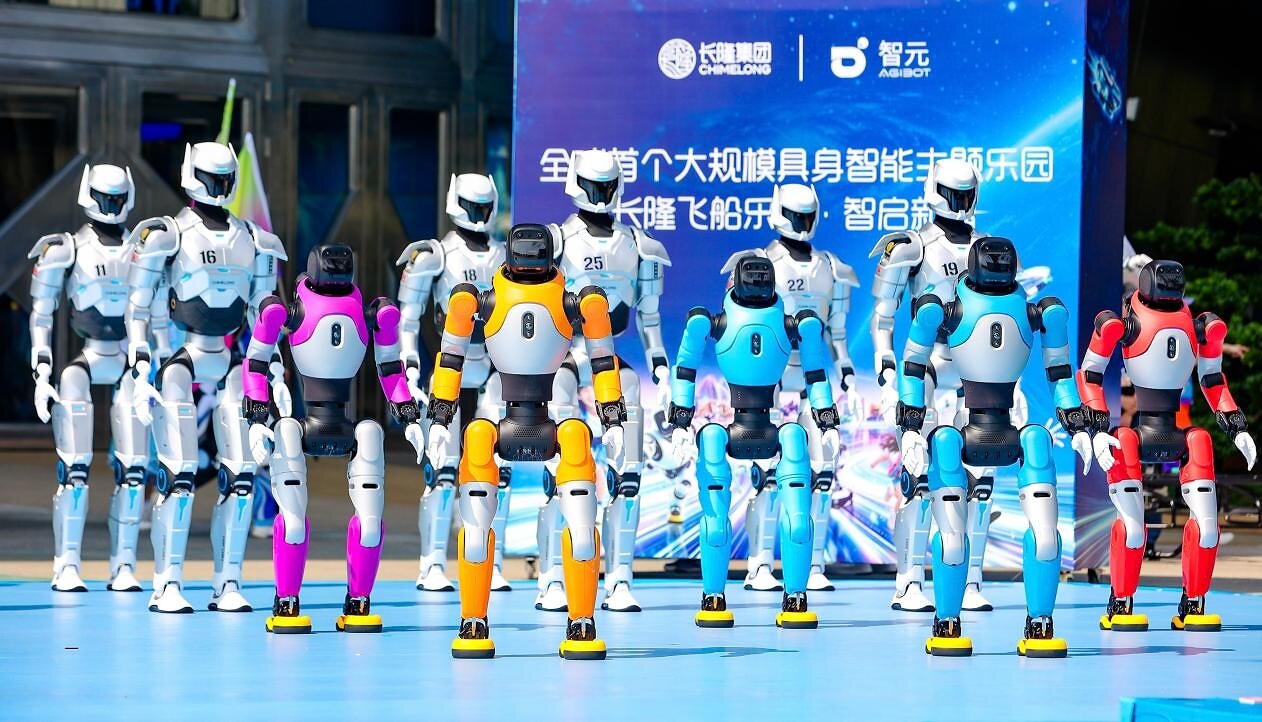
Opening day carried its own spectacle on top of that duty roster. A large-scale human-robot dance performance, built as a recurring show rather than a one-off ribbon-cutting stunt, had robots in matching Chimelong-branded shells lining up alongside human dancers on an outdoor stage. A separate robot aerial acrobatics act, billed by both companies as the first of its kind, put robots through a suspended, mid-air routine more associated with circus performers than industrial hardware. Chimelong has run circus theaters as a core business for decades, and folding a robot acrobatics act into that repertoire is a tell: the company is not treating AGIBOT's hardware as a novelty attraction bolted onto existing infrastructure, it is treating it as new content for a live-entertainment business that already knows how to sell tickets to physical performance.
Uptime, Not Applause, Is the Actual Product Being Sold
Strip away the acrobatics and the commercial proposition is a connectivity and coordination problem at a scale few operators have had to solve. AGIBOT, Chimelong, and China Mobile built a dedicated 5G-Advanced (5G-A) network specifically to support the deployment, with centralized multi-robot coordination managing robots across park and hotel environments simultaneously. Safety and operational coverage extends to network security, visitor privacy protection, charging logistics, and fire safety, the unglamorous plumbing that determines whether 300 robots function as a coordinated fleet or as 300 separate liability exposures. A single humanoid answering questions at a booth is a controlled pilot. Three hundred humanoids simultaneously performing choreography, running retail transactions, guiding children through an aquarium tunnel, and greeting hotel guests, all on one network, all in range of unscripted human contact, is closer to running a small municipal utility than staging a demo.
That is also the honest read for a buyer evaluating any vendor's deployment claims: a fleet only proves reliability once it has run daily, in public, without a script, for long enough that the failure modes show up on their own schedule rather than a press cycle's schedule.
AGIBOT and Chimelong also used the launch to unveil a joint research institute focused on embodied AI in culture and tourism, intended to study new applications and operating models drawn from what the Hengqin deployment actually produces once real visitors, not conference attendees, start interacting with it daily. The institute's declared early focus includes building customized robot "personalities" across voice, facial expression, character design, movement, and costume styling, treating a robot's on-stage identity as a design discipline in its own right rather than a byproduct of whatever hardware happens to ship. The two companies signed their original strategic cooperation agreement on August 23, 2026, at the same Hengqin site, with plans that already extended beyond the theme park itself to embodied-AI-themed hotel rooms and circus-format performances across Chimelong's wider resort portfolio, so the September 24 launch reads as the first phase of a plan drawn up five weeks earlier, not an improvised showcase.
The competitive context sharpens the point. AGIBOT has spent 2026 racking up medal counts at the World Humanoid Robot Games and rental-fleet placements across the Middle East, and it says the same A3 and X2 platforms that won those competitions are the ones now walking Chimelong's paths daily rather than staying in a trophy case. Rival Chinese humanoid makers, including UBTECH and Unitree, have leaned on factory pilots and short-lived public stunts to make their own commercial cases. None has put a three-figure robot count into continuous, unscripted public service at a single site with this much surface area for something to go visibly wrong. That is the specific claim Chimelong Spaceship Park is testing, and it is the claim a competing vendor's sales pitch will now have to answer, implicitly or otherwise, whenever it lands on a hospitality or retail buyer's desk.
Why a Theme Park Is the Right Proving Ground and the Right Risk
Chimelong is not a startup experimenting with robotics on the side. Founded in 1989, the group operates eight major theme parks, nine resort hotels with more than 10,000 rooms combined, and three international circus theaters across three resort complexes in Guangzhou, Hengqin, and Qingyuan, drawing more than 40 million visitors annually. That scale is precisely why a theme park, rather than a factory floor or a hospital corridor, is the sharper test of embodied AI's commercial readiness. Manufacturing environments are structured, predictable, and staffed by trained workers who adapt to a robot's quirks. A theme park visitor does neither. Children grab at robot limbs, tourists ask off-script questions in whatever dialect they speak, and a robot that freezes, mishandles a request, or simply looks awkward in front of a paying family becomes a viral clip within the hour rather than an internal incident report. Deploying 300 units into that environment, at 100-plus points of unscripted contact, is a far more demanding trust exercise than any factory pilot, and it is one AGIBOT chose to run in public rather than behind a non-disclosure agreement.
For a company competing on shipment volume as much as on capability claims, that choice is itself a form of evidence: AGIBOT is willing to let a mass consumer audience, rather than a curated trade-show crowd, be the judge.
The Structural Shift Buyers Should Actually Price In
The bigger signal sits one level above the robot count. For the past two years, the humanoid-robotics sector has marketed itself primarily on manufacturing and logistics use cases, where a robot's failure mode is a dropped part or a missed cycle time, both recoverable and both invisible to the public. Chimelong Spaceship Park inverts that risk profile entirely: the failure mode is a visible, public, and socially awkward one, played out in front of exactly the audience whose trust the entire humanoid-robotics industry needs to win before consumer-facing deployment becomes routine rather than exceptional. Every automation buyer currently running a pilot in a warehouse or assembly cell is, whether they realize it or not, one tier removed from the question this deployment is actually answering: not whether a humanoid robot can complete a task, but whether it can complete that task in front of people who did not sign a waiver and are not being paid to be patient. Vendors that can point to a public deployment at this scale, run continuously rather than as a weekend activation, will have a materially different sales conversation with hospitality, retail, and healthcare buyers over the next eighteen months than vendors whose evidence base stops at a trade-show booth.
What a procurement team should actually track from here is not the opening-day photo set, but the maintenance cadence: how often units go offline for servicing, how the fleet handles a Chinese national holiday crowd spike against a quiet Tuesday afternoon, and whether the second and third phases of the deployment expand into the hotel rooms and circus formats promised at the August signing, or quietly stall at Phase 1. A theme park does not hide its failures the way a factory floor can. By the next long holiday weekend, Chimelong's own visitor traffic will have run an uptime audit on AGIBOT's fleet that no press release could substitute for, and the robots either dancing again on cue or standing dark in a corner will tell that story on their own.
This account synthesizes AGIBOT's and Chimelong Group's public statements and industry reporting on the September 24, 2026 announcement. It is for general information purposes only and does not constitute investment, financial, or legal advice.
Hero image credit: AGIBOT / Chimelong Group via PR Newswire.