
Navel vs Sota
Navel Robotics vs Vstone — specs, price, and data-backed comparison.
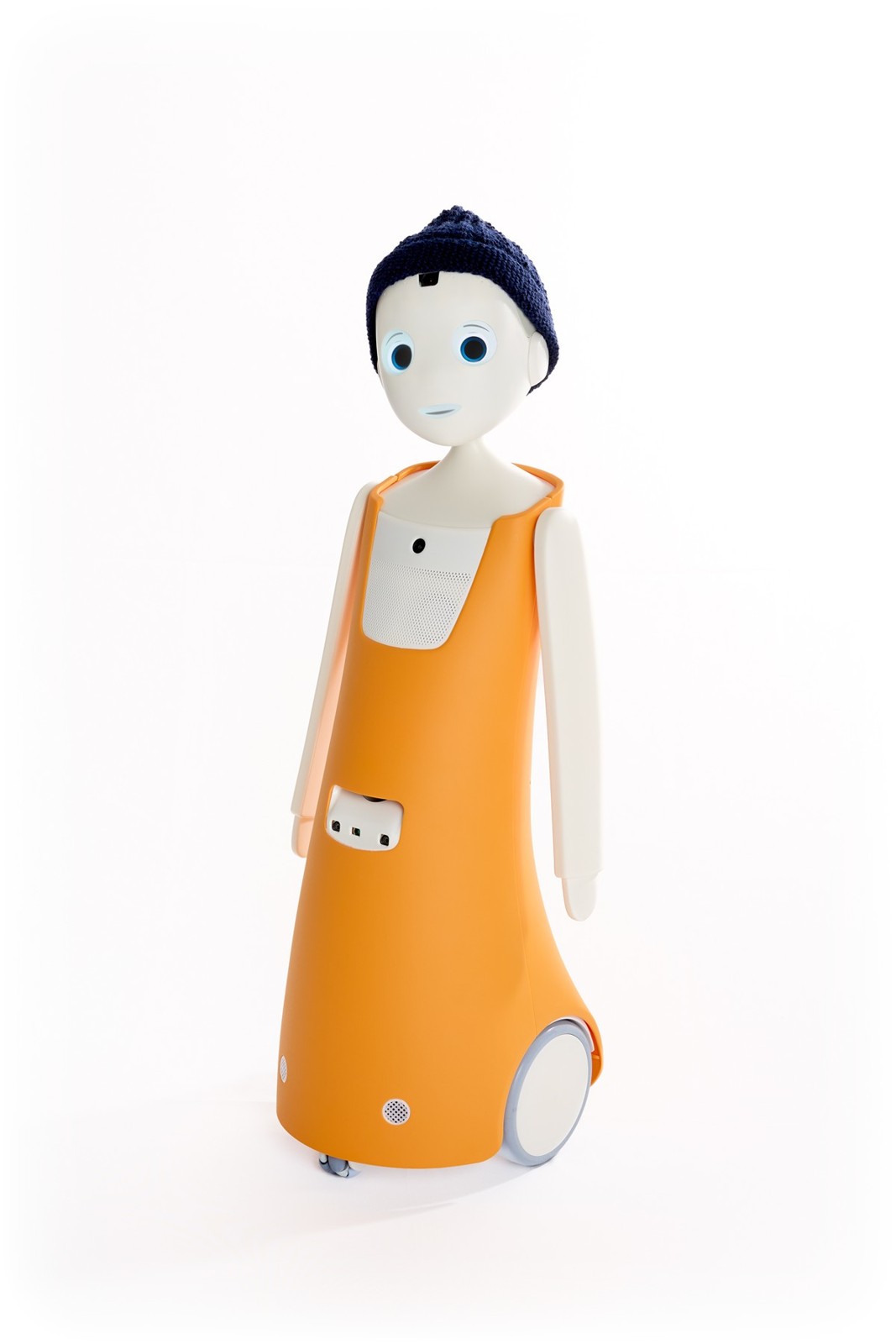

KURZFAZIT
- Sota bietet die leichtere Bauweise (0.76 kg vs. 8 kg).
TECHNISCHE DATEN IM VERGLEICH
| Navel | Sota | |
|---|---|---|
| Hersteller | Navel Robotics | Vstone |
| Kategorie | Mobile-Robots | Research-Robots |
| Preis: | Nicht angekündigt | ¥100,000–¥145,000 |
| Veröffentlicht: | 2023 | — |
| Gewicht | 8 kg | 0.76 kg |
| Freiheitsgrade | — | 8 |
| Akkulaufzeit | 288 Wh | — |
| Konnektivität | WLAN | — |
| Software / KI | Linux; computer vision (face detection, person identification, emotion recognition, head pose, eye gaze); sound source localisation and beam forming; STT via cloud service (e.g. Microsoft); TTS Acapela; LLM-based dialogue manager (e.g. GPT); socially aware proxemics (SLAM in planning); Python SDK; navel control studio | — |
Kaufberater und Preise
HÄUFIG GESTELLTE FRAGEN
Was ist der Unterschied zwischen Navel und Sota?
Navel wird von Navel Robotics hergestellt, Sota dagegen von Vstone. Navel gehört zur Kategorie „mobile-robots“, Sota dagegen zur Kategorie „research-robots“.
Was ist günstiger, Navel oder Sota?
Sota ist mit ¥100,000 gelistet; ein Preis für Navel wurde bisher nicht öffentlich bekannt gegeben.