Robot Orders Data Shows Automotive Losing Its Lead in the US
A3 order data shows US automotive robot orders fell 25% in H1 2026 while semiconductor and life-science orders surged, reshaping how vendors should pitch buyers.

Automotive manufacturers ordered 25 percent fewer robots in the first half of 2026 than a year earlier, at the same time North American companies overall increased total robot spending by 21.3 percent. Those two numbers, both from the Association for Advancing Automation's most recent order data, describe the same market moving in opposite directions depending on which industry is buying. For anyone responsible for a robotics procurement budget, the divergence is more useful than either headline figure alone, because it marks the point where automotive stopped being the default reference case for industrial automation spending.
A Market That Finally Stopped Being About Cars
North American companies ordered 8,940 robots worth US$622 million in the second quarter of 2026 alone, a 4.3 percent increase in units and a 21.3 percent jump in revenue over the same quarter in 2025, according to A3's order tracking. Across the full first half of the year, total orders reached 17,995 units worth US$1.166 billion, up 2.0 percent in units and 6.6 percent in revenue year over year. Buried inside that modest headline growth is a sharper story: for the first time in the tracking series' recent history, non-automotive customers accounted for the majority of orders, and automotive OEM purchasing fell 25 percent in units over the same period.
Automation has been treated as an automotive-adjacent industry for most of its commercial history, largely because car manufacturing was the first sector to industrialize robotic welding, painting, and assembly at scale decades ago, and remained the largest single buyer for years afterward. A3's first-half data shows that reference point breaking down in real time. Semiconductor, electronics, and photonics manufacturers increased robot orders by 35 percent in units over the same period, life sciences, pharmaceutical, and biomedical companies increased orders by 32 percent, and food and consumer goods manufacturers increased orders by 17 percent. Automotive components, distinct from full-vehicle OEM assembly, still grew 24 percent, meaning the decline is concentrated specifically in large vehicle-assembly buyers rather than the auto-parts supply chain broadly.
What Actually Explains the Automotive Pullback
A3's own framing, delivered through executive vice president Alex Shikany, describes the shift plainly: "the mix of the robotics market continues to evolve." That is a measured way of describing a reallocation buyers should read as structural rather than cyclical. Automotive OEMs spent much of the past three years absorbing the capital costs of electric-vehicle line conversions, a one-time automation surge that pulled forward robot orders that would otherwise have been spread across a longer period. A pullback following that surge is a normal capital-cycle pattern, not necessarily evidence that automakers have lost interest in automation broadly.
What is less cyclical is the growth on the other side of the ledger. Semiconductor and electronics manufacturing has been on a multi-year capacity-expansion trajectory tied to reshoring incentives and AI-hardware demand, and that expansion requires exactly the kind of high-precision, cleanroom-compatible robotic handling that general-purpose industrial arms have struggled to serve well. Life sciences and pharmaceutical growth follows a similar logic: precision dispensing, packaging, and quality-inspection tasks that used to be handled manually are increasingly automatable now that vision systems and force-controlled arms have become reliable and affordable enough to justify the capital outlay. Neither trend depends on automotive's capital cycle, and neither shows signs of reversing on the same timeline a post-EV-conversion automotive pullback would.
The Collaborative Robot Number Worth Watching Closely
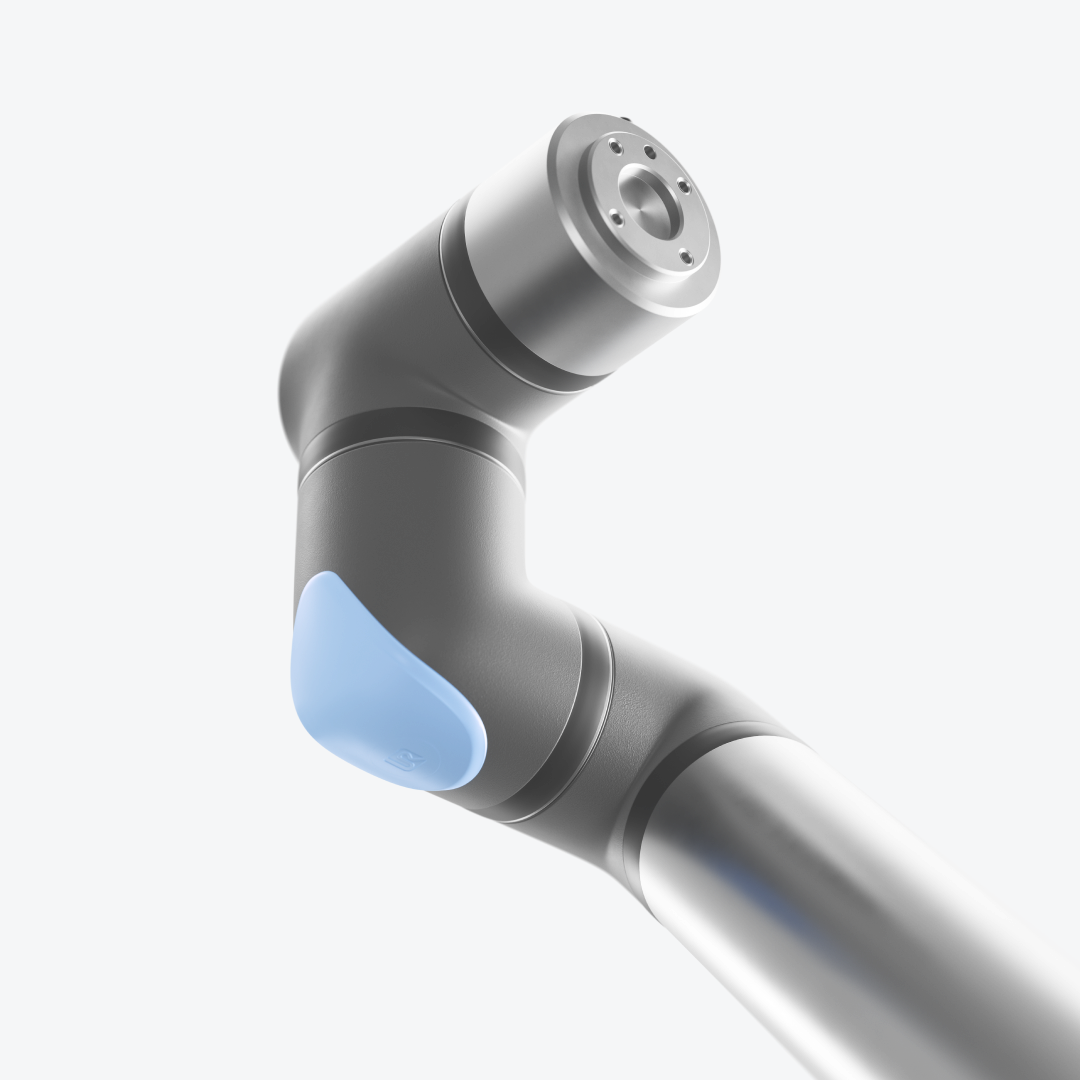
Collaborative robots, the smaller, lower-payload arms designed to work alongside people without full safety caging, accounted for 2,774 units and US$114 million in first-half 2026 orders, representing 15.4 percent of total units but only 9.8 percent of total revenue. That gap between unit share and revenue share is the clearest available evidence of where industrial robotics pricing pressure is concentrated: cobots are growing as a share of the market by volume faster than by dollar value, which means average selling prices in that segment are compressing even as adoption widens.
For a buyer, that compression is good news in the near term and a signal worth watching in the medium term. Falling cobot prices make automation economically viable for smaller manufacturers and lower-volume production lines that could not previously justify the capital cost of a traditional caged industrial arm. It also means vendors competing primarily on cobot hardware are operating in a segment with thinning margins, and buyers should expect continued consolidation among smaller cobot manufacturers over the next two to three years as competition compresses pricing further. A vendor selection process that only weighs current price and specification, without asking about a cobot supplier's balance sheet and service continuity plan, is exposed to that consolidation risk in a way a buyer working with an established industrial-arm vendor is not.
Reading the Data Without Overreading It
None of this data supports a claim that automotive automation spending is disappearing, and treating a 25 percent OEM order decline as evidence of a structural retreat from robotics in vehicle manufacturing would be a misreading of a single, likely cyclical, data point. Automotive remains one of the largest robotics end markets by installed base even after this pullback, and a return to EV or next-generation platform investment could reverse the order trend within a few quarters. What the data does support is a more specific, more useful claim for anyone building a robotics vendor strategy this year: the fastest-growing demand segments in North American automation are no longer automotive-adjacent, and vendors, integrators, and component suppliers whose sales pipelines are still built around automotive references are increasingly selling into last cycle's growth market rather than this one.
That has a direct implication for how procurement teams outside automotive should evaluate vendor claims. A robotics supplier whose case studies and reference customers are overwhelmingly automotive is not automatically a worse choice for a semiconductor or pharmaceutical buyer, but it is a signal worth probing directly: ask how much of the vendor's recent order volume has come from outside its historical core industry, and ask for reference customers in your specific vertical rather than accepting automotive case studies as a proxy for general competence. A3's data suggests the vendors that will grow fastest over the next several quarters are the ones already building that non-automotive reference base now, and a buyer choosing between two otherwise comparable vendors should weigh that trajectory as seriously as current pricing.
The Longer Arc Behind One Quarter of Numbers
Quarterly order data is noisy by nature, and a single quarter's automotive decline or semiconductor surge should never be extrapolated into a permanent trend on its own. What makes A3's first-half 2026 release more significant than a typical quarterly update is that it shows the same directional shift, automotive down, everything else up, persisting across two consecutive quarters rather than appearing as a single-period anomaly. A trend that survives two quarters in a row is still not proof of a permanent realignment, but it is enough evidence to justify treating the shift as the market's current baseline rather than noise, at least until the data says otherwise.
The practical test for procurement teams over the next two quarters is simple: watch whether automotive OEM orders stabilize or continue declining, and watch whether semiconductor and life-sciences growth holds its current pace or was itself inflated by a temporary capacity-expansion wave of its own. Either answer will tell buyers more about where to place their next robotics contract than any single vendor's product roadmap will.
This analysis draws on the Association for Advancing Automation's published first-half and second-quarter 2026 order data and independent trade reporting on that release. This article is for general information purposes only and does not constitute investment, financial, or legal advice.