

描述
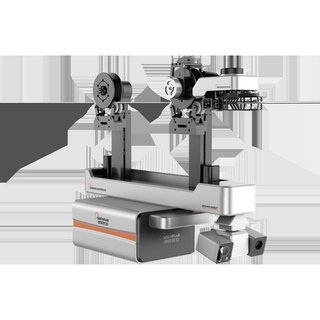
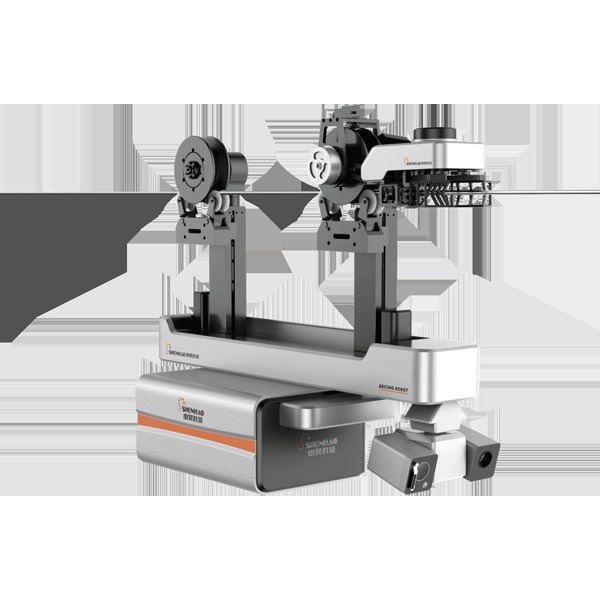
The L6 is a robot that lives on the wire. Delivered to a transmission line's ground wire by drone, it crawls the conductor and removes ice by a combined clamping, shovelling and rolling action, working across spans and climbing over the hardware that normally stops line robots — tension and straight towers, seismic hammers, connecting pipes and large spans. Its real design problem is not the ice but staying out there: it charges wirelessly at the tower, replenishes from solar nests automatically, drops into low-power standby with remote wake-up, and protects itself when the battery is low, so it can remain on the line waiting for the next icing event instead of being carried up each time. It is IP55 rated, works in level 6 wind and resists the electromagnetic field of a live line. For when things go wrong it carries battery quick-release, a backup external battery interface, emergency rescue remote control and decoupling of its execution units.
功能特色
- Crawls transmission line ground wires, delivered and recovered by unmanned aerial vehicle
- Combined de-icing mode of clamping, shovelling and rolling actions for mild to moderate ice cover within the span
- Climbs over up and down tension towers, straight towers, seismic hammers, connecting pipes and large spans
- Maximum movement speed 1.3 m/s
- maximum climbing angle 45 degrees
- Battery life over 5 hours
- Wireless charging at the tower with automatic power replenishment from solar nests
- Low battery protection, low-power standby and remote wake-up from sleep for long-term stay on the tower
- IP55 protection, normal operation in level 6 wind and low-temperature environments
- Operating temperature -20 to 50 degrees Celsius
- operating humidity up to 95%
- wind resistance 10 m/s or more
- Electromagnetic interference resistance and sensor self-test
- Emergency rescue: battery quick release, backup external battery interface, emergency rescue remote control and execution unit decoupling
- Real-time upload of operating status and de-icing effect with live camera image
技術規格
已驗證| 移動能力 | |
| 移動類型 | 其他 |
|---|---|
| 速度 | 4.68 km/h |
| 作業環境 | Live high-voltage transmission lines in icing conditions; IP55; -20 to 50 degrees Celsius; level 6 wind |
| 致動器 | Line-crawling chassis gripping the ground wire, with combined clamping, shovelling and rolling de-icing mechanisms; deployed by UAV |
| 電源與續航 | |
| 續航時間 | >5 h |
| 感知與計算 | |
| 感測器 | camera, sensor self-test system |
技術規格
已驗證| 移動能力 | |
| 移動類型 | 其他 |
|---|---|
| 速度 | 4.68 km/h |
| 作業環境 | Live high-voltage transmission lines in icing conditions; IP55; -20 to 50 degrees Celsius; level 6 wind |
| 致動器 | Line-crawling chassis gripping the ground wire, with combined clamping, shovelling and rolling de-icing mechanisms; deployed by UAV |
| 電源與續航 | |
| 續航時間 | >5 h |
| 感知與計算 | |
| 感測器 | camera, sensor self-test system |
圖片
 martti
圖片貢獻
影片
機器人論壇
正在載入論壇...
評分
常見問題
What is the Shenhao L6 UAV-Mounted De-Icing Robot?
The L6 is a robot that lives on the wire. Delivered to a transmission line's ground wire by drone, it crawls the conductor and removes ice by a combined clamping, shovelling and rolling action, working across spans and climbing over the hardware that normally stops line robots — tension and straight towers, seismic ham…
Who makes the Shenhao L6 UAV-Mounted De-Icing Robot?
The Shenhao L6 UAV-Mounted De-Icing Robot is made by Shenhao Technology, a robotics company based in China.
How much does the Shenhao L6 UAV-Mounted De-Icing Robot cost?
Shenhao Technology has not publicly announced pricing for the Shenhao L6 UAV-Mounted De-Icing Robot. You can enquire through RobotAIGeek for current pricing.
What is the Shenhao L6 UAV-Mounted De-Icing Robot used for?
The Shenhao L6 UAV-Mounted De-Icing Robot is designed for 檢查, 監測, transmission line ground wire de-icing, and ice-storm emergency response. It is used in 能源, 製造業, and 安全 settings.
How fast is the Shenhao L6 UAV-Mounted De-Icing Robot?
The Shenhao L6 UAV-Mounted De-Icing Robot can move at speeds of up to 4.68 km/h.
What is the battery life of the Shenhao L6 UAV-Mounted De-Icing Robot?
The Shenhao L6 UAV-Mounted De-Icing Robot runs for >5 h on a charge.
與同類機器人對比
看看這款機器人與最接近的同類產品相比表現如何
- Shenhao L6 UAV-Mounted De-Icing Robot vs Shenhao T2 Line Comprehensive Inspection Robot
- Shenhao L6 UAV-Mounted De-Icing Robot vs BUNKER MINI 2.0
- Shenhao L6 UAV-Mounted De-Icing Robot vs JUMP® 20-X
- Shenhao L6 UAV-Mounted De-Icing Robot vs TOM 50 RE
- Shenhao L6 UAV-Mounted De-Icing Robot vs TRACER 2.0