Ultra Raises US$50 Million Series A, Deepens Physical Intelligence Tie-Up
Ultra raised a US$50 million Series A and deepened its reliance on Physical Intelligence's AI models, a split between hardware and intelligence that buyers evaluating the warehouse-robotics vendor should weigh more heavily than the round size itself.

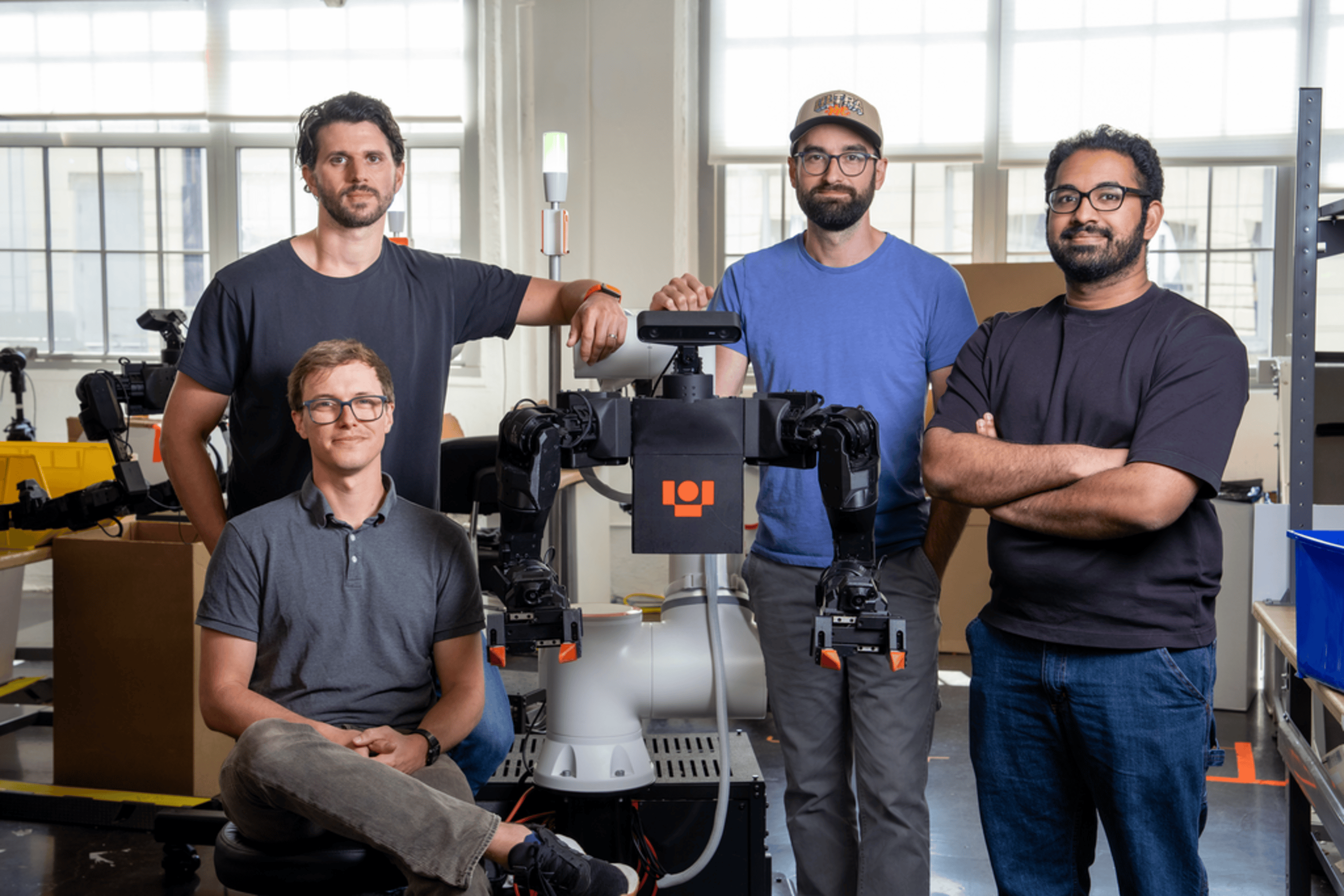
Ultra, a Brooklyn, New York, robotics startup that leases dual-arm packing robots to warehouses, announced on October 9, 2026 that it had raised a US$50 million Series A led by Framework Ventures, with Y Combinator participating, while deepening its reliance on Physical Intelligence, the artificial intelligence (AI) research company that supplies the software running Ultra's machines.
The round lifts Ultra's disclosed funding to US$62 million, layered on an earlier US$12 million seed round led by Y Combinator and Next View, and backs a business narrower than the headline figure suggests. Ultra builds and installs OP1, a stationary, dual-arm packing robot with roughly a five-by-five-foot footprint and up to ten feet of vertical reach, at third-party logistics (3PL) sites across the United States, where the fleet has packed more than 500,000 orders for shipment. The capability that makes those installations work, the software that lets a fixed-base arm learn a new conveyor layout or tote size without months of reprogramming, is licensed rather than owned. It comes from Physical Intelligence, the San Francisco company founded by former Google DeepMind researchers and now valued at roughly US$5.6 billion, whose models already run machines built by several other robot makers.
A Stack Split Between Hands and Mind
Warehouse automation is quietly separating into two businesses that used to be sold as one. One group of vendors, Ultra among them, owns the metal: the arms, the mounting hardware, the service contract, and the relationship with the warehouse operator who signs the invoice. A much smaller group owns the intelligence that decides what the arm does next. Physical Intelligence sits in the second group, and its software now sits inside Ultra's robots, inside other companies' robots, and inside a growing number of pitch decks that describe themselves as hardware businesses while quietly outsourcing the hardest engineering problem to someone else.
For a buyer evaluating Ultra, that split matters more than the round size. A US$50 million Series A says investors believe Ultra can keep installing hardware and collecting fees. It says nothing about whether Ultra, rather than Physical Intelligence, controls the roadmap for what its robots will be able to do in two years. Framework Ventures and Y Combinator are betting on distribution and installation competence; the harder, less visible bet is on a relationship Ultra does not fully control.
That dynamic undercuts a line that often slips into funding announcements: the idea that an AI partnership is itself a differentiator. Physical Intelligence licenses its software to multiple robot makers, and Ultra's own announcement frames the relationship as one among several rather than an exclusive arrangement, which means the distinguishing story for a buyer is not which foundation model a vendor has lined up. It is how well that vendor's hardware, installation process, and service organization turn a shared model's capability into packed orders on a real floor. Capital follows the model. Contracts still have to be won on the floor.
What Deepening the Partnership Actually Buys
Ultra and Physical Intelligence describe their arrangement as a body-and-brains division of labor: Ultra designs, manufactures, and installs the robot, while Physical Intelligence supplies the perception and control models that let it adapt to a given customer's layout instead of running a fixed script. In plain terms, most industrial robots before this generation worked the way a vending machine does, repeating one motion precisely because an engineer programmed every step in advance. A model like Physical Intelligence's gives the robot something closer to the ability to generalize, so it can look at a bin it has not seen before and still figure out how to pack it. That is the distinction between a demo and a deployable system, and it is also the distinction most warehouse operators cannot verify for themselves on a trade-show floor.
The exchange runs both directions. Ultra gets a capability it would otherwise need years and hundreds of millions of dollars to build in-house. Physical Intelligence gets what it needs more than cash: real warehouses, real failure cases, and real operator feedback that a research lab cannot manufacture on its own. Neither company has disclosed financial terms, an exclusivity clause, or a contract length for the arrangement, which leaves open the data ownership question that every integrator will face as foundation models move out of laboratories and into other companies' factory floors. A warehouse operator signing with Ultra today is also, in practice, entering a data relationship with a company it has never spoken to.
The Economics of Renting Instead of Owning
Ultra sells its robots as a subscription rather than a capital purchase: customers pay an upfront integration fee to get a unit installed, then an ongoing monthly fee that covers hardware and software support. Chief executive Jon Miller Schwartz, a mechanical engineer by training, says the model has let Ultra raise prices as demand has grown and that the company has booked meaningful revenue, though it has not disclosed a figure. That pricing power is the clearest evidence in this announcement that Ultra's customers are not treating the robots as pilots. A buyer willing to commit to recurring software and hardware fees, rather than a one-time purchase, has usually already decided the unit pays for itself.
The capital is arriving at a moment when warehouse robotics funding is unusually generous, and buyers should treat any single round as one data point rather than a verdict. Reasonable people can disagree about whether this funding round signals momentum or marks a top in a sector where several AI-robotics valuations have run well ahead of disclosed revenue. What is verifiable is narrower: Ultra can point to more than 500,000 packed orders as evidence of actual throughput, a figure that competing vendors pitching similar hardware without comparable deployment history cannot match.
Why the Floor Still Belongs to Narrower Machines
Schwartz's public argument, that humanoid robots draw most of the attention while narrower, purpose-built machines do most of the actual work, is a familiar one in this sector, but it carries real weight when weighed against who is winning contracts today. Ultra's robots share warehouse floors with a widening field of non-humanoid competitors: Exotec, the French vendor whose robots climb vertical storage racks to retrieve goods; Amazon's own internally built fleet; and Atoms, the logistics and AI venture from former Uber chief executive Travis Kalanick, which is chasing a similar body-and-brains model at larger scale. None of these companies sells a humanoid form factor, and all of them already operate in working warehouses, while general-purpose humanoids remain better known for falling over in demonstration videos than for completing a full shift unassisted. Schwartz's own estimate, that humanoid robots need roughly five more years before they scale the way narrower machines are scaling now, is a prediction rather than a fact, and buyers should treat it as one. It is, however, a prediction made by someone whose business depends on getting the comparison right, which gives it more weight than the identical claim made by a humanoid vendor with an incentive to argue the opposite.
The Due Diligence List This Deal Should Update
For a procurement or sourcing team already running a request for proposal on warehouse automation, the Ultra round and the Physical Intelligence tie-up change what belongs on the vendor questionnaire. The traditional checklist, uptime guarantees, integration timeline, cost per pick, and service response time, still applies. What it now needs is a second layer of questions aimed at the software underneath the hardware: which company owns the model controlling the robot, what happens contractually if that company is acquired, changes its pricing, or redirects engineering attention toward a different hardware partner, and whether the warehouse's own operational data, the footage, the failure logs, the pick-rate data used to retrain the model, remains the buyer's property or becomes training material for a vendor the buyer never signed a contract with directly.
None of this makes Ultra a weaker bet than a competitor building its own AI stack in-house. A licensed capability that already works, demonstrated by more than half a million completed orders, beats a proprietary one still in development. But a buyer who signs a multi-year service contract with Ultra is underwriting two companies' execution risk for the price of one, and the contract should say so explicitly rather than leave the dependency implicit in a funding announcement.
What the Raise Changes, and What It Does Not
Nothing in this announcement changes the basic risk a procurement team takes on when it signs with Ultra: the robot on the floor is only as capable as the AI model licensed to run it, and that model belongs to a company Ultra does not control. The US$50 million Series A extends Ultra's runway to keep installing hardware and defending its pricing, and the deepened Physical Intelligence partnership widens the capability gap between Ultra's robots and competitors still running on hard-coded scripts. It does not resolve the underlying dependency, and it does not, on its own, prove that Ultra's margins survive if Physical Intelligence's commercial terms ever change. The single number that matters most for a buyer weighing this vendor against its rivals is not US$50 million or US$5.6 billion. It is 500,000, the count of orders Ultra's robots have already packed, a figure no future funding announcement can revise.
The account above draws on Ultra's and Physical Intelligence's own statements about the financing, the partnership, and deployment volumes, read alongside public market activity in warehouse automation and embodied-AI investment over the same period.
This article is provided for general information purposes only and does not constitute investment, procurement, legal, or engineering advice. Figures reflect the sources listed above as of the stated information cut-off and may change without notice.