DESCRIPTION
Teledyne Slocum Sentinel Glider est un Marine de Teledyne Marine. Il est conçu pour Data Collection, Research, Surveying. Chiffres clés : 171 kg, 3.5 kg de charge utile.
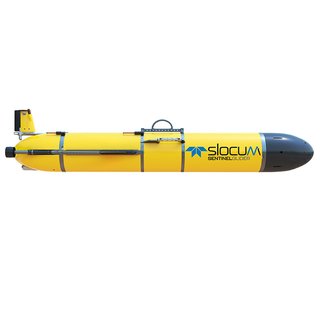
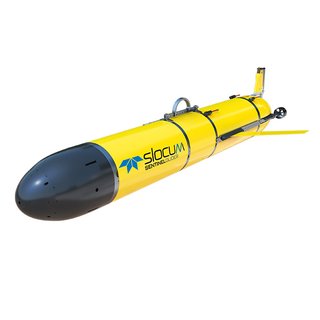
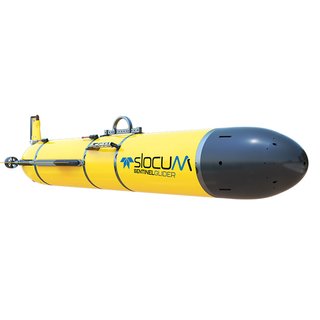
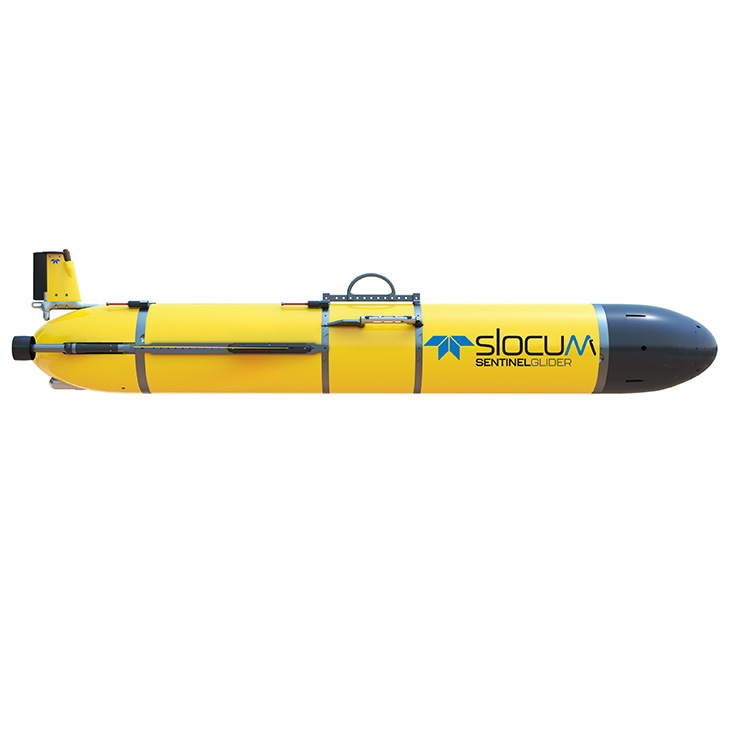
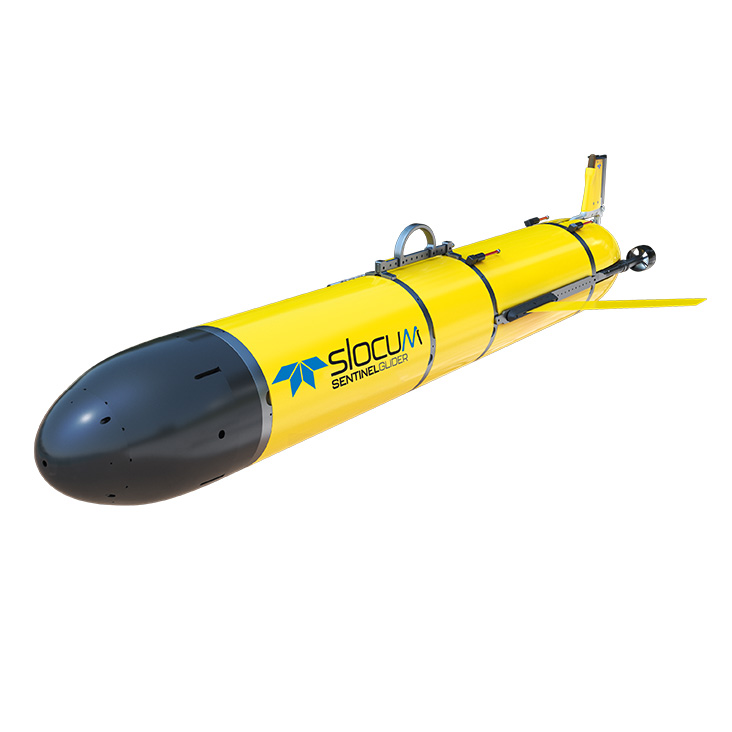
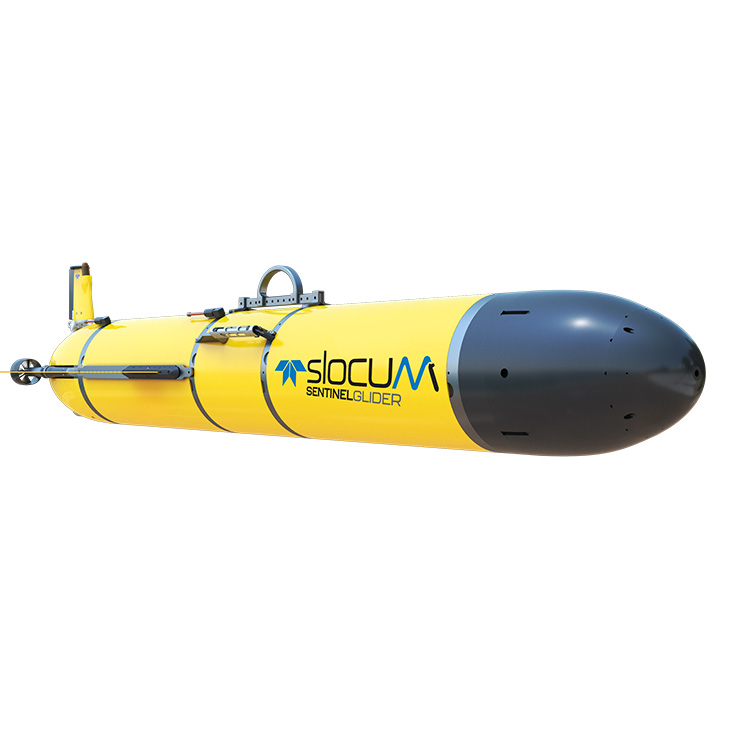
The Slocum Sentinel is Teledyne Webb Research's next-generation autonomous ocean glider, an ultra-long-endurance uncrewed vehicle built for persistent ocean monitoring on the scale of years. Teledyne calls it the longest-endurance glider on the market: 25.2 kWh of primary lithium energy (six 48-cell packs) lets it stay at sea for more than 18 months. It is 2.57 m long, 0.33 m in diameter and 171 kg, rated to 1,000 m, with a 3.5 kg maximum payload. Its 3.4-litre (plus or minus 1.7 L) buoyancy engine - the largest on the market, per Teledyne - gives an average glide speed of 0.75 knot and up to 1.5 knots, and integrated thrusters on every Sentinel add bursts of up to 2.5 knots against strong currents or to shorten transits. The larger hull leaves room for extra batteries, internal sensors and several external integration points, and up to eight sensors can run at once. It accepts the sensor, hardware and software options of the Slocum G3 - including ADCPs, CTDs, acoustic modems, passive acoustic monitoring, echosounders, fish-tag detection, nitrate, oxygen and optical sensors - and is piloted through Slocum Fleet Mission Control. It navigates by GPS, pressure sensor, altimeter and dead reckoning and communicates by RF modem, Iridium and ARGOS.
FONCTIONNALITÉS
- Endurance 18+ months at sea
- 25.2 kWh primary lithium energy (6 x 48-cell packs)
- Depth rating 1000 m
- Length 2.57 m
- diameter 0.33 m
- volume 170 L
- mass 171 kg
- Max payload mass 3.5 kg
- 3.4 L (+/-1.7 L) buoyancy engine
- Glide speed 0.75 knot average, 1.5 knots max
- Integrated thrusters: bursts up to 2.5 knots
- Up to 8 sensors simultaneously
- GPS, pressure sensor, altimeter, dead reckoning
- RF modem, Iridium (RUDICS), ARGOS
- Slocum Fleet Mission Control piloting
CARACTÉRISTIQUES TECHNIQUES
Vérifié| Physique | |
| Poids | 171 kg |
|---|---|
| Dimensions | L 2.57 m |
| Charge utile | 3.5 kg |
| Mobilité | |
| Type de déplacement | Aquatic |
| Vitesse | 4.6 km/h |
| Environnement | Underwater, open ocean and coastal |
| Alimentation | |
| Autonomie de la batterie | Up to 18+ months |
FORUMS DU ROBOT
Chargement des forums...
CARACTÉRISTIQUES TECHNIQUES
Vérifié| Physique | |
| Poids | 171 kg |
|---|---|
| Dimensions | L 2.57 m |
| Charge utile | 3.5 kg |
| Mobilité | |
| Type de déplacement | Aquatic |
| Vitesse | 4.6 km/h |
| Environnement | Underwater, open ocean and coastal |
| Alimentation | |
| Autonomie de la batterie | Up to 18+ months |
Images
Contributions d'images
Vidéos
FORUMS DU ROBOT
Chargement des forums...
NOTES
QUESTIONS FRÉQUENTES
What is the Teledyne Slocum Sentinel Glider?
The Slocum Sentinel is Teledyne Webb Research's next-generation autonomous ocean glider, an ultra-long-endurance uncrewed vehicle built for persistent ocean monitoring on the scale of years.
Who makes the Teledyne Slocum Sentinel Glider?
The Teledyne Slocum Sentinel Glider is made by Teledyne Marine, a robotics company based in United States.
How much does the Teledyne Slocum Sentinel Glider cost?
Teledyne Marine has not publicly announced pricing for the Teledyne Slocum Sentinel Glider. You can enquire through RobotAIGeek for current pricing.
What is the Teledyne Slocum Sentinel Glider used for?
The Teledyne Slocum Sentinel Glider is designed for data collection, research, surveying, and monitoring. It is used in defence, energy, and research settings.
What is the payload capacity of the Teledyne Slocum Sentinel Glider?
The Teledyne Slocum Sentinel Glider has a payload capacity of 3.5 kg.
How much does the Teledyne Slocum Sentinel Glider weigh?
The Teledyne Slocum Sentinel Glider weighs 171 kg.
How fast is the Teledyne Slocum Sentinel Glider?
The Teledyne Slocum Sentinel Glider can move at speeds of up to 4.6 km/h.
What is the battery life of the Teledyne Slocum Sentinel Glider?
The Teledyne Slocum Sentinel Glider runs for Up to 18+ months on a charge.
COMPARER AVEC DES ROBOTS SIMILAIRES
Voyez comment ce robot se positionne face à ses alternatives les plus proches
- Teledyne Slocum Sentinel Glider vs NETRA AUV
- Teledyne Slocum Sentinel Glider vs Kongsberg Sounder USV
- Teledyne Slocum Sentinel Glider vs Kongsberg Sounder USV with gondola
- Teledyne Slocum Sentinel Glider vs Teledyne Slocum G3 Glider
- Teledyne Slocum Sentinel Glider vs XGATEWAY