DESCRIPCIÓN
EULON Ruyi 2.0 es un Medical-Robots de Changsha Eulon Robot 优龙机器人. Está diseñado para Assistance, Rehabilitation, Helping. Cifras clave: 1.8 kg, 360 min de autonomía.
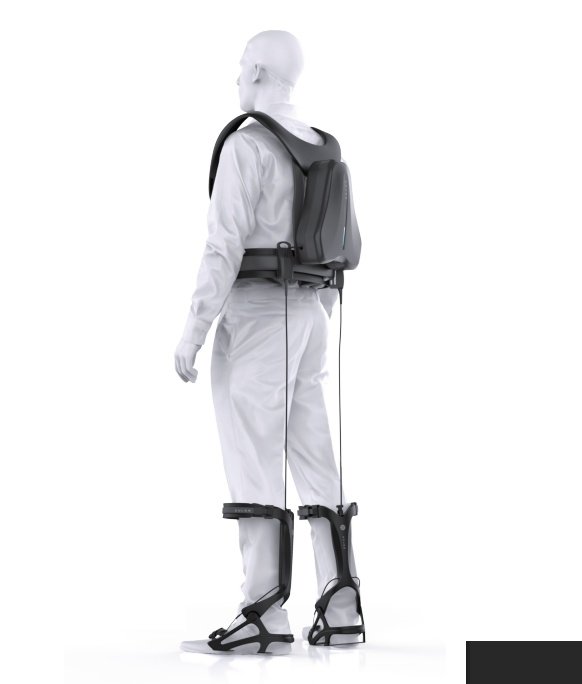
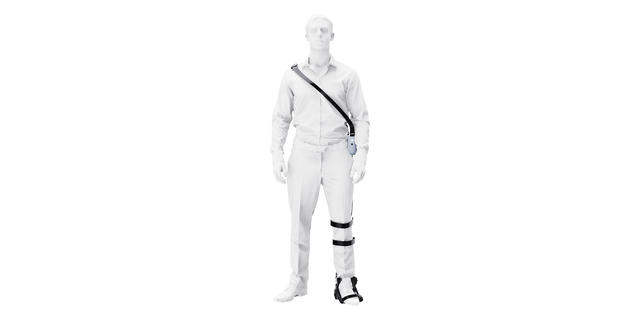
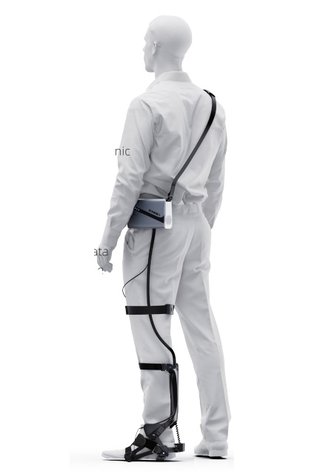
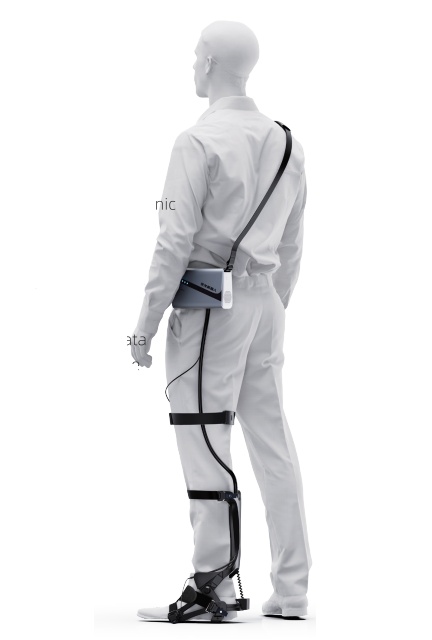
Ruyi 2.0 is the second generation of EULON's ankle walking-assistance device, and the change from the first is in how the force is delivered: a Bowden cable drive pulls the way a muscle contracts, and the ankle brace it pulls against carries a dorsiflexion-assist spring built as a bionic Achilles tendon. The brace stabilises the joint against inversion and eversion while the cable supplies the kinetic assistance, which is what smooths the transitions between gait phases. The control algorithm identifies walking intent and the phase of the gait cycle, so assistance starts exactly at the beginning of swing and finishes before heel strike rather than fighting the wearer's own motion. It supports walking at up to 120 steps per minute and reaches a dorsiflexion angle of at least 30 degrees. At roughly 1.8 kg it is lighter than Ruyi 1.0 and runs for six hours or more. Everything is controlled from a WeChat mini program, including real-time gait data, so there is no separate app to install — a deliberately low-friction choice for a device meant to be worn daily by people with ankle mobility impairments.
CARACTERÍSTICAS
- Bowden cable drive mimicking muscular contraction to assist ankle flexion
- Bionic Achilles tendon design with an integrated dorsiflexion-assist spring
- Ankle brace stabilises the joint against inversion and eversion
- Smart gait analysis identifies walking intent, gait cycles and phases
- Assistance begins at the initiation of swing and ends before heel strike
- Product weight approximately 1.8 kg
- Battery life 6 hours or more
- Fastest walking speed 120 steps per minute
- Maximum dorsal flexion angle 30 degrees or more (tolerance 2.5 degrees or less)
- Controlled entirely through a WeChat mini program - no separate app required
- Real-time gait data available in the same mini program
- Target users: individuals with ankle joint mobility impairments
ESPECIFICACIONES TÉCNICAS
| Características físicas | |
| Peso | 1.8 kg |
|---|---|
| Movilidad | |
| Tipo de movimiento | Other |
| Manipulación | Baja |
| Entorno | Everyday walking and gait-correction training for wearers with ankle joint mobility impairment |
| Actuadores | Bowden cable drive from a waist pack to an ankle brace carrying a bionic Achilles-tendon dorsiflexion spring |
| Energía | |
| Autonomía de la batería | 360 min |
| Percepción y cómputo | |
| Sensores | gait sensors |
| Software / IA | Gait-phase recognition algorithm with WeChat mini-program control and real-time gait data readout |
FOROS DEL ROBOT
Cargando foros...
ESPECIFICACIONES TÉCNICAS
| Características físicas | |
| Peso | 1.8 kg |
|---|---|
| Movilidad | |
| Tipo de movimiento | Other |
| Manipulación | Baja |
| Entorno | Everyday walking and gait-correction training for wearers with ankle joint mobility impairment |
| Actuadores | Bowden cable drive from a waist pack to an ankle brace carrying a bionic Achilles-tendon dorsiflexion spring |
| Energía | |
| Autonomía de la batería | 360 min |
| Percepción y cómputo | |
| Sensores | gait sensors |
| Software / IA | Gait-phase recognition algorithm with WeChat mini-program control and real-time gait data readout |
Imágenes
 martti

Imágenes aportadas
Vídeos
FOROS DEL ROBOT
Cargando foros...
VALORACIONES
PREGUNTAS FRECUENTES
What is the EULON Ruyi 2.0?
Ruyi 2.0 is the second generation of EULON's ankle walking-assistance device, and the change from the first is in how the force is delivered: a Bowden cable drive pulls the way a muscle contracts, and the ankle brace it pulls against carries a dorsiflexion-assist spring built as a bionic Achilles tendon.
Who makes the EULON Ruyi 2.0?
The EULON Ruyi 2.0 is made by Changsha Eulon Robot 优龙机器人, a robotics company based in China.
How much does the EULON Ruyi 2.0 cost?
Changsha Eulon Robot 优龙机器人 has not publicly announced pricing for the EULON Ruyi 2.0. You can enquire through RobotAIGeek for current pricing.
What is the EULON Ruyi 2.0 used for?
The EULON Ruyi 2.0 is designed for assistance, rehabilitation, and helping. It is used in consumer and healthcare settings.
How much does the EULON Ruyi 2.0 weigh?
The EULON Ruyi 2.0 weighs 1.8 kg.
What is the battery life of the EULON Ruyi 2.0?
The EULON Ruyi 2.0 runs for about 360 minutes on a charge.
COMPARAR CON ROBOTS SIMILARES
Vea cómo se sitúa este robot frente a sus alternativas más cercanas
- EULON Ruyi 2.0 vs EULON Ruyi 1.0
- EULON Ruyi 2.0 vs Ekso Bionics Ekso Indego Personal
- EULON Ruyi 2.0 vs RoboCT UGO Rehabilitation Exoskeleton (Household)
- EULON Ruyi 2.0 vs RoboCT KidGo Children's Exoskeleton (Household)
- EULON Ruyi 2.0 vs Jianghuai Hip Assisted Exoskeleton Robot