
BESCHREIBUNG
Autonomous Service Device ist ein Mobile-Robots von WHILL. Er ist für Navigation, Hilfe, Transport ausgelegt. Eckdaten: erschienen 2020.
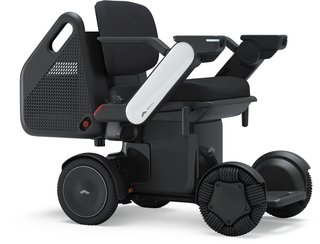
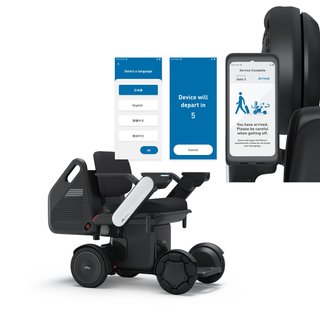
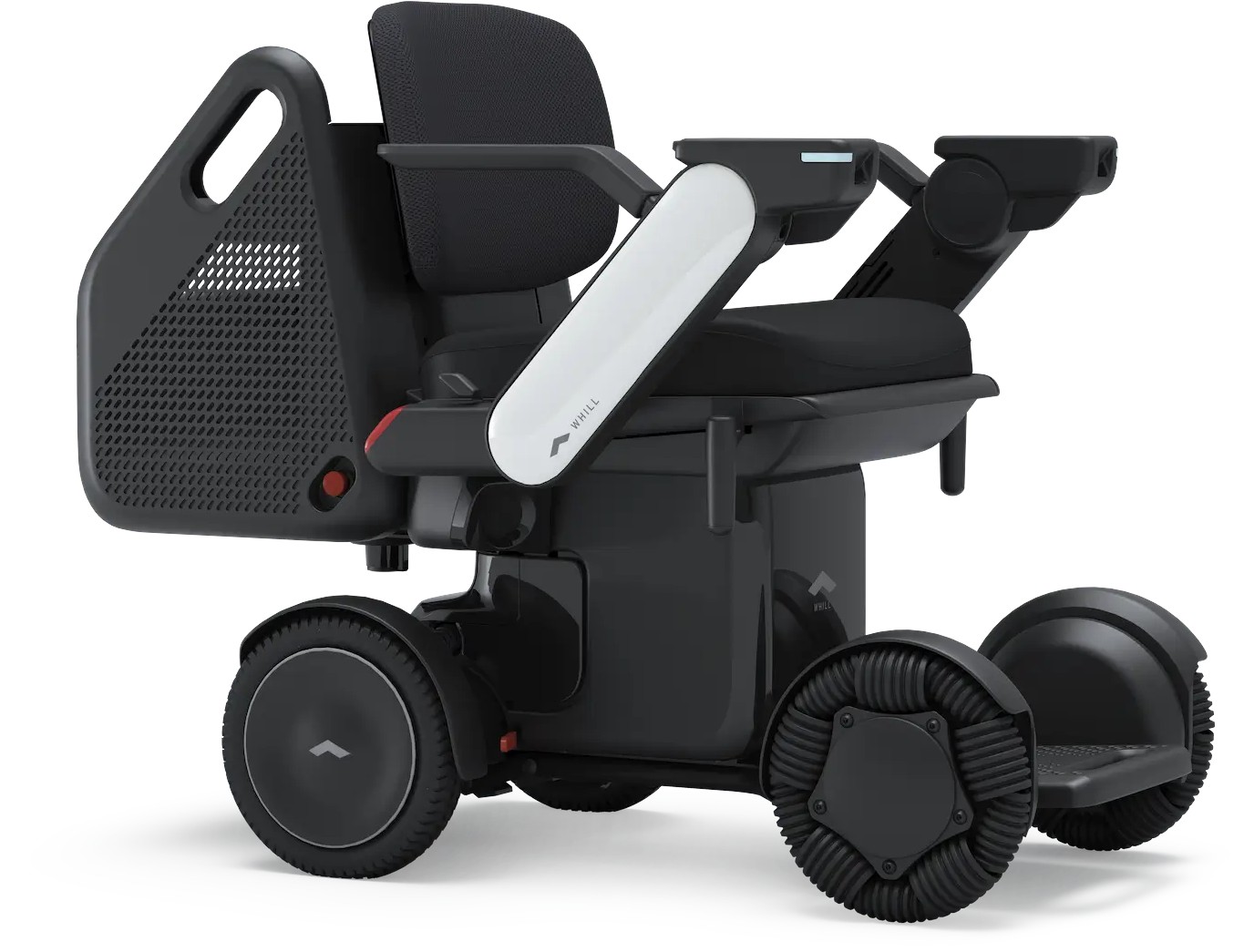
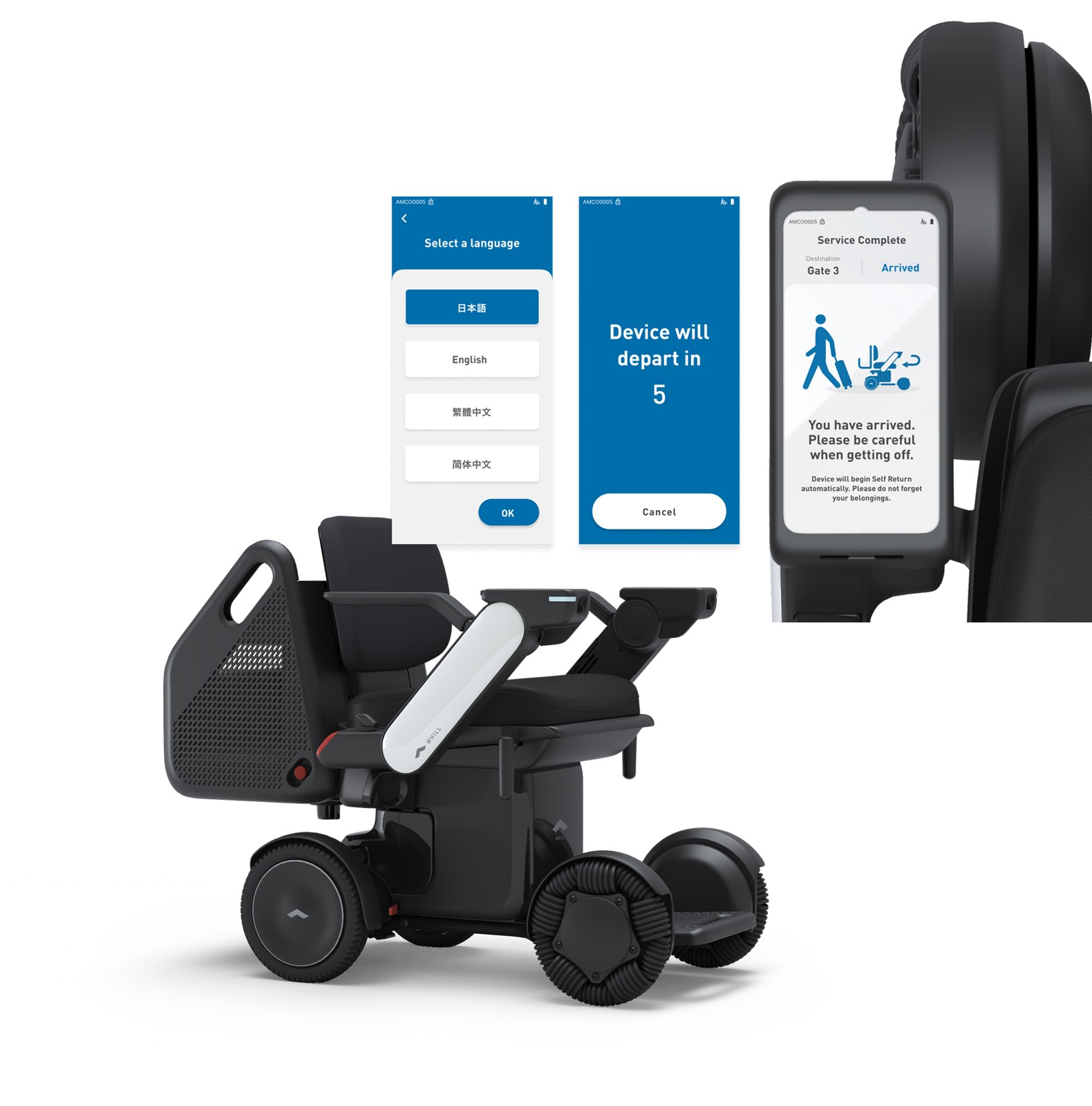
WHILL's Autonomous Service Device is a self-driving personal mobility chair that carries passengers with reduced mobility through airport terminals and other large public facilities. The passenger, or airport assistance staff, picks a destination such as a departure gate on the touchscreen service panel; the chair drives there on pre-mapped digital routes and then returns to its home station by itself, freeing staff from pushing wheelchairs and bringing them back. Front, side and rear sensors give 360-degree coverage, and the chair brakes automatically when an obstacle appears; desk and stair sensors, an emergency stop button and a seatbelt add protection. Omni-wheels let it turn on the spot for tight spaces, top speed is capped at 2.2 mph - slower than walking pace - and an oversized basket holds most carry-on bags. A cloud fleet-management platform tracks each device's location, battery and status in real time, and WHILL integrates with PRM workforce software such as AvTech for dispatching. WHILL put the service into commercial use at Tokyo Haneda in 2020; it now runs at around 26 airports and facilities, with close to one million autonomous rides.
FUNKTIONEN
- Self-driving to a destination chosen on the touchscreen service panel
- returns to its home station autonomously
- 360-degree sensing with front, side and rear sensors
- automatic braking on obstacles
- Desk sensor and stair sensor
- emergency stop button
- seatbelt
- Omni-wheels: rotates 360 degrees in place
- Max speed up to 2.2 mph (3.5 km/h), below walking pace
- Oversized storage basket for carry-on luggage
- Real-time fleet management (location, battery, status, diagnostics)
- integration with AvTech PRM software
- Deployment includes facility scanning, digital pathways and speed zones set up by WHILL
TECHNISCHE DATEN
Verifiziert| Mobilität | |
| Bewegungsart | Radbasiert |
|---|---|
| Geschwindigkeit | 3.54 km/h |
| Einsatzumgebung | Indoor airports and public facilities |
| Sensorik & Rechenleistung | |
| Sensoren | 360-degree obstacle sensors (front, side, rear), desk sensor, stair sensor |
| Konnektivität | Cloud fleet management; workforce-platform integration |
ROBOTER-FOREN
Foren werden geladen...
TECHNISCHE DATEN
Verifiziert| Mobilität | |
| Bewegungsart | Radbasiert |
|---|---|
| Geschwindigkeit | 3.54 km/h |
| Einsatzumgebung | Indoor airports and public facilities |
| Sensorik & Rechenleistung | |
| Sensoren | 360-degree obstacle sensors (front, side, rear), desk sensor, stair sensor |
| Konnektivität | Cloud fleet management; workforce-platform integration |
Bilder
 martti
 martti
 martti
Bildbeiträge
Videos
ROBOTER-FOREN
Foren werden geladen...
BEWERTUNGEN
HÄUFIG GESTELLTE FRAGEN
What is the Autonomous Service Device?
WHILL's Autonomous Service Device is a self-driving personal mobility chair that carries passengers with reduced mobility through airport terminals and other large public facilities.
Who makes the Autonomous Service Device?
The Autonomous Service Device is made by WHILL, a robotics company based in Japan.
How much does the Autonomous Service Device cost?
WHILL has not publicly announced pricing for the Autonomous Service Device. You can enquire through RobotAIGeek for current pricing.
What is the Autonomous Service Device used for?
The Autonomous Service Device is designed for navigation, hilfe, transport, and autonomous passenger transport for people with reduced mobility in airports and large facilities. It is used in gebäudemanagement, flughäfen, and gesundheitswesen settings.
How fast is the Autonomous Service Device?
The Autonomous Service Device can move at speeds of up to 3.54 km/h.
When was the Autonomous Service Device released?
The Autonomous Service Device was released in 2020.
MIT ÄHNLICHEN ROBOTERN VERGLEICHEN
Sehen Sie, wie sich dieser Roboter gegenüber seinen nächsten Alternativen schlägt
- Autonomous Service Device vs Ottobot
- Autonomous Service Device vs NAVER LABS ALT-B
- Autonomous Service Device vs Anie Light
- Autonomous Service Device vs gitamini
- Autonomous Service Device vs MYRO