Robotaxis Are Going Everywhere Except Where the Traffic Is
Pony.ai and WeRide's 2026 robotaxi expansion touches Zagreb, Doha, Luxembourg, South Korea and one Singapore estate, while Jakarta, Manila and Bangkok get nothing. Grab's own words explain why: the easy markets are being solved first, and the region's hardest traffic is being deferred, not conquered.

This month a fleet of robotaxis started carrying paying passengers with nobody behind the wheel, on a 22-kilometer route linking an office park to an airport. The city is Zagreb, capital of Croatia, a country of under four million people. Metro Manila alone holds more than three times that many residents, and as of today, no documented fully driverless ride-hailing service operates anywhere in it.
Pony.ai and its local partner Verne opened those fully driverless rides this month, running the company's seventh-generation Robotaxi on a Level 4 domain controller built on NVIDIA's DRIVE AGX platform. Verne's own service had already logged more than 200,000 kilometers with a safety operator on board since it launched in early April, carrying several thousand paying customers to an average rating of 4.7 out of 5. Removing that operator now, on a fixed 22-kilometer corridor, is a genuine technical milestone. It is also, on inspection, part of a pattern.
Every stop on the robotaxi industry's 2026 world tour is small, wealthy, and orderly enough that the hardest problem in autonomous driving, unpredictable human behavior in dense traffic, barely gets tested. The industry keeps calling this "going global." A city-by-city look says it is closer to going wherever the traffic is easiest.
The tour list, read as a list
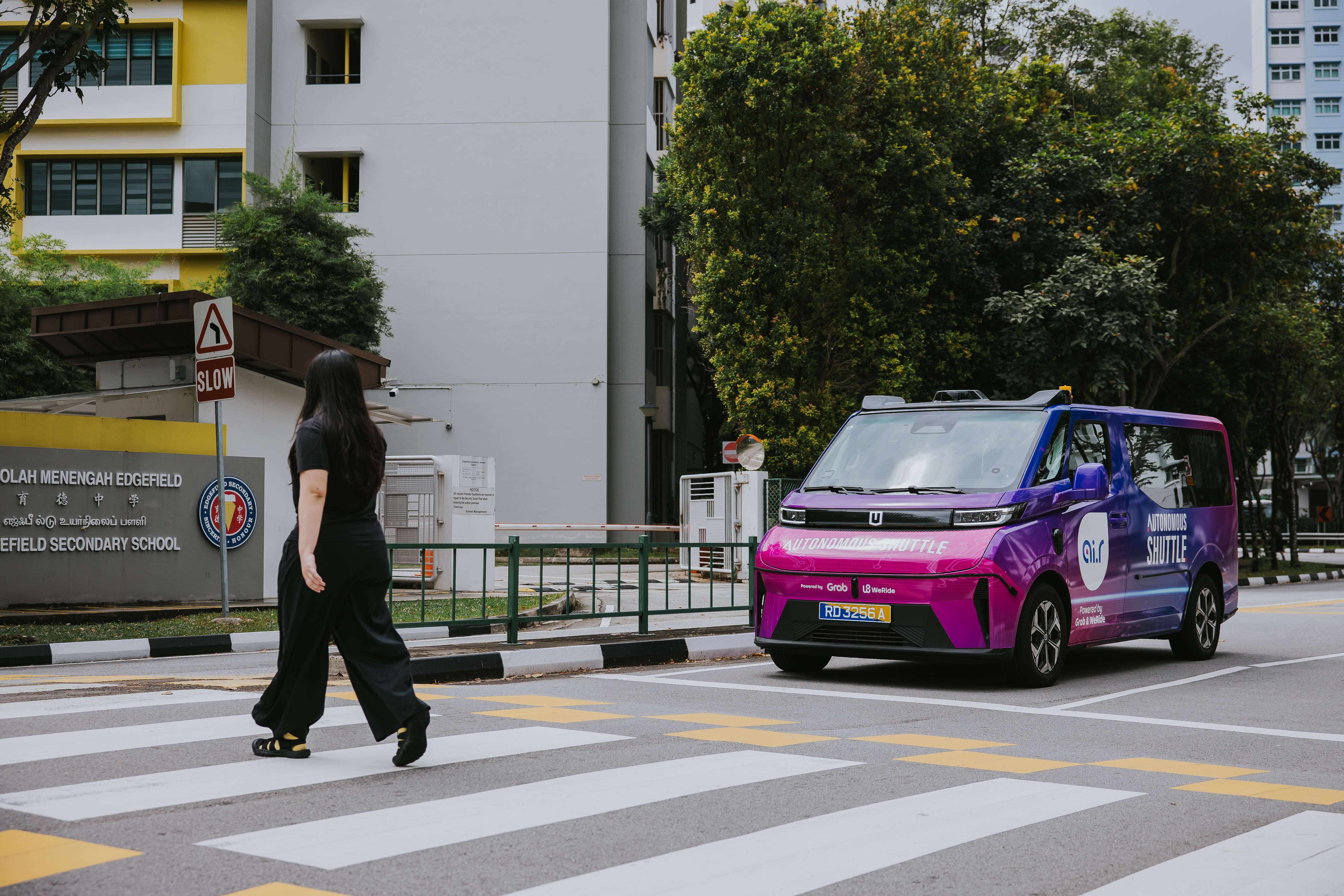
Pony.ai now runs public robotaxi services in Zagreb, in Doha through a partnership with Qatar's Mowasalat, in Luxembourg alongside Bolt and Stellantis, and in South Korea and Singapore, with the company describing its overseas vehicle pipeline as growing past four thousand units. WeRide, the other Chinese operator with a Southeast Asian foothold, runs its Ai.R shuttle service with Grab inside Punggol, a single planned residential estate in Singapore, with eleven vehicles covering two shuttle routes and one short mini-route since its official launch at the end of March. WeRide's own materials put its footprint at more than forty cities across twelve countries, with Slovakia the most recent addition and its global fleet past one thousand vehicles.
Read that list for what it has in common rather than for how long it is. Doha, Luxembourg, Zagreb, and Punggol are not test cases for chaotic urban driving. They are small, high-income, tightly governed environments where lane discipline holds, jaywalking is rare, and the local government can hand an operator a clean regulatory sandbox. Singapore is the wealthiest and most rule-bound member of the Association of Southeast Asian Nations, and it is also the only one on the list.
Jakarta's wider metropolitan area, Jabodetabek, is now estimated at roughly 35.6 million residents under the United Nations' 2025 World Urbanization Prospects, one of the largest urban agglomerations on the planet. Metro Manila's population passed 14 million in the Philippine government's own 2024 census. Bangkok's metro region runs into the double-digit millions as well. None of the three has a public robotaxi pilot, driverless or otherwise, from either Pony.ai or WeRide.
Grab said the quiet part in its own words
Grab, the ride-hailing platform that dominates booking volume across the very Southeast Asian cities the robotaxi tour has skipped, has been explicit about why Singapore came first. In its own account of the Ai.R launch, the company states that Singapore's "infrastructure and regulatory readiness allow us to test safely and learn quickly," and that the service deliberately started with "controlled routes and hours" to build a base of "real-world insights" before going further. Grab separately describes the rest of the region's driving conditions in its own words: "dense mixed traffic, two-wheelers, informal stops," a description any Manila or Jakarta commuter would recognize immediately and any autonomy engineer would read as a warning label.
That is a company that has invested in three different autonomous-driving partners, Momenta, WeRide, and May Mobility, telling its own users, in writing, that the technology it is funding is not yet built for the roads its core business runs on. May Mobility is reportedly using Grab's own mapping data specifically to study conditions such as left-hand traffic in Malaysia before its planned regional entry, which is itself an admission that the mapping and behavior-prediction work for the region's hardest markets has not been done yet.
None of these fleets has driven through a Manila monsoon rush hour, and that absence is not an oversight. It is the plan.
The tradeoff nobody in the press releases mentions
None of this means the incremental approach is wrong. Validating a safety-critical system in a low-complexity environment before scaling to a harder one is standard, sensible engineering practice, and a driverless car that cannot yet handle a swarm of motorcycles threading between lanes in a downpour has no business carrying passengers through one. Unit economics matter too: short, predictable routes with wealthy riders and cooperative regulators produce cleaner data and faster commercial breakeven than sprawling megacity routes ever would.
The problem is what the marketing language does to that legitimate caution. Every new city named in a press release gets reported as evidence that robotaxis have "arrived" and are "expanding globally," language that quietly borrows credibility from markets it has never been tested against. A regulator or transport ministry in Jakarta or Manila reading those headlines could reasonably conclude the technology is closer to being road-ready for their own streets than any of the companies building it have actually demonstrated. The gap between "operating in twelve countries" and "operating in the twelve countries where most of the world's traffic actually happens" is doing a lot of unstated work in every one of these announcements.
What an honest Southeast Asian test would need
I run a platform that tracks robot and robotics-company data across the region, which means most of my working days involve reading these deployment claims against what a Manila or Jakarta commute actually looks like: motorcycles occupying whatever gap exists rather than a marked lane, pedestrians crossing mid-block because the nearest crosswalk is a kilometer away, informal jeepney and tricycle stops that no map file records, and monsoon rain heavy enough to degrade LiDAR return quality for hours at a stretch. None of the environments on the current tour, Zagreb, Doha, Luxembourg, Punggol, requires a system to handle more than one or two of those conditions at once, let alone all of them simultaneously during a single evening commute.
A genuine test of readiness for Southeast Asia's largest cities would mean training and validating behavior-prediction models against exactly that mix, not porting over a system tuned on European or Gulf-state traffic and hoping the edge cases stay rare. Grab's own description of what it still needs to learn, in that same blog post, reads like a rough specification for the work still ahead: identifying "where these systems add the most value," tailoring solutions to "the region's unique needs," and doing it before, not after, claiming regional coverage.
The milestone actually worth watching
The robotaxi story that will matter for Southeast Asia will not be another "first driverless city" release from a market smaller than a single Manila district. It will be the day one of these fleets is tested, without a government mandate forcing the issue, against Jakarta's, Manila's, or Bangkok's actual traffic, because the company running it has decided the technology can finally survive contact with it. Until that day arrives, every new stop on the current tour is evidence of what the technology can already do in a controlled setting, not of how close it is to doing the job the region's own ride-hailing giant would actually need it to do.
Disclaimer: This column reflects the author's own analysis and is provided for general information purposes only. It does not constitute investment, financial, legal, or transportation-policy advice. Readers should verify details with primary sources before making business decisions. Hero image: WeRide's Ai.R autonomous shuttle, operated with Grab, crossing a pedestrian crossing in Punggol, Singapore, official photography via WeRide's investor relations newsroom.