ROKAE Delivers 10,000th Humanoid Force-Controlled Arm
ROKAE has delivered its 10,000th humanoid force-controlled arm, with five of its Helios robots now assembling components inside Schaeffler's Taicang factory in China.

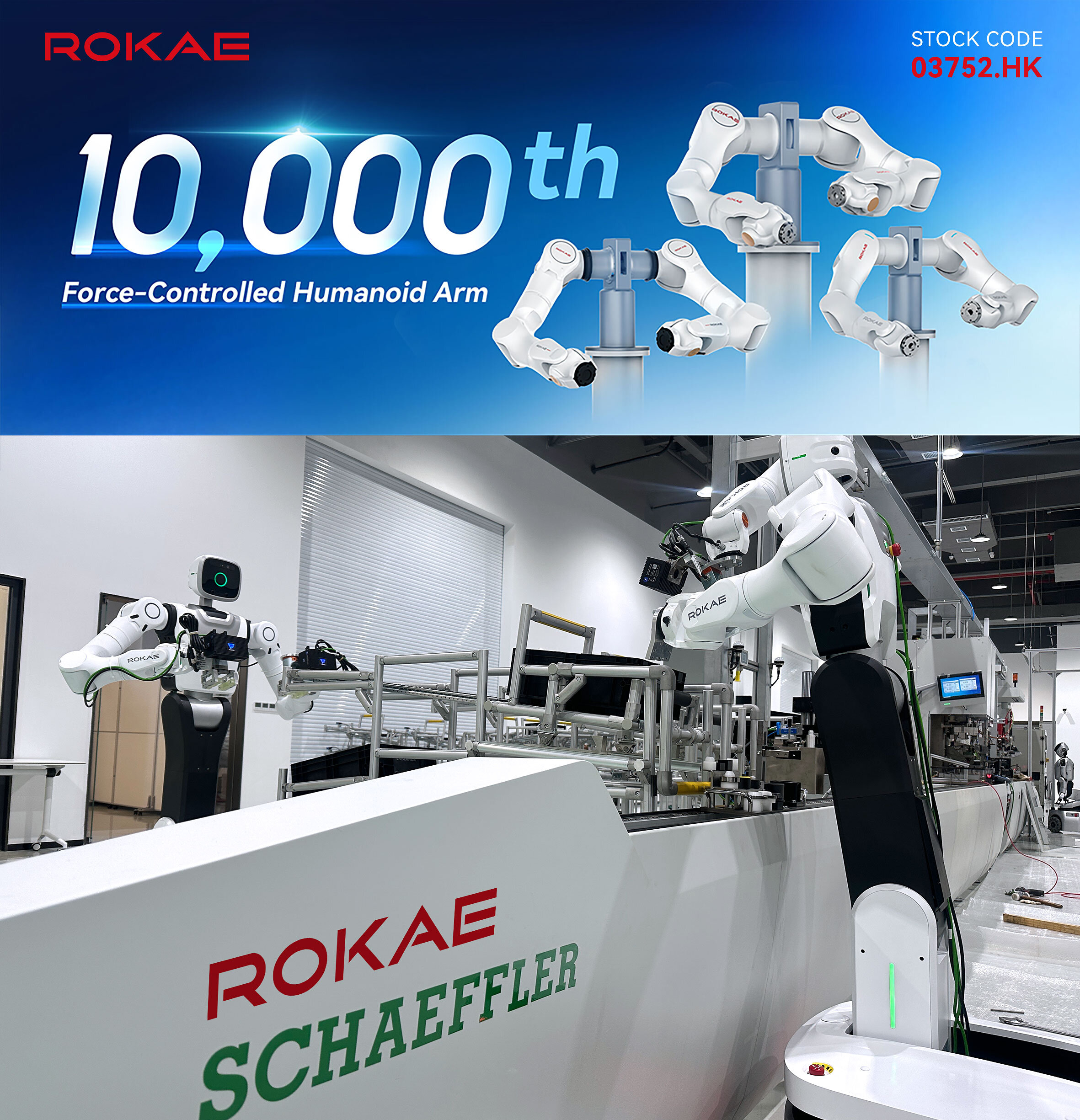
ROKAE Robotics said Monday it has delivered its 10,000th humanoid force-controlled arm, a milestone the Beijing-headquartered, Hong Kong-listed robot maker reached in September at its manufacturing base in Shandong Province. The count covers only ROKAE's AR Series arm line, not the industrial and collaborative robots the company sells separately across more than 40 countries, and it arrives alongside a specific proof point: five of ROKAE's Helios wheeled humanoids, each fitted with an AR Series arm, are now running an assembly line inside Schaeffler's Lighthouse Factory in Taicang, handling parts, assembly and inspection for components that themselves go into other humanoid robots.
Founded in 2014 and listed on the Hong Kong Stock Exchange under ticker 3752, ROKAE built its business on industrial and collaborative robot arms before extending the same force-control engineering into Helios, its wheeled humanoid platform, and the iNex embodied-AI control system that runs it. The company says more than 1,000 enterprise customers across over 40 countries and regions use its robots, and more than 80 industrial partners have integrated the AR Series arms specifically into production applications, a figure ROKAE discloses but that is not independently audited.
Why Force Control Is the Harder Problem Than Walking
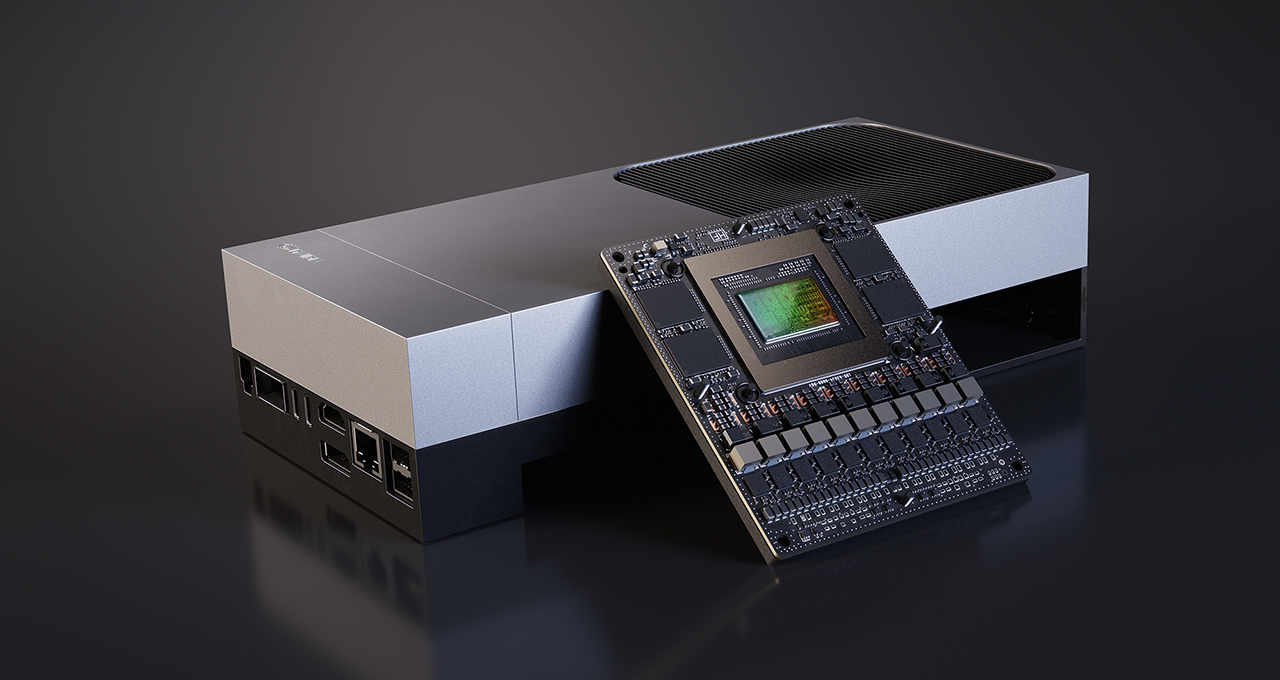
Humanoid robotics coverage tends to fixate on locomotion, how smoothly a robot walks, climbs stairs or recovers from a push, because it is the most visually legible capability a demo can show. ROKAE's arm business points at a less photogenic but commercially sharper problem: a robot that can walk into a factory but cannot tell the difference between tightening a bolt and crushing a sensor housing is not deployable on most assembly lines, whatever its gait looks like. Force control, sensing and regulating the physical force an arm's joints exert in real time, is what lets a robot work with parts that vary slightly in tolerance, fit, or position without either stripping a thread or dropping the part. ROKAE's MAC controller, a module measuring 213 by 145.5 by 45 millimeters, is built to manage that regulation across seven joints in a single arm, 14 across a pair, or more than 20 joints spanning a full humanoid body, scaling the same control architecture from an industrial arm bolted to a factory floor up to a mobile humanoid torso.
That architecture is also why ROKAE counts arms, not finished humanoids, as its headline milestone. A humanoid robot maker selling a complete walking, talking product has an obvious unit to report. ROKAE, selling the manipulation layer itself, is making a narrower and more verifiable claim: 10,000 arms built to one control specification, deployed across industrial customers that chose the component on its manipulation performance rather than on a full-robot demo. For a buyer comparing humanoid suppliers, that distinction is worth sitting with. A company whose core expertise is the arm, and which treats the humanoid chassis as one of several places to put that arm, is making a different bet than a company that started with a humanoid body and is still working out how good its hands need to be.
What Five Robots on One Taicang Line Actually Prove
The Schaeffler deployment is small by the standards of the industry's favorite statistic, unit counts. Five Helios robots on one assembly line inside a single factory is not evidence of mass deployment. What it is evidence of is something procurement teams should weigh more heavily than raw unit counts at this stage of humanoid adoption: a German precision-engineering supplier, whose own business depends on components meeting tight tolerances, chose ROKAE's force-controlled arms for a line that assembles humanoid robot components, the exact kind of fiddly, variable, tolerance-sensitive work that force control exists to solve, and that a position-only robot arm handles poorly. The task ROKAE's robots do at Taicang, parts handling, assembly and inspection for humanoid components themselves, is a recursive detail worth noting on its own: part of China's humanoid supply chain is now being assembled by robots built on the same force-control technology the end products will use.
Neither ROKAE nor Schaeffler disclosed production throughput, defect rates, or how many of the line's stations still require human intervention, gaps that matter more to a buyer's actual decision than the headline arm count. A five-robot pilot proving a technology works in principle is a different claim than a five-robot pilot proving it works at the cost and reliability a factory manager would sign off on for a hundred-robot line. ROKAE's own release is candid about scope: it describes the Taicang installation as an example of force control in a real production environment, not as a scaled commercial deployment, and a careful reader should hold the company to that more modest framing rather than the more dramatic one trade coverage sometimes applies to any humanoid-in-a-factory photo.
What 80 Industrial Partners Signals, and What It Does Not
More than 80 industrial partners integrating the AR Series arm is, on its face, the stronger adoption signal in Monday's announcement, larger and more distributed than a single customer's pilot line. It suggests ROKAE's arms have cleared procurement review at a meaningful number of manufacturers independently of any one marquee customer, which is a harder bar to clear than landing one high-profile logo. But the figure is ROKAE's own count, with no breakdown by industry, region, order size, or whether "integrated" means a single pilot unit or a production-line deployment at each partner. A buyer should treat 80 partners as a reason to shortlist ROKAE for evaluation, not as a substitute for requesting reference customers and asking those customers directly about uptime, service response time, and total cost of ownership once a unit is actually running a shift rather than appearing in a company's own case study.
The honest reading of Monday's announcement is that it is simultaneously a real engineering milestone and an incomplete commercial picture. Ten thousand arms built to a consistent force-control specification is a manufacturing achievement that few humanoid-arm suppliers globally can currently claim at that volume, and it suggests ROKAE's production line, not just its lab demos, has matured. What it does not establish is unit economics, defect rates, service infrastructure outside China, or whether the Taicang line's results generalize to the kind of higher-volume, lower-margin manufacturing environments where most industrial buyers actually need humanoid labor to pencil out financially.
A Crowded Field With Few Comparable Numbers
ROKAE is not the only company selling force-controlled arms into China's humanoid supply chain. Flexiv and Agile Robots have both built businesses on the same core claim, that sensing and regulating joint-level force is what separates a manipulation-capable robot from one that can only move to fixed positions, and both have raised substantial funding on versions of the same pitch. Internationally, Franka Robotics built an entire research and light-industrial business on torque-sensing arms years before humanoid robotics became the dominant narrative for the technology. What distinguishes Monday's announcement is not the underlying technology, force control at the joint level is now a well-established approach rather than a novel one, but the specific claim to scale: 10,000 units built to one specification is a volume figure none of ROKAE's direct force-control competitors has publicly matched, even though none of them publishes directly comparable numbers either, which makes ROKAE's figure effectively unverifiable against the field rather than simply impressive in isolation.
ROKAE's listing on the Hong Kong Stock Exchange adds a layer of disclosure incentive that privately held competitors do not carry. A public company has a standing reason to publicize production milestones between earnings periods, and investors reading Monday's release should weigh it accordingly: it is simultaneously a genuine manufacturing data point and a piece of routine investor communication from a company whose share price benefits from a steady drumbeat of growth signals. Neither motivation cancels the other out, but a buyer or investor should not read corporate enthusiasm as a substitute for the throughput, defect-rate and reference-customer data the release does not include.
The Test That Will Actually Answer the Question
ROKAE founder and chief executive Tuo Hua framed the milestone modestly, saying the number itself matters less than the trust behind it and that there are no shortcuts in force control. That is a reasonable standard to hold the company to over the next year: whether the Taicang line's five robots become fifty without a corresponding jump in defects or downtime, and whether the 80-partner figure grows alongside published reference cases rather than remaining a round number repeated in each new press release. A force-controlled arm is either reliable enough to run an unsupervised shift on a real production line or it is not, and that is a question an arm count, however large, cannot answer by itself. The next disclosure worth watching is not a bigger milestone number but a named customer willing to put a throughput or defect-rate figure next to ROKAE's own.
This analysis synthesizes company statements and public market activity as of the publication date and should not be read as investment, financial, or professional advice; it is provided for general information purposes only.