California Was Due the Biggest Robot-Adoption Grant. It Never Landed.
NIST renewed twelve of fourteen state Manufacturing Extension Partnership centers on schedule in September, each awarded exactly what a July funding notice promised. The two missing recipients are not random: California was allocated the single largest award in the program, over a third of the total, and its incumbent center is already listed by NIST as a former operation with no successor named.


Washington announced a robotics-adoption grant program in July with fourteen named recipients and a combined price tag just north of US$46 million. Two months later, twelve of those recipients got their money. The two that didn't are not a random pair. One of them, more than double the size of the next-largest single award in the entire program, belonged to the state with the biggest small-manufacturer base in the country, and its outgoing operator is already listed on the federal government's own website as a "former center."
A grant program's real signal isn't the total it announces. It's which recipients clear the finish line on schedule, and which one the program can least afford to lose.
The National Institute of Standards and Technology runs the Manufacturing Extension Partnership, a network of roughly 1,400 advisors across more than 450 service locations whose entire job is helping small and mid-sized manufacturers, which NIST's own paperwork puts at 98 percent of the country's manufacturing base, adopt technology they otherwise couldn't evaluate or afford to integrate alone: robotics, artificial intelligence, automation, and additive manufacturing among them. On July 22, NIST opened a funding round to renew fourteen of these state centers, publishing exact dollar allocations for each one. On September 15, it announced awards. Compare the two documents line by line and something specific falls out, not a shortfall spread evenly across the program, but two states missing entirely, with every one of the twelve funded awards matching its July allocation to the dollar.
The Twelve That Landed On Time
Alabama got US$2,191,702. Arkansas got US$1,291,618. Georgia, Louisiana, Massachusetts, Missouri, Montana, Ohio, Pennsylvania, Puerto Rico, Utah, and Vermont each received the exact figure NIST had already published in July. Ohio and Pennsylvania topped the group at just over US$6.1 million apiece. Nothing about these twelve awards required drama: they are formula-driven renewals for state manufacturing-advisory operations that have run for years, each one now committed to a five-year cooperative agreement requiring at least 50 percent of the federal dollar in nonfederal matching funds before a single robot gets specced for a client.
That matching requirement matters more than it looks. A US$30 million federal commitment isn't US$30 million of adoption assistance; it's a floor that states, universities, and manufacturer associations have to match with their own money before it becomes real technical assistance on a factory floor. Every one of the twelve awarded states had already lined up that match. That's the actual evidence the program works as designed for the recipients it funded on time.
The Two That Didn't
California was allocated US$15,641,800 for year one of this program, projected at US$78.2 million across five years, more than a third of the entire fourteen-state pot and more than double the next-largest single award, Pennsylvania's US$6.1 million. Alaska was allocated US$706,300. Neither appears anywhere in the September award announcement.
That is where the story stops being a footnote. California's incumbent MEP operator, California Manufacturing Technology Consulting, is the state's sole federally recognized manufacturing-advisory center, and NIST's own site now lists its page under the header "California Manufacturing Technology Consulting (Former Center)," archived, with no successor named. The federal government did not simply fail to publish California's award on schedule. It let the state carrying the single largest allocation in the entire competition go without a functioning, federally backed advisory operation at the exact moment the rest of the program restarted.
Nobody covering this round has connected those two facts, probably because each one reads as a minor procedural note on its own: a funding opportunity closing its application window, a nonprofit's status page quietly updating months later. Put side by side, they describe an industrial-policy program whose single point of failure is also its single largest bet.
Why Concentration Is the Real Risk, Not the Dollar Amount
The instinct in trade coverage is to read "US$30 million awarded for small-manufacturer robotics adoption" as a straightforward number going up, evidence the US is finally taking automation-adoption support as seriously as the manufacturers it's meant to help. Read against the underlying allocation table, the more useful number is the one that's missing: a program built so that one state carries more than a third of the total, over double what any other single recipient gets, is a program that can look, on schedule and on budget, for twelve of its fourteen recipients while its most consequential one sits in limbo.
Consider what that concentration does to risk, not to totals. If Ohio's or Georgia's centers had missed the September deadline instead, the program's public framing would be identical: "twelve of fourteen funded." The material difference is which twelve. A shortfall concentrated in the recipient carrying a third of the pot is not the same event as a shortfall spread across small awards, even though both produce the same headline count.
I run a platform that tracks robotics companies, deployments, and policy filings across dozens of jurisdictions for a living, from an ASEAN vantage point where every government automation-adoption scheme, whether it's a tax credit, a demonstration grant, or a state-run technology center, gets evaluated first on a blunt question: what happens to the smallest, least-resourced applicant in the program if the largest one stumbles? A program that concentrates a third of its capacity in a single recipient has answered that question before a single robot arm gets installed under it, and the answer is that everyone else's on-time renewal doesn't actually tell you the program is healthy.
What a Buyer or a Policymaker Should Actually Watch
For a small manufacturer in California weighing whether to wait for subsidized technical assistance or pay a systems integrator directly, the honest answer right now is that the federally backed option does not currently exist in a form NIST is willing to name on its own website. That is not a claim that California will stay without a center; the state's application may simply be in a later stage of review than the twelve that cleared in September, and NIST has not published a rejection notice or an explanation for the gap. What is documented, not speculative, is that the state carrying the largest allocation and the largest small-manufacturer base in the program is the one still unresolved, with its predecessor already off NIST's active roster.
The tradeoff in every renewal-based advisory program is the same: formula funding is administratively clean for the states that renew smoothly and structurally fragile for the one state whose absence the rest of the program can't quietly absorb. Watch whether NIST issues a follow-up award before the October 1 funding-period start date the program itself set. If California clears that date without an announcement, the number worth reporting won't be US$30 million anymore. It will be how many months the country's largest manufacturing state went without the federal program built to help its smallest factories automate.
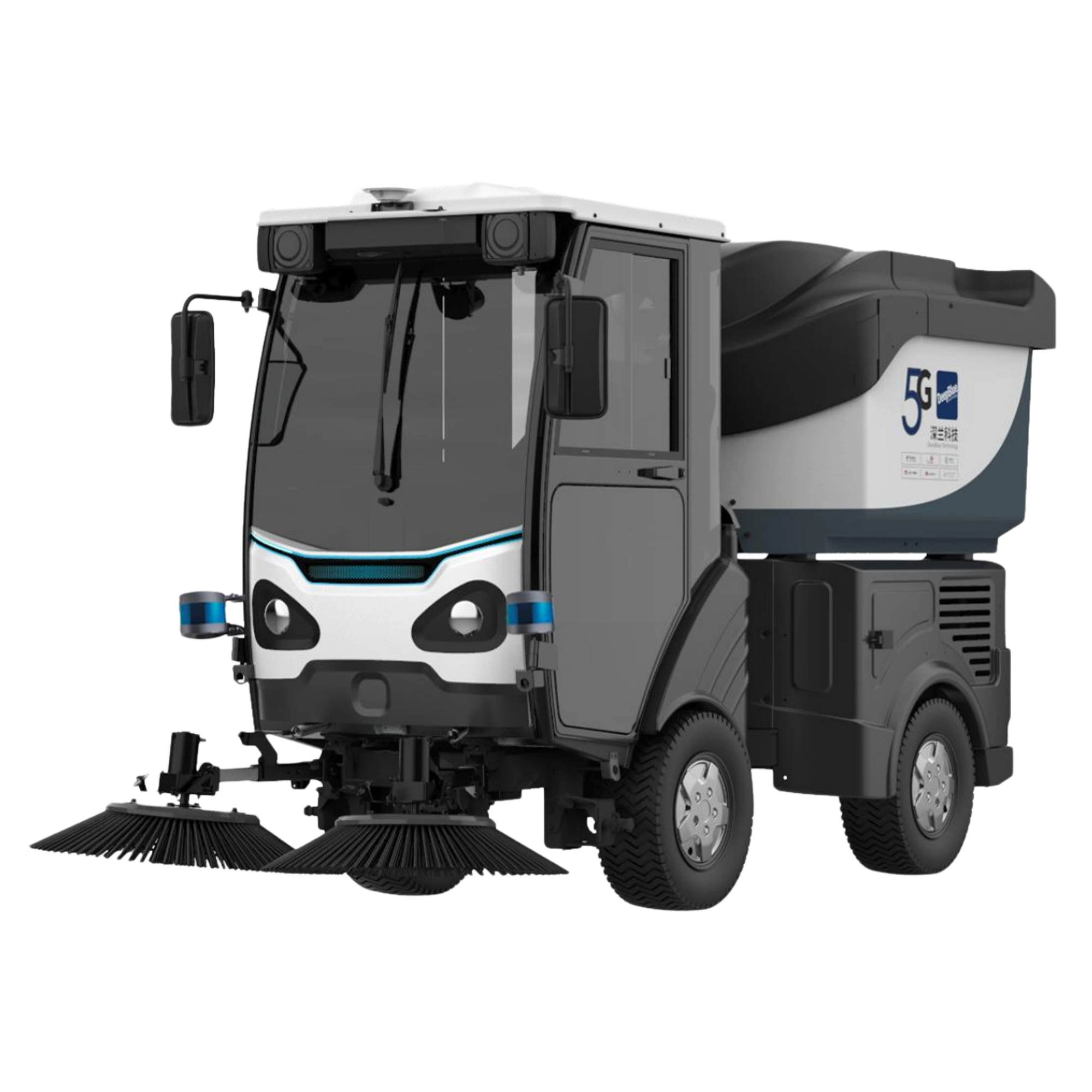
Hero image: NIST Manufacturing Extension Partnership advanced-manufacturing program imagery, official image via the National Institute of Standards and Technology.
Disclaimer: This article is for general information purposes only and does not constitute investment, legal, or procurement advice. Readers should verify details with primary sources before making business decisions.