Robotics Doesn't Have a ChatGPT-Moment Problem. It Has a Geography Problem.
Two former colleagues in Nvidia's robotics orbit are debating when robotics gets its 'ChatGPT moment.' Four unrelated events from the same week, a Micron earnings call, a Chinese technical standard, a Symbotic acquisition, and a Hong Kong training ground, suggest the debate itself is asking the wrong question.

A former Nvidia product-marketing executive who spent seven years building the company's robotics-platform business now runs a venture fund built on a bet against her old employer's favorite slogan. Amulya Vishwanath calls the industry's current state its "Lego era": actuators, hands, software, and safety standards still being assembled piece by piece, nowhere near one breakthrough model away from working. In the same conversation, General Intuition's chief executive Pim de Witte argued close to the opposite: that a sufficiently general foundation model would make much of that specialized assembly work redundant almost overnight.
Both investors are arguing about the wrong variable. The question is not whether robotics gets a single "ChatGPT moment." It is whether a single moment is even the right shape for this industry to expect. Four unrelated events from the past 72 hours, the kind that never make a keynote, say it probably is not.
Text had one shared raw material. Robots do not, and that difference is permanent, not a phase.
Why one global moment worked for language and will not work for hardware
ChatGPT scaled the way it did because the internet had already produced a vast, shared, multilingual corpus of text as an unplanned byproduct of ordinary human activity, and every lab training a large language model could draw on roughly the same representation of that corpus. A model trained in Beijing and a model trained in San Francisco are still learning from overlapping text.
Physical deployment has no equivalent shared substrate. A sortation system approved for a German warehouse answers to different codes than a delivery robot licensed for a Chinese sidewalk, which answers to different codes again than a hospital robot cleared for a Philippine ward. What compounds in robotics is not one corpus everyone draws from. It is dozens of regional stacks of hardware, capital, and regulation maturing on separate clocks, and this week's deal flow is a clean cross-section of exactly that.
What the chip industry is actually planning for
Micron's own earnings calls this year are a better predictor of robotics' trajectory than any demo. At its September fiscal-year-end call, chief executive Sanjay Mehrotra used Level 4 autonomous vehicles as his reference point, a vehicle class he pegged at upward of 200 gigabytes of onboard memory plus several terabytes of storage, and told investors a humanoid should need a broadly similar footprint. Three months earlier, on the June call, he had used a different yardstick entirely: humanoid robots, he said, will carry roughly ten times the memory of an average Level 2-plus passenger vehicle.
Neither figure is a hardware specification. Both are a chipmaker's own forward-looking estimate, built from two different comparison points three months apart, which should tell a buyer something: even the company selling the memory has not settled on a single reference design for what a robot needs. That is not a company behind schedule. It is a company planning capacity around a category that has not yet standardized, a decision with multi-year lead times that gets made regardless of whether any lab ships a smarter model next quarter.
A standard most foundation-model labs have never heard of
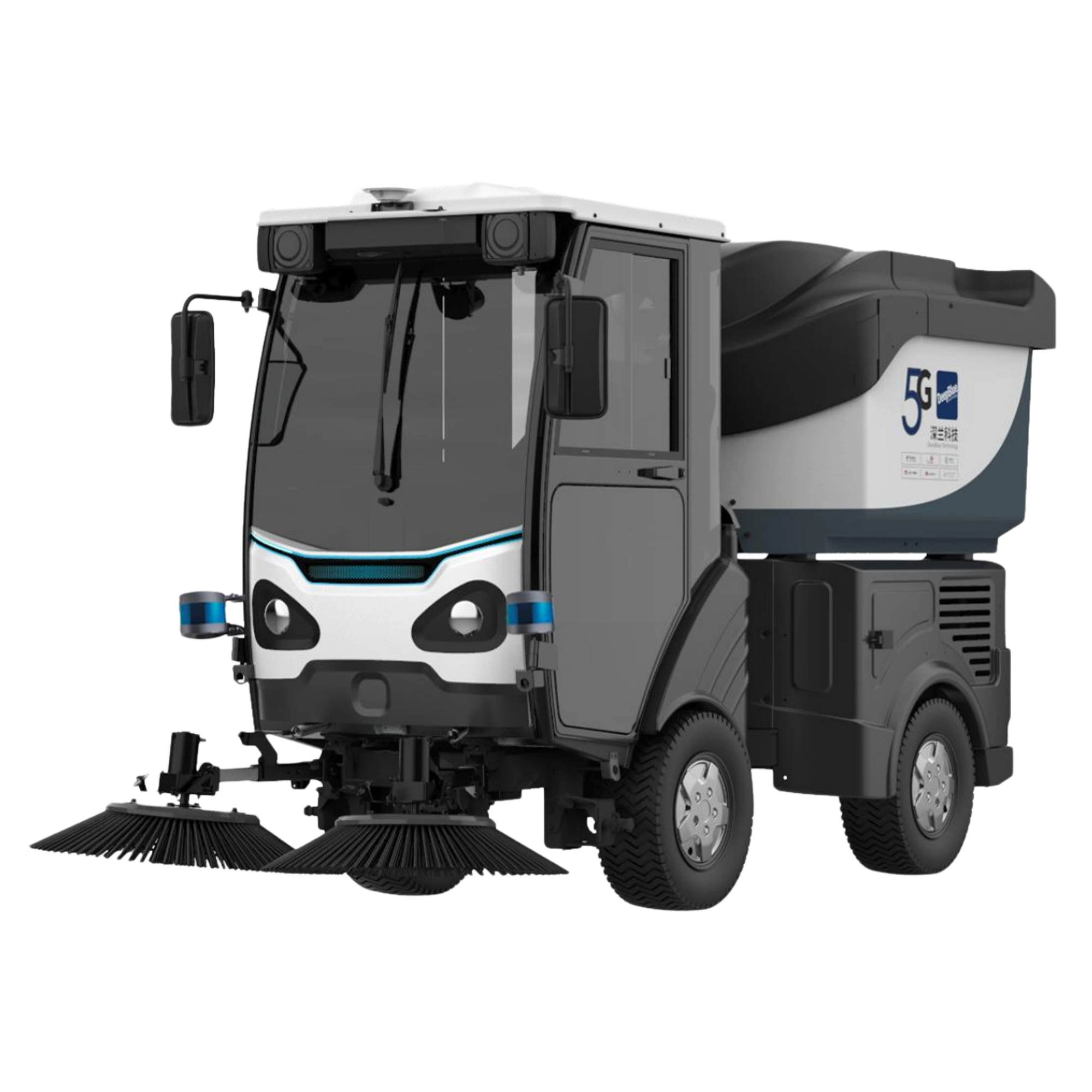
China's low-speed autonomous-vehicle sector, the sanitation trucks, delivery carts, and shuttle vehicles that rarely appear in a funding headline, awarded close to 200 contracts worth more than RMB 8 billion (roughly US$1.1 billion) in the third quarter of 2026 alone, pushing the year-to-date total above RMB 21.8 billion (roughly US$3 billion), according to industry data tracked by the New Strategy Low-Speed Automated Driving Industry Research Institute. The distribution inside that number is the real story: deals of RMB 1 million to 10 million (roughly US$140,000 to US$1.4 million) made up 72 percent of all contracts by count, while the roughly one-in-five projects priced above RMB 100 million (about US$14 million) accounted for more than 95 percent of total value.
That barbell did not appear on its own. A national technical standard, GA/T 2388-2026, took effect July 1 and is explicitly credited in the industry's own reporting with helping larger, more compliance-capable operators win a growing share of contracts. A paperwork requirement, not a smarter model, just reshaped who gets to compete in one of the world's largest robotics deployment markets.
Hardware consolidation and training infrastructure, a continent apart
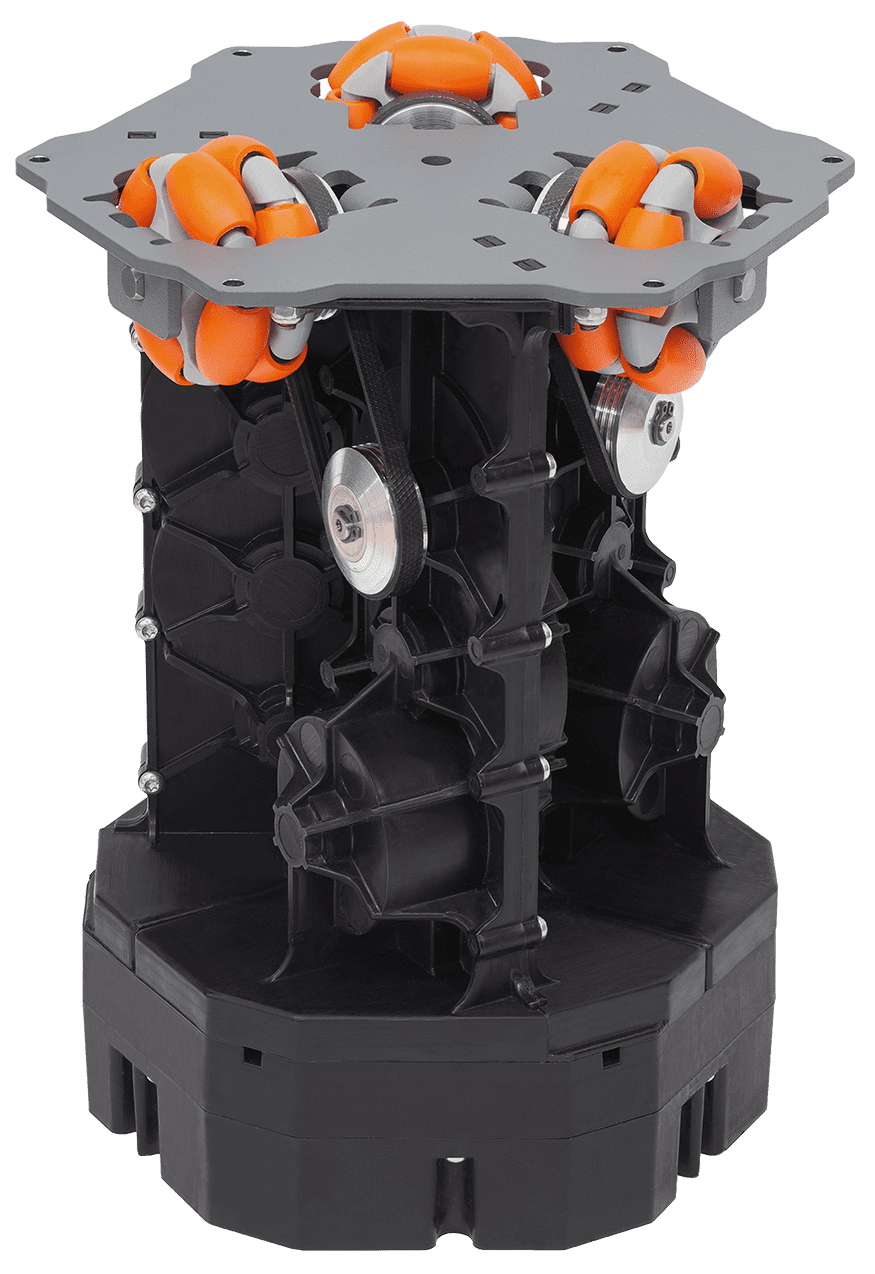
Two more data points from the same week round out the pattern. Symbotic, the US warehouse-automation company, acquired Bremen-based Cellumation and its celluveyor platform, an omnidirectional sortation cell built from independently controlled modules rather than fixed conveyor belts. It is Symbotic's second robotics acquisition this year, after Fox Robotics in February, and chief executive Rick Cohen called the technology a "game-changer" for throughput and floor space. Nothing about celluveyor's advantage runs through a language model. It runs through mechanical engineering that took Cellumation's founders years to patent and productize in one German city.
Half a world away, Hong Kong switched on a new facility on October 15: its first embodied-intelligence training ground built for international use, assembled by the Hong Kong Productivity Council with the explicit goal of closing the gap between what a robot does in a demo and what survives a real deployment. Its first phase launched with seven technology partners and eight international scenario partners already signed, combining research, model training, system verification, and scenario testing in one facility, a government-funded answer to a problem no foundation model lab has volunteered to solve on its own.
None of these four stories would make a Jensen Huang keynote slide. All four are the actual mechanism by which robotics gets more capable this quarter.
The part both investors get right, and the part the data corrects
De Witte's underlying point deserves more credit than the framing above gives it. A genuinely general foundation model would still commoditize large chunks of the narrow, task-specific software layer, the palletizing logic, the sortation routing, the perception stack, that companies like CMES Robotics are currently selling as differentiated products. CMES is bringing its AI-powered mixed-case palletizer to its first US trade show this month, a capability that uniform-case palletizing solved years ago and mixed-case automation has resisted until recently. If a general model eventually handles that kind of variable-geometry manipulation as a side effect of broader training, a meaningful slice of today's specialized robotics vendors lose their moat in one release cycle. That risk is real, and it is the strongest argument against the fragmentation thesis in this piece.
What the evidence from this week pushes back on is the timing and the shape, not the possibility. Capital, standards bodies, and hardware supply chains are not behaving like they are waiting on a single breakthrough to arrive before committing. They are building region-specific, vertical-specific infrastructure right now, on the assumption that whatever intelligence arrives will have to run on top of whatever physical and regulatory substrate already exists locally. A model that gets smarter in a San Francisco lab still has to clear GA/T 2388-2026 in Guangdong and a Philippine hospital's own procurement rules in Manila. Intelligence can scale globally. Deployment clears one jurisdiction at a time.
What this means for anyone buying, not just watching
I run a platform that tracks hundreds of these filings, standards updates, and acquisitions every week, and the pattern that actually predicts which robotics bets pay off is not which lab publishes the most impressive benchmark. It is which companies are quietly building the compliance, power, and hardware layer their specific region requires, regardless of which foundation model eventually wins.
For a buyer sitting in Manila rather than Shenzhen or Boston, that means the honest question is never "when does robotics have its moment." It is "what does my own jurisdiction's version of GA/T 2388-2026 look like, who is already positioned to meet it, and does my vendor's uptime and compliance story hold up locally, not just on a slide built for a different market." The industry is not one race with one finish line. It is dozens of regional races, several of them already well underway, and the operators winning them this quarter are not the ones with the smartest model. They are the ones who stopped waiting for one.
This analysis reflects the author's own reading of a recent recorded interview with Techable VC's Amulya Vishwanath and General Intuition's Pim de Witte, Micron's September and June 2026 earnings-call remarks, industry data on China's low-speed autonomous-vehicle sector from the New Strategy Low-Speed Automated Driving Industry Research Institute, Symbotic's and Cellumation's own statements on their acquisition, the Hong Kong Productivity Council's own materials on its embodied-intelligence training ground, and CMES Robotics' own statements on its PACK EXPO International 2026 debut. It is provided for general information purposes only and does not constitute investment, legal, or professional advice.
Hero image: Cellumation's celluveyor sortation cell hardware, courtesy of Cellumation.